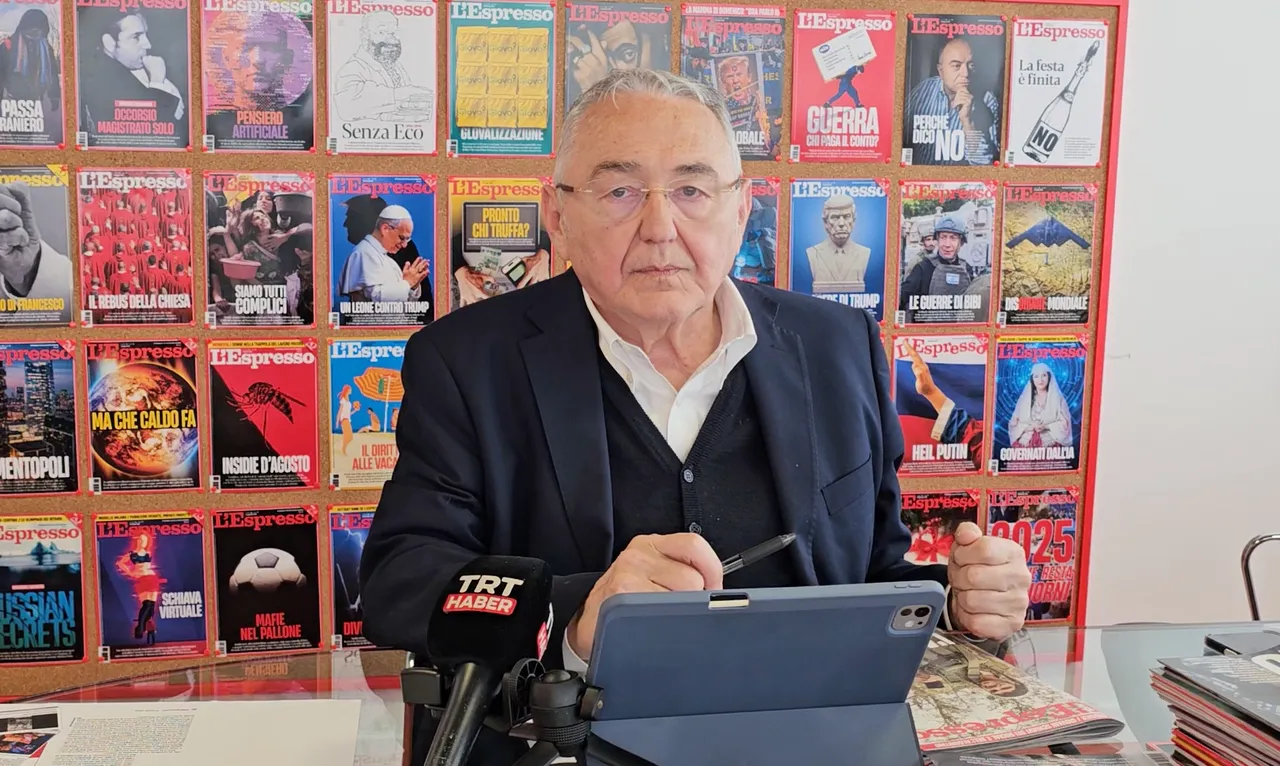
Italy’s leading weekly magazine, L’Espresso, has come under intense scrutiny after publishing a cover titled “Abuse,” drawing strong criticism — particularly from Israel.
The cover, featuring a striking image linked to the occupied West Bank, quickly went viral, sparking heated debate across social media and political circles.
Israeli officials accused the magazine of misrepresenting reality, with some claims suggesting the image was fabricated or generated using artificial intelligence.
In response, L’Espresso released behind-the-scenes footage from the same moment the photograph was taken, aiming to counter the allegations and demonstrate the authenticity of the image.
Speaking to TRT, Editor-in-Chief Emilio Carelli firmly rejected the accusations.
“Our goal at L’Espresso has always been to do investigative journalism — independent journalism that tells the truth,” Carelli said.
He added that the image was selected for its impact, describing it as part of the magazine’s broader effort to document realities on the ground.
“To document an illicit and illegal situation like the one in the West Bank falls within the duty of every serious newspaper,” he said.


Addressing claims that the image was artificially created, Carelli said the publication took additional steps to verify and defend its reporting.
“Some even claimed the photo wasn’t real, that it was created with artificial intelligence — which is not true,” he said.
“To prove this, we published a video shot in the same context. It clearly shows the image is authentic.”
The controversy has reignited broader debates over media credibility, visual verification, and the role of journalism in covering conflicts — particularly in highly contested environments such as the Israeli-Palestinian conflict.