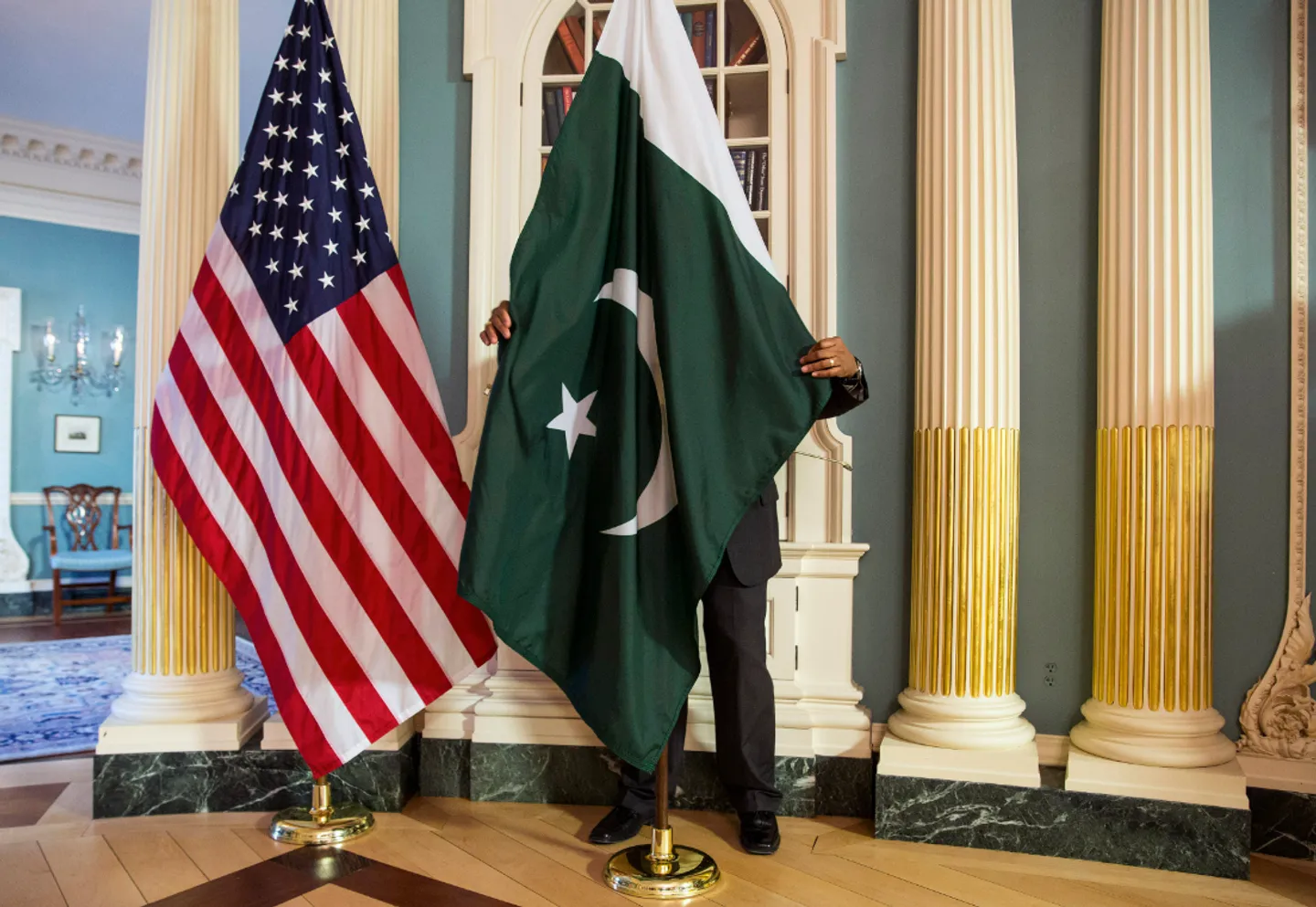
Pakistan has lodged a strong diplomatic protest over comments made by the US Special Envoy for South and Central Asia and Ambassador to India during his tightly choreographed visit to Indian-administered Kashmir, where Sergio Gor described the portion of the disputed territory as an "important part of India".
Right after Gor's remarks on Wednesday, Indian media and analysts prominently headlined it and interpreted the statement as backing New Delhi's claim to the region — a territory Pakistan disputes since 1947, when both countries gained independence from British rule.
Islamabad said it summoned the US Charge d' Affaires to lodge a strong demarche "over the factually incorrect remarks of US Ambassador to India, regarding the status of Jammu and Kashmir, during his visit to Indian Illegally Occupied Jammu and Kashmir."
"Pakistan strongly condemned and categorically rejected the characterisation of Jammu and Kashmir as a 'part of India'," a statement from Pakistan's Ministry of Foreign Affairs said.
Pakistan underscored that Kashmir is an internationally recognised disputed territory, awaiting final settlement in accordance with relevant UN Security Council resolutions and the aspirations of the Kashmiri people.
"It was highlighted that the irresponsible statement by the US Ambassador (Gor) negated the long-standing and well-documented position of the US on the Jammu & Kashmir dispute, and also ran contrary to the United States’ commitment to supremacy of international law and the UN Charter," the statement added.
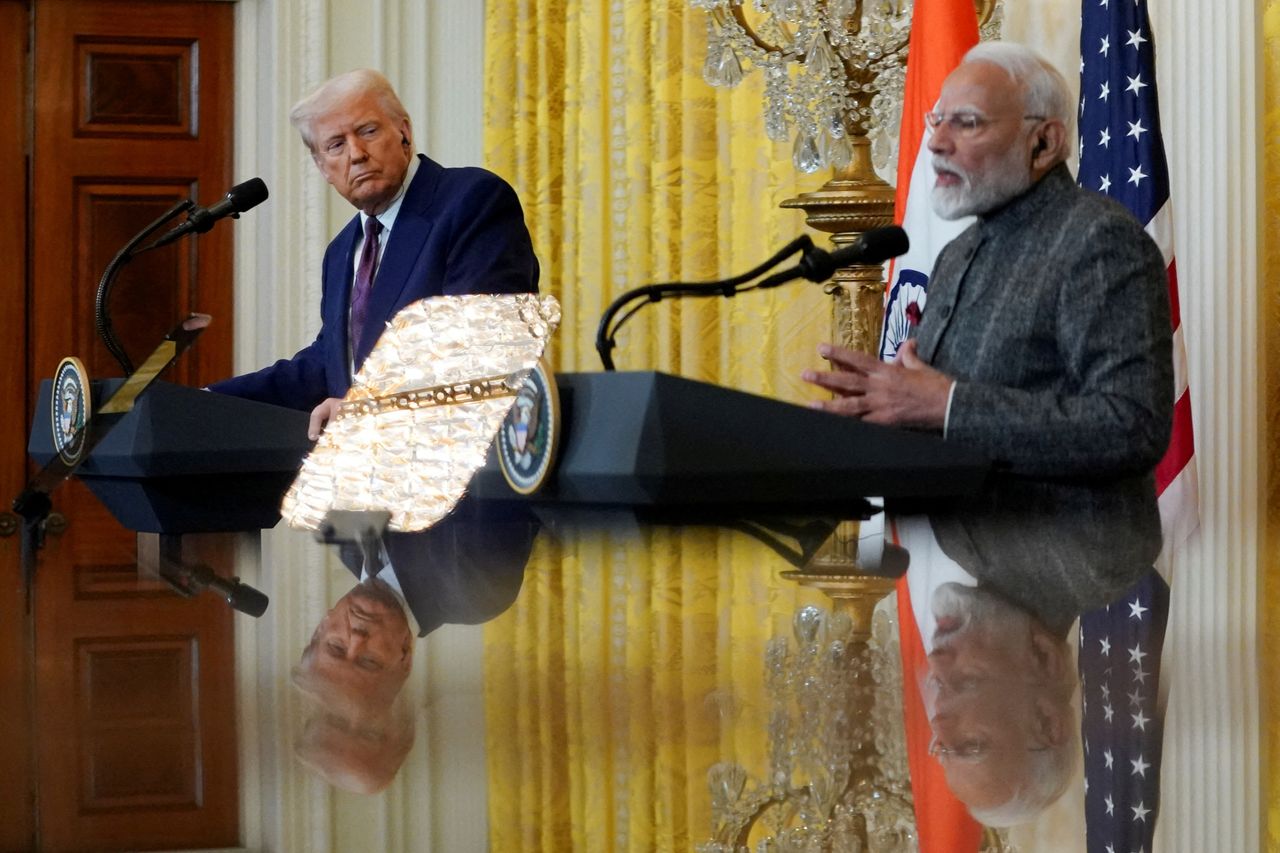
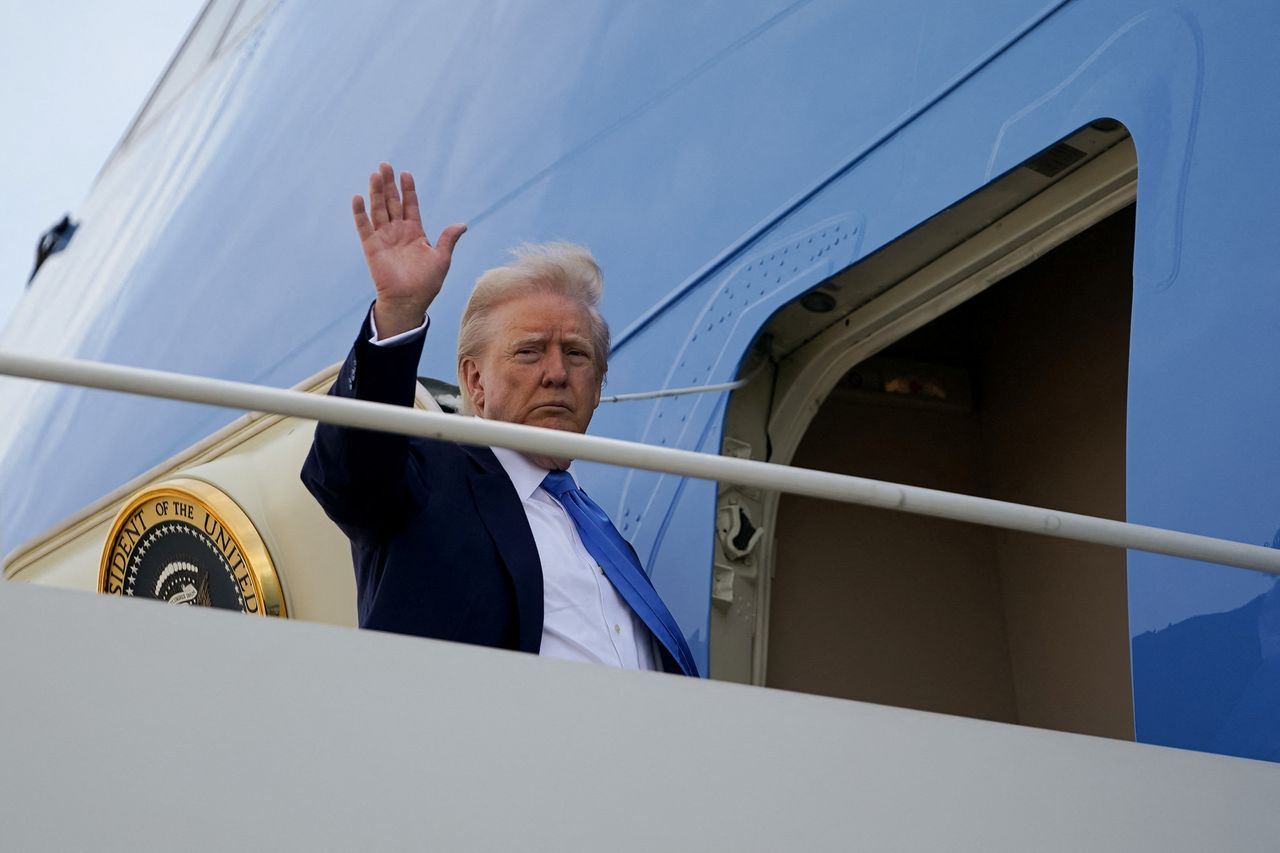
Welcoming US President Donald Trump's mediation offer over the Kashmir dispute in the aftermath of the May 2025 military conflict with India, Pakistan urged Washington to keep public statements aligned with the Himalayan territory's disputed status.
"While appreciating President Donald Trump's offer to mediate between India and Pakistan to resolve the Jammu and Kashmir dispute in the aftermath of Marka-e-Haq, the US side was urged to ensure that its public statements remain consistent with the disputed status of Jammu and Kashmir," the statement said.
Pakistan's angry reaction came after Gor, who is also President Trump's Special Envoy to South and Central Asia met with Omar Abdullah, the pro-India chief minister of India-administered Kashmir, and said during a media interaction: "It's a pleasure to be here. This is an important part of India. I am here, visiting for the first time. It is an incredibly beautiful place. I am thrilled to be here."
Gor also noted that the US would review its travel advisory for the region.
One of planet's most militarised zones
It is the first such high-level US ambassadorial visit to the region since 2019, when India annexed the region, revoked its special status within the Indian constitution, cancelled its limited autonomy, and split it into two federally administered territories — Jammu and Kashmir, and Ladakh.
The decision — which largely resonated in India and among right-wing Indian Prime Minister Narendra Modi supporters — was mostly opposed in Muslim-majority Kashmir as an assault on its identity and autonomy aimed at demographic changes in the region and beginning of settler colonialism.
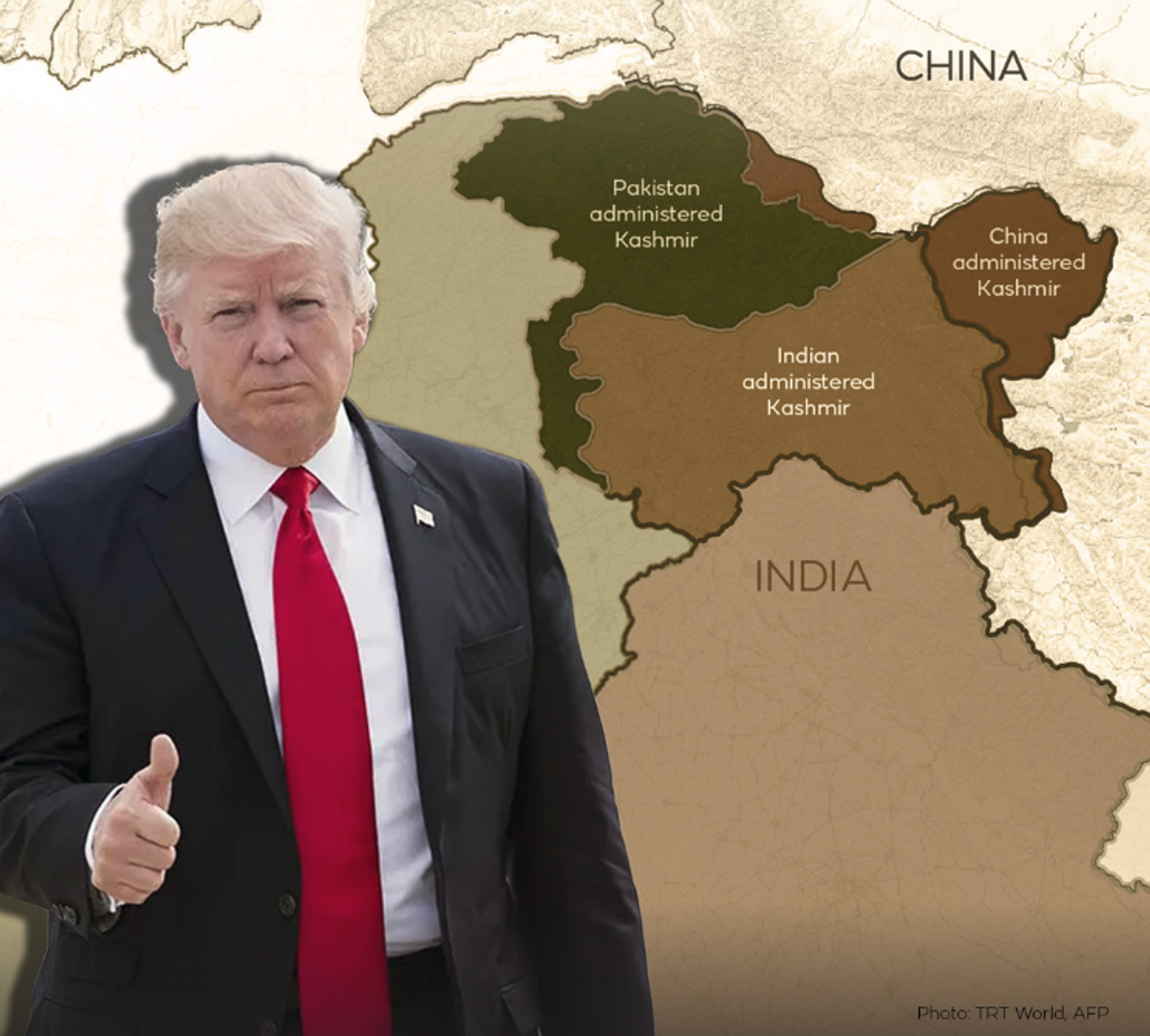
India and Pakistan each administer a part of Kashmir, but both claim the territory in its entirety. The nuclear-armed rivals have fought two of their three wars over the territory since they gained independence in 1947. China also administers a portion of Kashmir, known as Aksai Chin, following the 1962 Sino-Indian War — making the Himalayan region the world's only nuclear tri-junction.
Rebels in the Indian-controlled portion of Kashmir have been fighting New Delhi's rule since 1989. Many Kashmiri Muslims support deciding the future of the region through a UN-mandated plebiscite.


India claims the Kashmir revolt is funded by Pakistan. Islamabad denies the charge, and many Kashmiris consider it a legitimate freedom struggle. Tens of thousands of civilians, rebels and Indian troops have been killed in the conflict.
India has deployed more than 500,000 troops to the region, making it one of the planet's most militarised zones.
The long-standing US position holds that Kashmir's status must be resolved via talks between India and Pakistan, considering the wishes of the Kashmiri people.
US mediation in 2025 conflict
Kashmir came close to a major war in April 2025 following the killing of 26 predominantly Hindu tourists in Indian-administered Kashmir.
New Delhi immediately blamed Pakistan for the attack, without any evidence. Islamabad denied the allegation and sought an independent investigation.
Both sides downgraded diplomatic and trade ties, closed their main land border crossing and revoked visas for each other's nationals.
New Delhi rejected Islamabad's calls for independent probe and began attacking Pakistan, triggering one of the sharpest deteriorations in relations between the nuclear-armed rivals in decades.
Pakistan retaliated against Indian attacks, downing several aircraft and targeting Indian military bases in May before a ceasefire was announced by US President Trump and his administration officials.
India initially denied that any of its aircraft had been downed, but later admitted to the losses. It also denied that any soldiers had been killed at the time, but recently admitted to the loss of at least six soldiers.
The US, which mediated the truce, believes approximately 11 aircraft were shot down, while Pakistan says it shot down seven or eight Indian aircraft, including Rafale fighter jets.
Relations between India and Pakistan have remained frozen since despite US Secretary of State Marco Rubio announcement on May 10, 2025 that both sides have "agreed to an immediate ceasefire and to start talks on a broad set of issues at a neutral site."
India says US played no role in truce, but Pakistan has hailed President Trump's efforts and nominated him for the Nobel Peace Prize. Trump has said that millions of people in South Asia could have died in the conflict had he not intervened immediately.
President Trump had offered to work on the Kashmir dispute, remarking last year, "I will work with both of you to see if, after a ‘1000 years’, a solution can be arrived at concerning Kashmir."