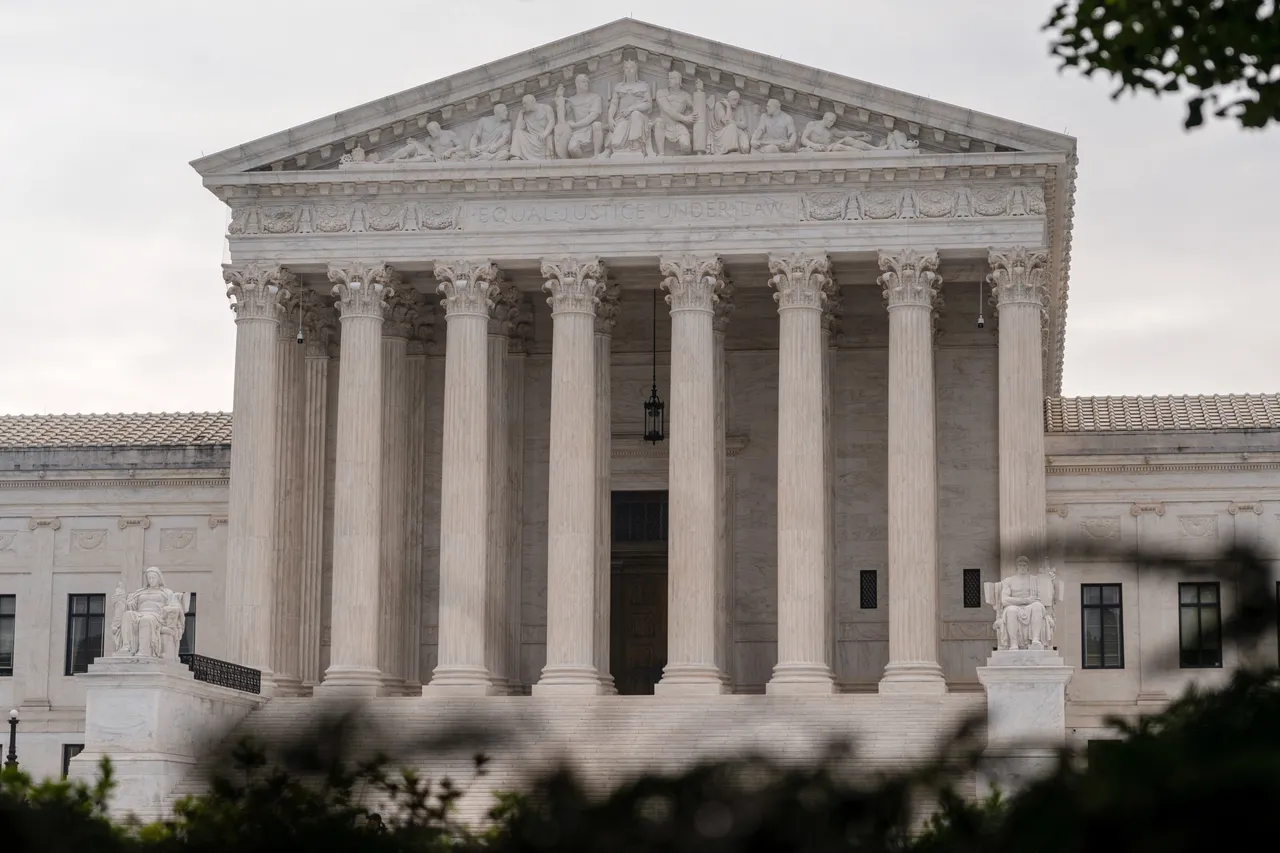
The US Supreme Court has upheld a law permitting officials to count mail-in ballots postmarked by Election Day, even if they arrive later, preserving existing voting procedures in several states as the crucial midterm elections approach.
Monday’s court decision favouring the state of Mississippi over the Republican National Committee delivered an immediate reprieve to the 14 states with grace periods for regular mail ballots, and also headed off what was expected to be a scramble to alter the practice and inform voters just months ahead of the midterm elections.
At least one state, Ohio, had preemptively changed its law in anticipation of a different result from the high court, and 15 other states have such grace periods specifically for military and overseas voters.
Washington Secretary of State Steve Hobbs said the ruling means "the thousands of voters whose ballots are postmarked on time but received after Election Day still have their voices heard.”
Justice Amy Coney Barrett, a Trump appointee, wrote for the majority that the practice is legal.
"Nothing in the federal election-day statutes requires ballots to be received by Election Day,” she wrote, adding that the court considered that very narrow question without wading into more sweeping declarations about absentee voting in general or the authority of Congress versus states over election law.
In Illinois, where mail-in ballots accounted for up to a quarter of this year's primary vote, the state elections board had budgeted $300,000 for a television and radio ad campaign to educate voters about potential changes to the mail ballot deadline.
Spokesman Matt Dietrich said that campaign will be called off after the court's ruling. Illinois allows mail ballots to be counted if they are postmarked by Election Day and received within 14 days.
“Anytime you have a change in the administration of elections that affects voters, it is a big challenge to us to make sure that voters understand what that change is,” he said.
“A tremendous loss”
California, which has a seven-day grace period, has been a regular target of Trump and other Republicans who criticise the state's slow-counting of late-arriving ballots and have used the gap to spread conspiracy theories about voter fraud.
California Secretary of State Shirley Weber called Monday's ruling "a win for voters, for the rule of law, and for the future of our democracy.”






In addition to California, Illinois and Mississippi, the other states that count regular mail ballots received after Election Day are Alaska, Maryland, Massachusetts, Nevada, New Jersey, New York, Oregon, Texas, Virginia, Washington and West Virginia.
Data show that mail ballots are popular options in all 50 states among both Republican and Democratic voters.
Although the RNC was party to the case and not the Trump administration itself, national party committees of a sitting president’s party typically operate in concert with the president’s political strategies.
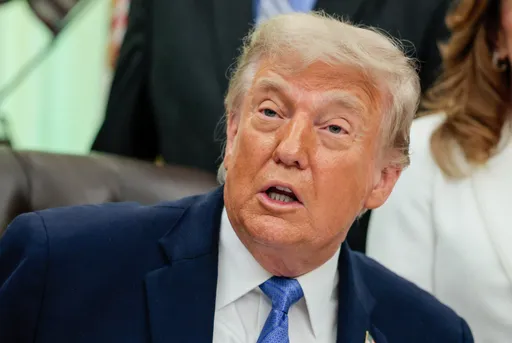
Calling Monday's ruling “a tremendous loss,” Trump used it as a way to push his sweeping election law bill that has stalled on Capitol Hill despite Republican control in both chambers of Congress.
In a Truth Social post, the president declared it “more important than ever to pass THE SAVE AMERICA ACT,” his name for legislation that would require voters nationally to document their US citizenship to register to vote, show certain photo identification to cast ballots and limit who can vote with a mail ballot.
RNC Chairman Joe Gruters issued a statement aligning with Trump, saying Monday's ruling was justification to pass the congressional proposal.
Lower federal courts have issued rulings blocking the Trump administration’s efforts to impose new restrictions on mail ballots and to create a national voter list, among other proposed changes.
Judges in those cases have consistently said the Constitution vests authority for setting election rules with Congress and the states, not the president.
While Barrett framed Monday’s opinion on the narrower question of the mail ballot deadline, the decision could bolster hopes among Democrats that the high court will look sceptically on the president’s assertion of power over elections if other cases land before it.
Several voting rights advocates welcomed the ruling, saying they had feared the court might overturn long-standing rules on ballot deadlines.
National Association for the Advancement of Coloured People (NAACP) President Derrick Johnson called it “a win for our democracy.”