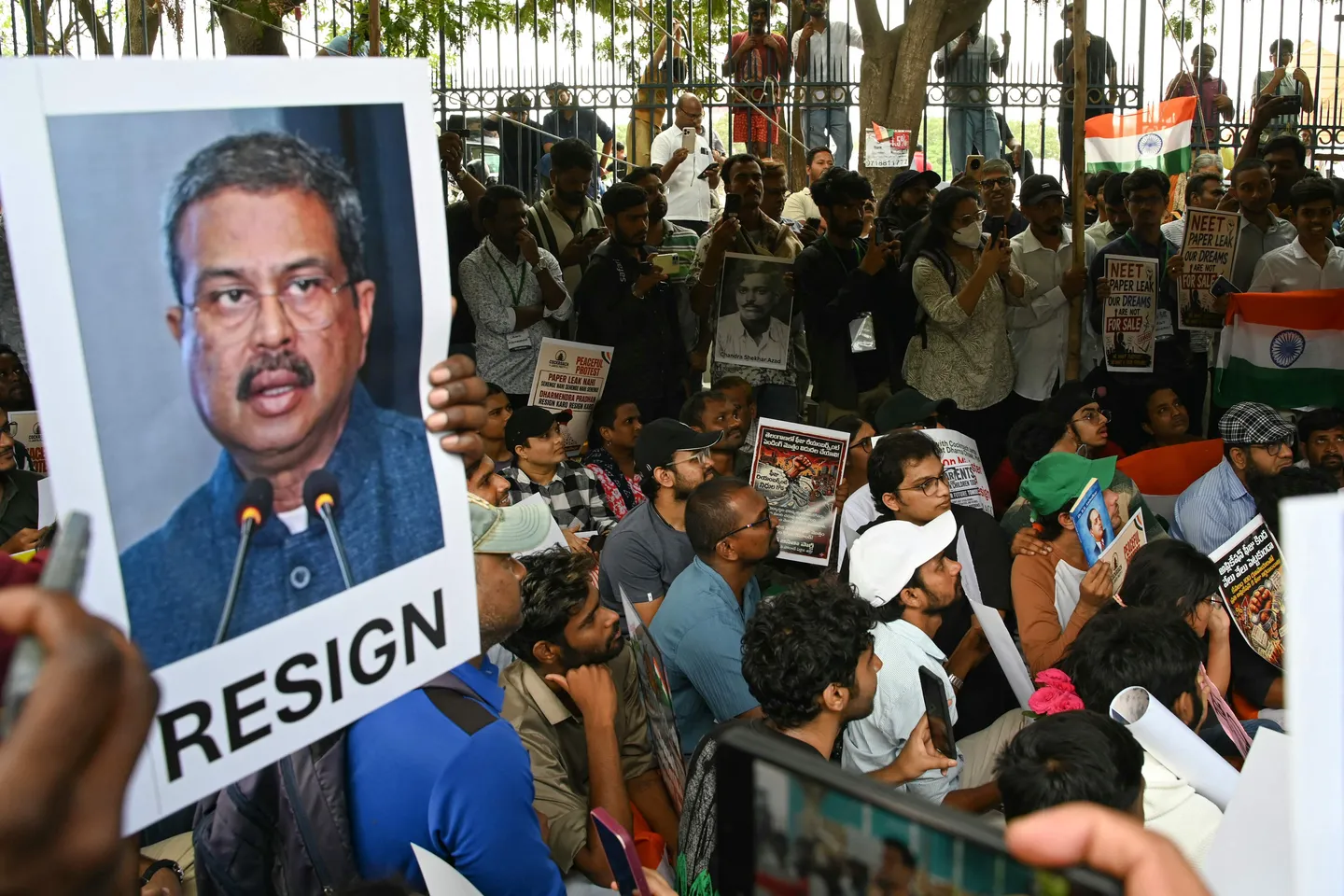
India's Education Minister Dharmendra Pradhan has announced his resignation, capping weeks of nationwide protests that demanded he take responsibility for a series of leaks in some of the country's most competitive entrance exams and wider irregularities in the education system.
Pradhan disclosed his resignation on X on Saturday, just as police fired tear gas to scatter protesters in the Indian capital, hours before their leaders were set to hold another round of talks with ministers to push for the move.
The resignation marked the first major concession from Prime Minister Narendra Modi's government after the so-called Cockroach movement held weeks of demonstrations, sit-ins and hunger strikes calling for Pradhan to step down.
Even as Pradhan's departure handed the movement its central victory, the founder of the Cockroach Janta Party (CJP) said the protests would not be called off until two further demands were met by the government.
The founder first called for the families of students who died by suicide following exam paper leaks to be compensated, insisting that those who lost their lives to the scandal should not be forgotten in the wake of Pradhan's departure.
The founder also demanded action against police officers involved in Monday's violent crackdown on protesters, when tens of thousands of demonstrators were baton-charged and tear-gassed as they attempted to march on Parliament.

From courtroom remark to nationwide movement
The Cockroach Janta Party (CJP) emerged in May as a satirical online movement, after Chief Justice Surya Kant reportedly likened young people to "cockroaches" and "parasites" during an unrelated court hearing.
What began as social-media satire quickly snowballed into one of the most organised movements India has seen in years, drawing millions of followers and a broad cross-section of students.
The movement shifted from the internet to the streets in June, with sit-ins at Jantar Mantar, New Delhi's iconic protest site, becoming the focal point.




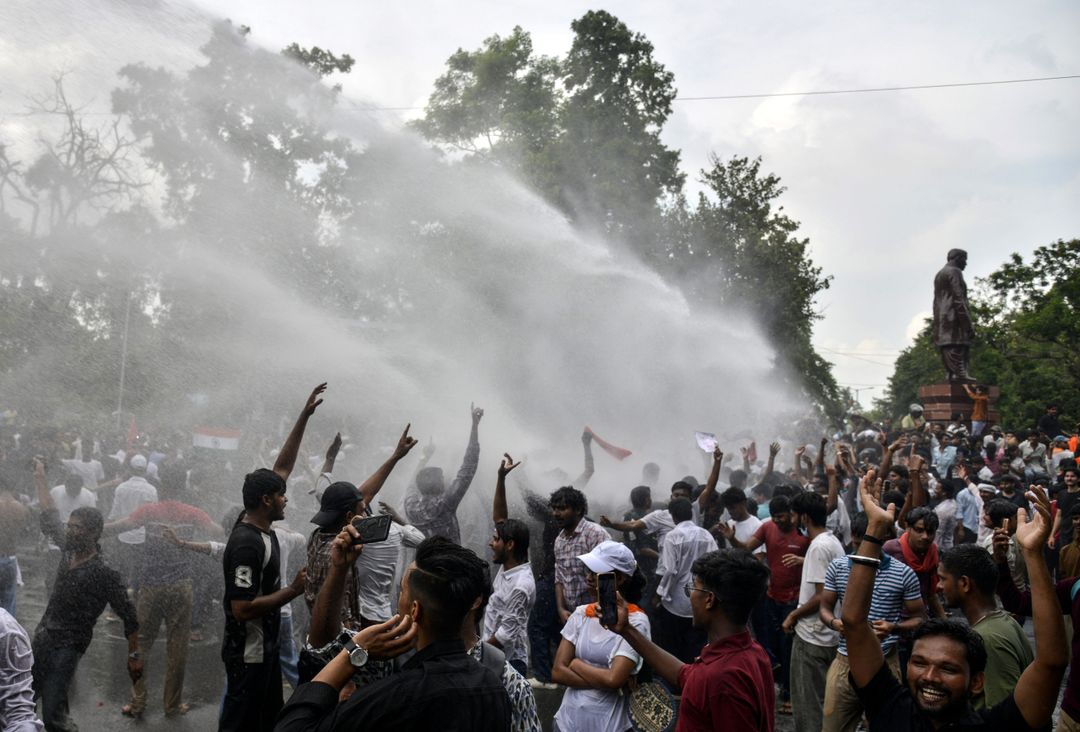
Tensions escalated sharply this week on the opening day of parliament's monsoon session on Monday; tens of thousands tried to march on the legislature, prompting police to fire tear gas and baton-charge the crowd, the largest street rally in the capital in roughly five years.
Protesters responded by hurling stones, and at least 178 people, including security personnel, were injured, according to police.
Exam scandals and Modi's response
The protests are rooted in a string of irregularities that have eroded public trust in India's high-stakes testing system.
A leak in the medical entrance exam (NEET) forced more than two million candidates to retake the test, while a separate dispute over the online marking of high school exams, which were taken by nearly two million students, has further inflamed public anger.
The movement has broadened its agenda to include unemployment and a lack of opportunity for young people.
Until Thursday, Modi had not directly addressed the crisis. In his first public comments tied to the unrest, he vowed "stringent punishment" for those involved in exam fraud and promised fast-track courts to handle question-paper leak cases.
"Those who try to harm the future of our youth will not be spared," he said.
The protests have become one of the most visible signs of public dissent against Modi's government in recent years.