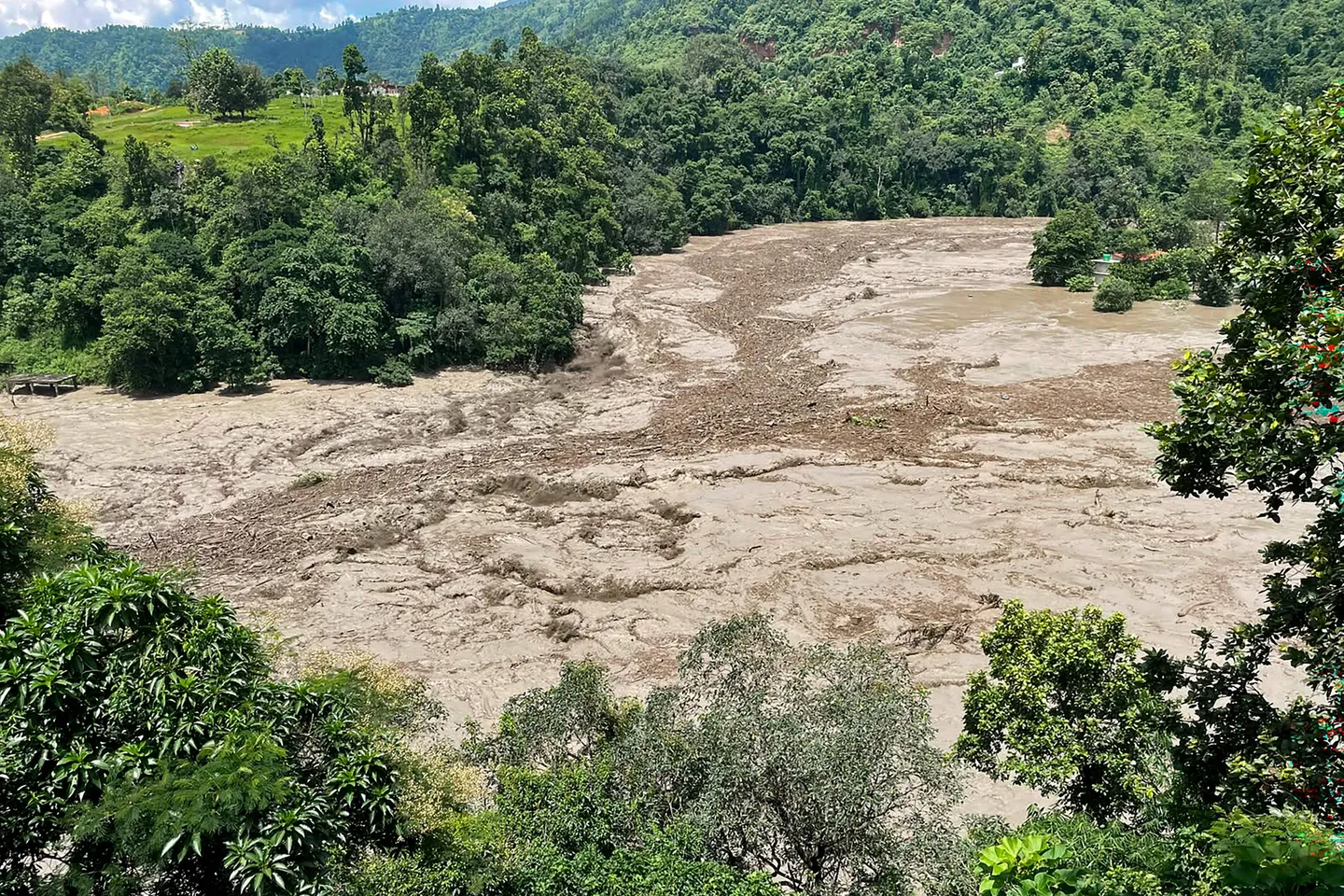
At least eight people have died after massive floods swept through Nepal’s northern Rasuwa district near the border with China.
Nepal Police spokesperson Abi Narayan Kafle said on Wednesday that rescuers had recovered eight bodies and were continuing search operations.
“We do not exactly know the extent of damage, but the flood is big, and it could have damaged many settlements,” Kafle said.
Police images showed floodwater surging through rivers and sweeping away homes, while videos showed torrents of muddy water rushing through mountain valleys.
Chinese state media also reported “major casualties” from a mudslide at a nearby trade hub in Tibet.
At least 384 tourists, including 291 foreigners, were out of contact after flash floods and mudslides struck near the border port with China, according to the Nepal Tourism Board.
Rescue operations under way
Prime Minister Balendra Shah convened an emergency meeting of the National Disaster Risk Reduction and Management Authority to assess the damage.
The Nepal Army deployed helicopters and disaster response personnel to the affected area, while authorities began assessing the extent of the damage.
The Nepal Electricity Authority said the floods damaged facilities representing about 430 megawatts of power generation capacity, including hydropower and solar facilities.








Several highways were also closed, authorities said.
Mudslide hits China border hub
Chinese state broadcaster CCTV reported that a mudslide on the Nepalese side had caused “major casualties” and left people missing at Gyirong Port in Tibet.
Footage broadcast by CCTV showed rushing water carrying tree branches and debris and flooding roads. AFP could not immediately verify the footage.
Chinese state news agency Xinhua said President Xi Jinping had ordered “all-out” rescue operations but did not provide figures for deaths or injuries.
Xi said rescuers should prioritise finding and rescuing missing people, treating the injured and minimising casualties, according to CCTV.
Traffic authorities in Tibet’s Shigatse said roads in the area were at risk of mudslides and unsafe for travel.
In July last year, 17 people went missing after a mudslide near Gyirong Port, Xinhua reported.
Monsoon rains from June to September regularly trigger deadly floods and landslides across South Asia. Scientists say climate change is increasing the frequency and intensity of extreme weather events in the region.