 Yusuf Ozkir
The rapid developments in artificial intelligence are fundamentally changing science, education, industry, media, and communication.
AI is no longer a future technology, but a global force for power and shaping the future.
Journalism, in particular, demonstrates that dealing with AI has become unavoidable – and that it requires clear ethical guidelines.
Problematic cases worldwide, including the debate over AI-generated opinion pieces in Germany, underscore the urgent need for transparency, accountability, and editorial oversight.
At the same time, the dominance of US technology companies in the AI sector has created new dependencies.
Their technical systems are increasingly shaping global knowledge orders, interpretations, and content.
Therefore, countries like China and Türkiye are seeking their own technological alternatives.
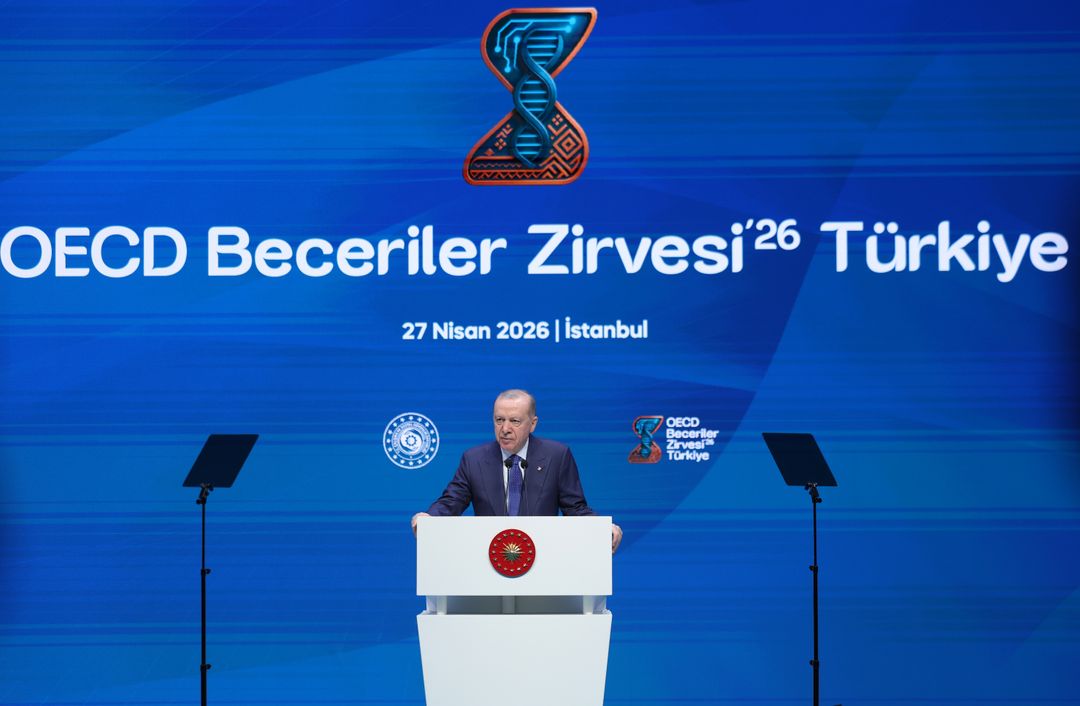
In this context, the Turkish AI Action Plan 2026–2030, announced by President Recep Tayyip Erdogan, represents not only technological modernisation but also digital sovereignty and strategic autonomy.
In the future, data security, efficient governance, economic development, and cultural identity will depend significantly on whether states possess their own AI capabilities.
The two dimensions of the ethical debate
The ethical debate surrounding artificial intelligence has two central dimensions.
The first concerns how written and visual content on globally relevant topics is generated – and to what extent this content is shaped by political, ideological, or cultural perspectives.
A significant ethical problem arises when AI systems, for example, favour certain interpretive frameworks on topics such as Zionism or Israeli interests and present these as objective information without disclosing their underlying assumptions.
This is particularly problematic for journalists, newsrooms, and individual users because they must identify, verify, and filter out such algorithmically embedded biases.
This not only creates additional work but also erodes trust in the neutrality and reliability of AI systems.
The fact that more and more users worldwide are criticising such biases shows that the ethical standards set by large technology companies have themselves become the subject of fundamental criticism.
The second dimension directly concerns the media industry.
Here, the focus is on how journalistic content is created, the extent to which AI may be used in news, commentary, or guest articles, and where journalistic responsibility begins.
The fact that similar issues are being discussed in various countries demonstrates, on the one hand, the need for common rules for transparency, oversight, and labelling.
On the other hand, it also highlights that while AI can facilitate journalistic work, it can simultaneously exacerbate existing weaknesses in addressing truth, responsibility, and manipulation.








Recent cases in Germany exemplify the significant challenges journalism faces from AI.
For instance, the "Jüdische Allgemeine" deleted two opinion pieces by former "Tagesspiegel" publisher and editor-in-chief Stephan-Andreas Casdorff after they were suspected of being generated using AI.
Editor-in-Chief Philipp Peyman Engel subsequently announced stricter rules for the use of AI. In particular, editorials and commentaries will be more closely scrutinised to determine whether they were written by humans or generated using AI.
The Frankfurter Allgemeine Zeitung also removed a guest article by Thuringian Minister-President Mario Voigt from its website after doubts arose regarding its authorship and the use of AI.
According to research by Die Zeit, several guest articles published under the name of Digital Minister Karsten Wildberger were also problematic.
After it became clear that these texts were not written by the stated authors or their teams, publications such as Handelsblatt and the Frankfurter Allgemeine Sonntagszeitung removed the articles from their websites.
However, it would be misleading to view these cases as a purely German problem. AI-generated comments, guest articles, and journalistic content have long been a global phenomenon.
Without clear countermeasures, distinguishing between authentic and AI-generated content could become increasingly difficult.
Therefore, press associations and media organisations in Germany and other countries are increasingly addressing this issue. At the heart of the debate are three fundamental questions: transparency, editorial responsibility, and reader trust.
AI and the rationality of journalism
The use of AI is now part of everyday journalistic practice – from research and image and video editing to text production.
However, it is crucial that this use remains bound to clear ethical standards. Without transparency, editorial oversight, and professional expertise, AI risks exacerbating existing problems such as disinformation, manipulation, and loss of trust.
Therefore, AI-generated or AI-supported content must be carefully reviewed before publication and, where necessary, clearly identified to the public.
The German Press Council also emphasises that it is not only the extent of AI use that is decisive, but also adherence to fundamental journalistic principles such as diligence, truthfulness, responsibility, and transparency.

Ultimately, the responsibility always remains with humans.
AI can make mistakes, fabricate information, or produce superficial content. Journalists must therefore give precise instructions, verify results, and imbue the text with their own interpretation, style, and perspective.
Protecting user data also remains crucial. If AI is deliberately used for manipulation or disinformation, the ethical debate ends—legal responsibility begins.
This article was first published on TRT DEUTSCH