 Kazim Alam
Türkiye’s participation banking sector, which operates on the interest-free principles of Islamic finance, is set for a major boost due to the proposed merger of three state-owned banks.
President Recep Tayyip Erdogan recently announced the merger of Ziraat Katilim, Vakif Katilim, and Halk Katilim into a combined entity to serve customers seeking interest-free banking.
“With their forces combined, the sector will gain a different momentum,” he said, while addressing the third World Islamic Economy Summit in Istanbul.
Participation banking – where lenders share profit and loss with their customers in line with the principles of Islamic finance – accounts for roughly 9.5 percent of total banking assets in the country.
The three soon-to-be-merged banks collectively hold a share of about 36 percent in total participation banking assets.
Fitch Ratings, one of the three premier global institutions that assess the creditworthiness of corporate and government entities, has described the proposed consolidation in favourable terms.
“The merged entity could achieve stronger standalone creditworthiness through greater scale and a potentially stronger combined franchise, as it would become Türkiye’s largest participation bank,” it said in a recent note to its clients.
In addition to banning interest, participation banking also prohibits gambling and gharar, which refers to excessive risk in a transaction that may create room for unfair advantage or potential deceit.
Practised under different names across the world, including Western countries, participation banking is gaining massive popularity because of its ethical foundation, greater transparency, and anti-speculative nature.
However, participation banking is more popular in countries with large Muslim populations as it allows lenders and borrowers to conduct banking without riba or interest.
Under Islamic jurisprudence, interest is inherently exploitative because the lender is always guaranteed a fixed profit regardless of the borrower's repayment capacity.
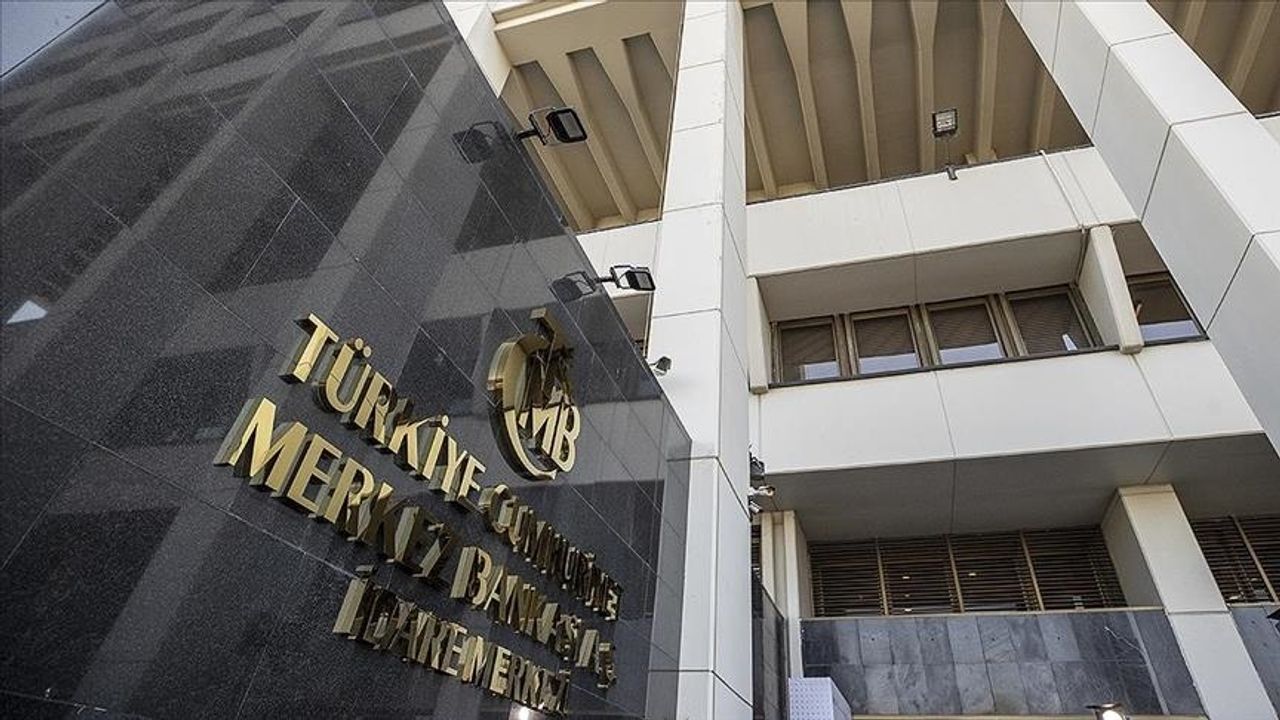
Experts say the merger of the three Turkish banks can deliver long-lasting benefits despite likely integration hurdles in the beginning.
Baris Alpaslan, a professor of economics at the Social Sciences University of Ankara, tells TRT World that the core opportunity lies in economies of scale that larger institutions naturally unlock.
“Larger financial institutions can spread fixed costs over a broader asset base, reduce administrative duplication, strengthen their capital position, and improve operational efficiency,” he says.
A substantially larger balance sheet will also expand the lending capacity for major infrastructure projects, export-oriented investments, and long-term development initiatives – tasks that smaller participation banks often find difficult to support on their own, he adds.
Alpaslan says there will be a huge potential for greater investment in digital transformation, data analytics, and product innovation, which require significant upfront resources.
Zeyneb Hafsa Orhan, a professor in the Islamic economics and finance department of Istanbul Sabahattin Zaim University, tells TRT World that the existence of multiple public participation banks has tended to divide the sector’s potential rather than expand it.
Their merger will allow the sector to claim larger overall shares instead of smaller, fragmented pieces, she says.
“(The consolidation) can also decrease the harmful competition for customers and employees,” she says.
An immediate and tangible gain, Orhan says, will be the growth in the size of assets.
Cost efficiencies are expected to appear relatively quickly through streamlined branches, staff, and IT systems, reinforced by economies of scale, she says.
A larger bank will also have more opportunities for diversification, which reduces risks, she notes.
Combining the expertise and resources of three state-owned banks will accelerate product innovation in areas such as digitisation and SME financing.



The way forward is paved with challenges
Experts say that integrating three state-owned institutions will not be effortless, given a host of technological, cultural, and operational challenges.
Alpaslan identifies the alignment of different operational structures, legacy IT systems, risk management practices, and organisational cultures as typical challenges in any large banking consolidation process.
The new institution will have to strike a careful balance between commercial objectives and public policy priorities, given the state-owned nature of the three merged entities, he says.
Orhan also acknowledges the challenges ahead, pointing to different decision-making mechanisms, institutional cultures, human resource practices, and IT systems across the three banks.
Building a unified brand and customer relationship management system will take time, as will managing operational risks and regulatory compliance, she says.
Yet both experts insist that these challenges are manageable, standard issues rather than insurmountable barriers.
Alpaslan notes that the process for legal consolidation is likely to proceed relatively quickly, with full operational integration – such as unified IT infrastructure and organisational restructuring – realistically requiring three to five years.
But Orhan expects “full consolidation” will likely take one to two years given the operational risks and the regulatory compliance processes.

Will merger be bad for competition?
As for competition and customer benefits following the consolidation of the three public participation banks, the experts see more opportunities than drawbacks.
Alpaslan says that while consolidation improves organisational efficiency, it can also increase the risks of market concentration.
The key is whether efficiency gains are passed on through lower financing costs and better services, while the new entity competes vigorously with private participation banks and conventional players, he notes.
Orhan says that dominance by the merged bank does not automatically equate to a monopoly.
Instead, it may encourage other participants to raise their game, she insists.
She stops short of predicting immediate price reductions, noting that participation banks still operate in a market where conventional banks heavily influence pricing.
However, she foresees scope for improved offerings and overall sector vitality.
Both experts view the merger as an important building block for Türkiye’s broader ambition to emerge as a regional hub for Islamic finance.
Orhan says that for the merged bank to help Türkiye strengthen its global reputation as a home for Islamic finance, policymakers must ensure that regulations are tailored to participation banking and sustain efforts to improve public perception of Islamic finance products.
Alpaslan foresees the combined entity participating more actively in large syndicated financings, expanding sukuk (Islamic bond) issuance, and deepening financial links with Gulf economies, thereby boosting international visibility.
“The merger may be a necessary step… but it is not by itself sufficient to transform Türkiye into a leading regional centre for Islamic finance,” he says.