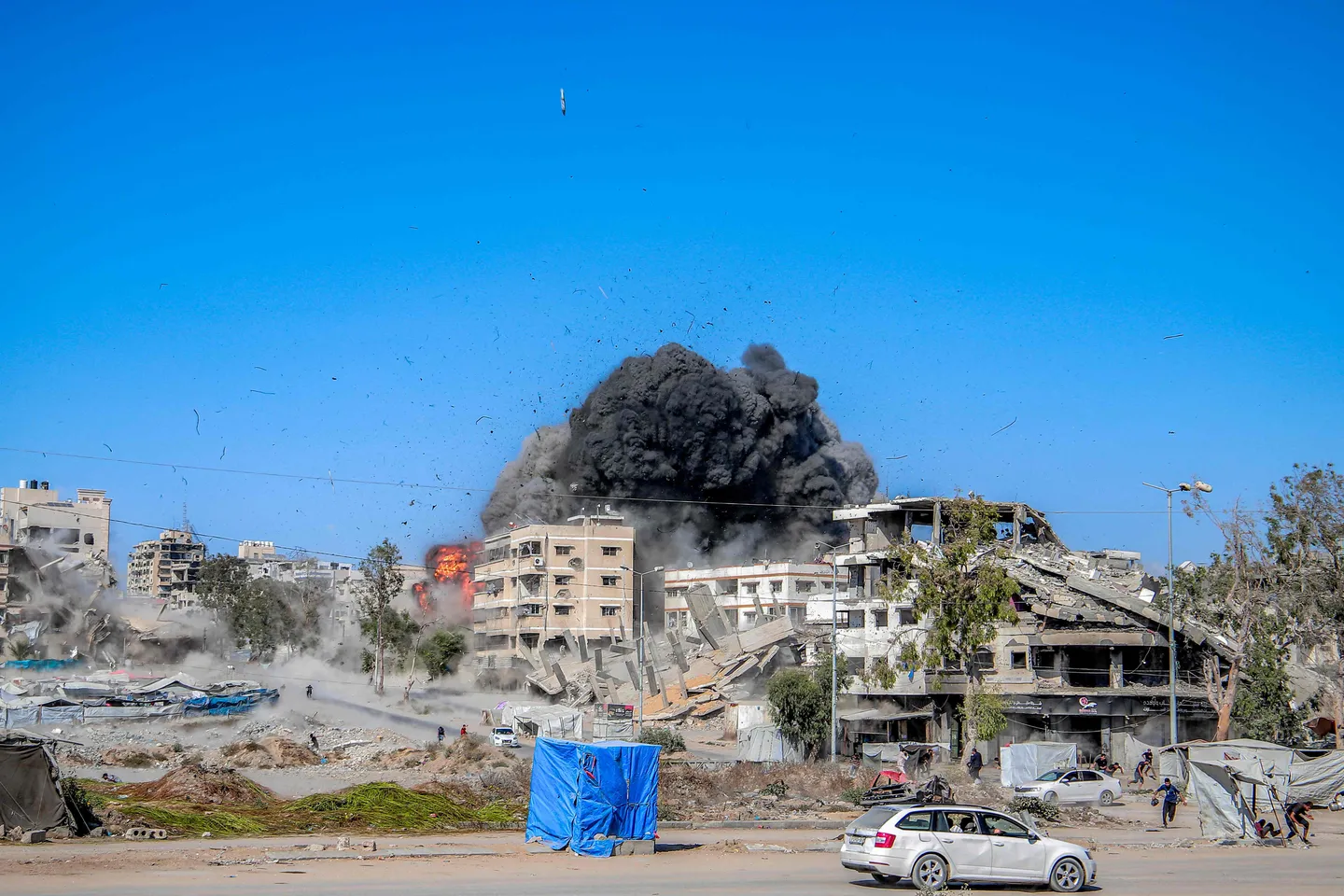
Israel’s Security Cabinet approved the deployment of the Board of Peace’s International Stabilisation Force (ISF) in Gaza under US President Donald Trump’s plan, according to Israeli media, even as some Israeli ministers voice opposition or hesitation.
The ISF is one of four bodies established to administer Gaza under Trump’s plan, which was endorsed by the UN Security Council through Resolution 2803 on November 17, 2025.
“The Cabinet approved the entry into Gaza of a multinational force affiliated with the Board of Peace,” the Israel Hayom newspaper reported on Sunday.
National Security Minister Itamar Ben-Gvir voted against the decision, opposing the Cabinet majority, it added.
Foreign Minister Gideon Sa’ar responded during the meeting that it was “an international plan", adding, "We may not succeed, but we should not be the ones to derail it,” the newspaper reported.
Israel’s public broadcaster KAN said the cabinet's approval effectively gives the green light to begin establishing a headquarters for the force near the southern Gaza city of Rafah.
‘Critical part’
In a statement on X, the Board of Peace’s lead envoy for Gaza, Nickolay Mladenov, welcomed Israel’s steps to facilitate the ISF deployment in Gaza under UN Security Council Resolution 2803.
Mladenov called it “a critical part” of the agreed framework for stabilising and demilitarising the enclave and enabling a transition to “effective Palestinian transitional administration” under the National Committee for the Administration of Gaza.
He said the focus should now be on advancing Trump’s 20-point Gaza plan, including implementing the roadmap presented by the mediators.
Israel’s Channel 12, citing an unnamed Israeli political source, said the Security Cabinet had approved the entry of the Board of Peace and international forces into Gaza, in coordination with the Israeli army, in areas outside the “Yellow Line".
The “Yellow Line” is an imaginary boundary established under the October 2025 ceasefire understandings and marked by yellow concrete blocks. It separates areas from which the Israeli army has withdrawn from those it continues to occupy, which constitute around 70 percent of Gaza.


“Israel alone is authorised to approve which countries may send forces to Gaza,” the source claimed.
Separately, Yedioth Ahronoth, citing another unnamed political source, said Tel Aviv insisted on maintaining control over the “Yellow Line” area unless Hamas was disarmed.
“The entry of any international forces into Gaza requires separate approval from the prime minister and the defence and foreign ministers,” the source claimed.
Hamas fulfills obligations
The Palestinian resistance group Hamas says continued demands for its disarmament while bypassing Israel’s obligations under the first phase of the ceasefire agreement contradict Trump’s Gaza plan.
While Hamas fulfilled its first-phase obligations by releasing Israeli captives, Israel has continued its attacks and restricted the entry of humanitarian assistance.
The agreement’s second phase includes a broader Israeli military withdrawal and Gaza’s reconstruction alongside the start of the disarmament of Palestinian factions. Israel, however, insists that disarmament must come first.
Trump’s plan calls for the US to work with Arab and international partners to establish a temporary international stabilisation force for immediate deployment in Gaza.
The force would train and support Palestinian police officers in the enclave and consult Egypt and Jordan, which the plan says have extensive experience in the field.
It would also work with Israel and Egypt to secure border areas, prevent weapons from entering Gaza and facilitate the rapid and safe flow of goods, according to the plan.