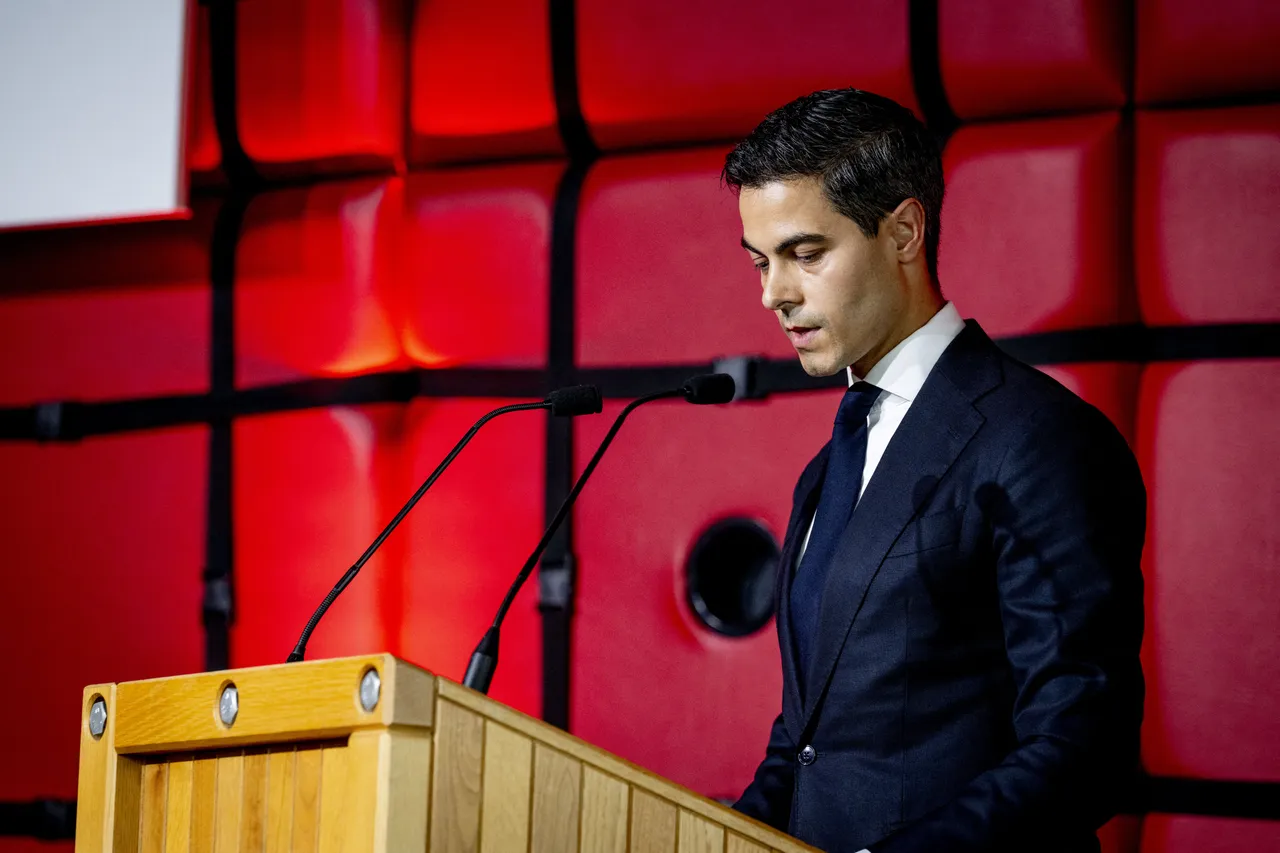
Dutch Prime Minister Rob Jetten on Sunday issued a formal state apology to members of the Moluccan community for their decades-long mistreatment by the Netherlands after Indonesia gained independence from colonial rule.
Many Moluccans, from the so-called "Spice Islands" in eastern Indonesia, fought for the Dutch colonial army during the post-Second World War struggle for independence.
After Indonesia gained independence in 1949, around 12,500 Moluccans were brought to the Netherlands in a state-organised transfer to escape reprisals.
They were supposed to stay only briefly before returning to an independent country, as part of negotiations between the Dutch government and Indonesia at the time.
However, the Dutch reneged on their promise to repatriate them, and they were housed in dire conditions, with little effort made to find them employment or integrate them into wider Dutch society.
Unveiling a monument to commemorate that dark period of Dutch history, a visibly moved Jetten told hundreds of Moluccans gathered in Rotterdam that it was "high time" to apologise.
"For the inadequate reception and housing. For being unseen and abandoned. For the unfulfilled longing for home. And for the grief and pain in so many families. For this, I offer my apologies today on behalf of the Dutch government," said Jetten.




The Ulu Kora monument was unveiled on the Lloydkade in Rotterdam, where the first ships transporting Moluccans arrived in the Dutch port.

Those who had served in the army were immediately discharged, and many were sent to former concentration camps that had been used to detain Jews in the Nazi-occupied Netherlands.
The 1970s saw a number of violent actions by second-generation Moluccans, who felt betrayed by the Dutch for failing to secure their independent homeland.
"I realise the injustice cannot be suddenly removed with apologies. We cannot change the course of history and the reality of today with a few sentences," said Jetten.
"But I do hope that the words I have just spoken are perceived as a form of recognition and an act of historical justice for you," he told members of the community, many of them clutching family photographs of first-generation Moluccans who have since died.