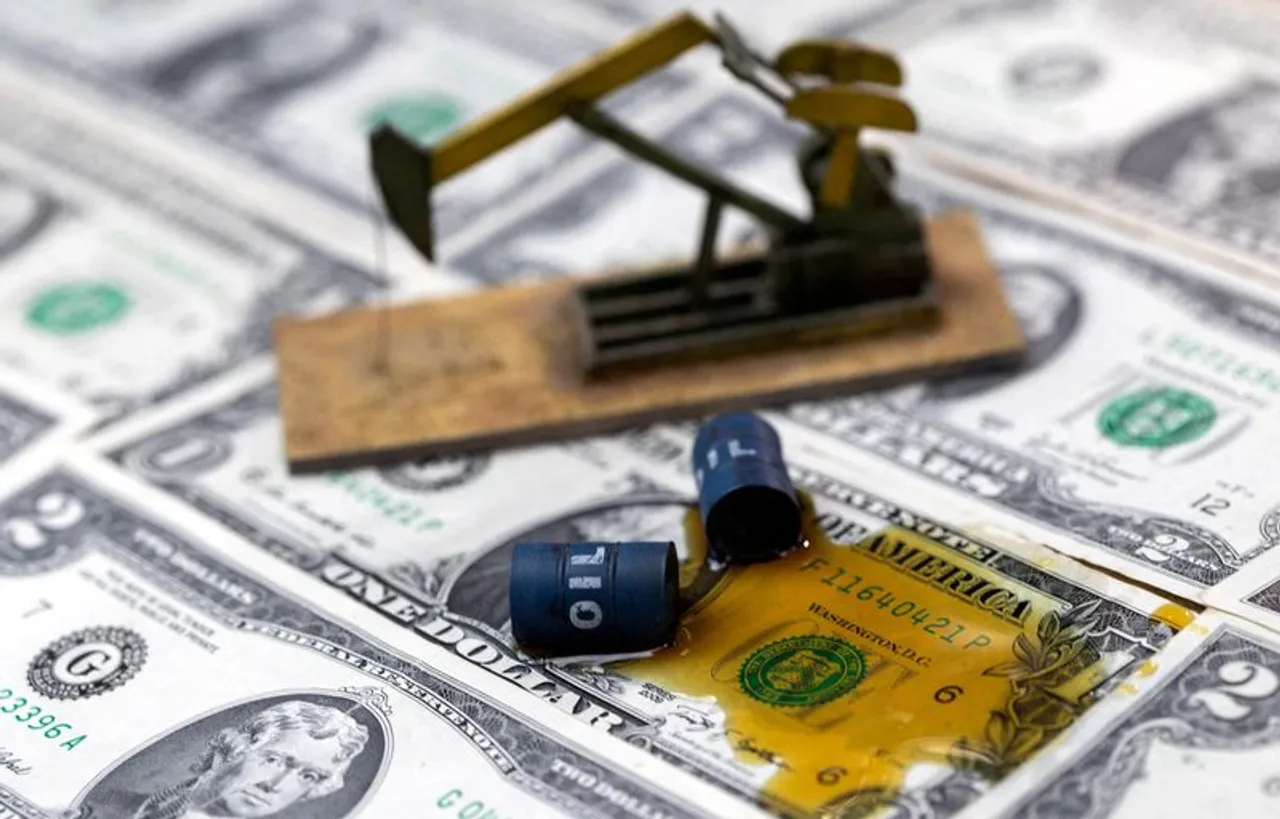
Every few weeks, heavily guarded cargo planes depart from the United States carrying shrink-wrapped pallets of $100 notes destined for the Central Bank of Iraq in Baghdad.
But now the US has halted this, citing “Iraq’s failure to prevent weeks of Iran-backed militia attacks on American facilities in Iraq and neighbouring countries."
Washington says halting the US dollar shipments and pausing security cooperation programmes with Iraq’s military is an effort to dismantle “Iranian-backed militias", the Wall Street Journal reported on Tuesday.
This was reportedly the second planned dollar transfer to Iraq’s central bank that Washington had postponed since the US-Israel war began on February 28, and Tehran retaliated with strikes on Israel, and also attacked the Gulf countries hosting US military and financial assets.
Some armed groups in Iraq claimed daily attacks on "enemy bases" in the country and the wider region, but later suspended their actions after the announcement of a ceasefire between the US and Iran.
“The Iraqi government’s failure to prevent these attacks while some elements associated with the Iraqi government continue to actively provide political, financial and operational cover for the militias adversely impacts the US-Iraq relationship,” State Department spokesperson Tommy Pigott said.
When did the US start shipping dollars?
The practice, which dates back to the aftermath of the 2003 US invasion, continues to this day as Iraq remains one of the world’s most dollarised economies.
Oil sales, which fund roughly 90-95 percent of the Iraqi government budget, are paid in US dollars and deposited into accounts at the Federal Reserve Bank of New York.
When Baghdad needs liquidity for salaries, pensions, imports and currency auctions to support the Iraqi dinar, physical banknotes are flown in.
The United States, since its 2003 invasion of Iraq, has held effective control over the country's oil revenue dollars, giving Washington extraordinary leverage over Baghdad's affairs.

How does the US control Iraq's oil revenues?
The US control over Iraq's oil revenues primarily stems from the management of Iraq's oil income through the Federal Reserve Bank of New York.
After the 2003 invasion, the Coalition Provisional Authority (CPA), led by the US, established the Development Fund for Iraq (DFI), which was held at the New York Fed.
The then-President George Bush signed an executive order, which has been renewed by every president since, that set up the arrangement.
The DFI eventually became an account of the Central Bank of Iraq at the New York Federal Reserve.
Dollar auctions
The US withdrew its combat troops from Iraq in December 2011 but maintained a contingent of 2,500 soldiers for what Washington describes as “training and advising Iraqi forces".
When the Iraqi government asked US troops to leave the country in 2020, Washington reportedly threatened to cut Iraq's access to the New York Federal Reserve funds, with Baghdad ultimately backing down, Reuters reported.
Iraq has historically used dollar auctions, formally known as the foreign currency window, as the main mechanism to supply dollars.
Private banks and exchange houses could bid daily to purchase US dollars using Iraqi dinars.
Iraq formally ended the auction system at the beginning of 2025 after significant US pressure, part of a broad crackdown on alleged syphoning of dollars to sanctioned entities, especially Iran.