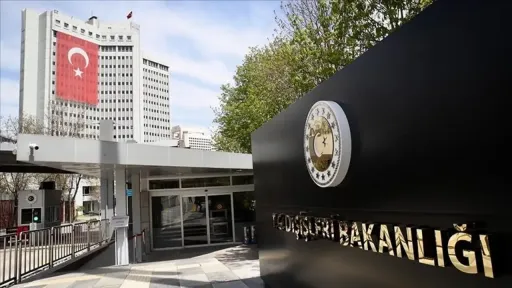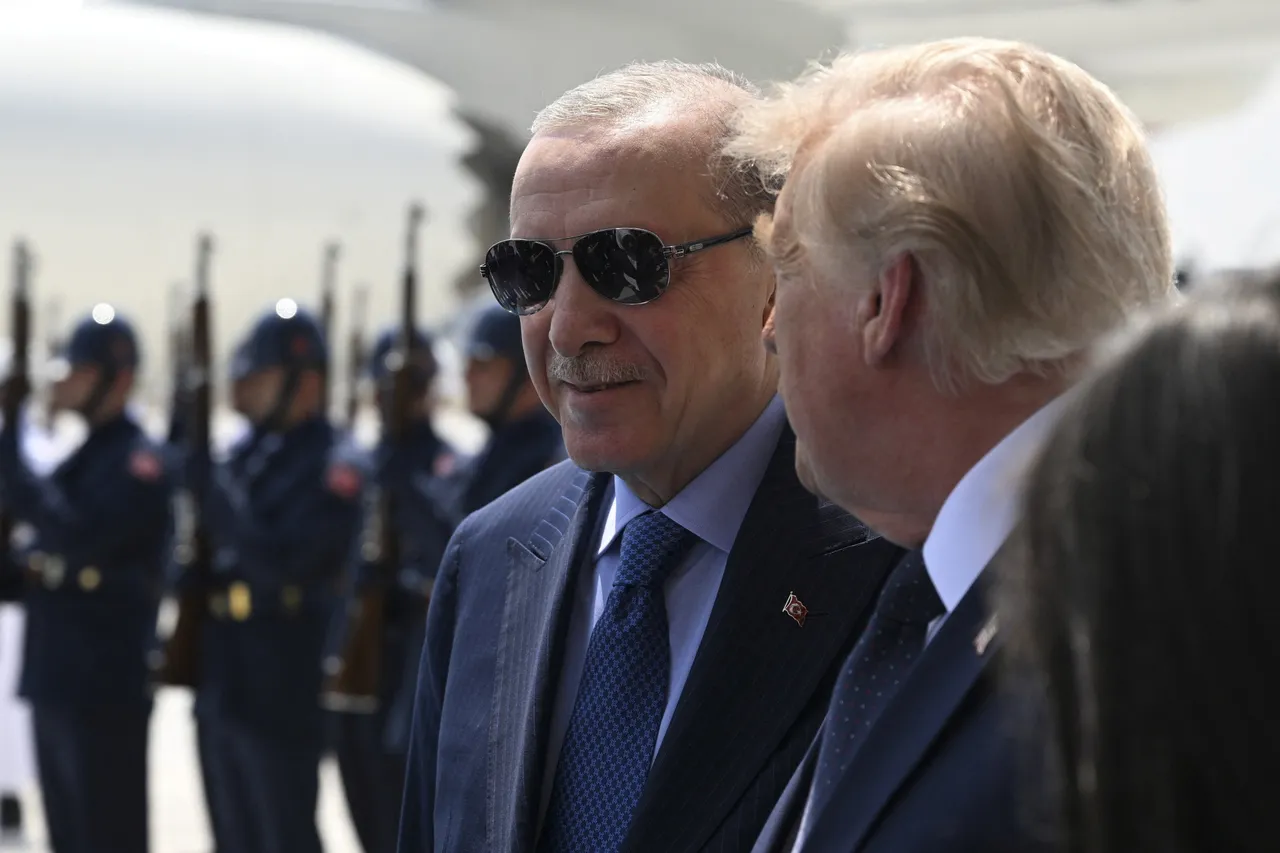
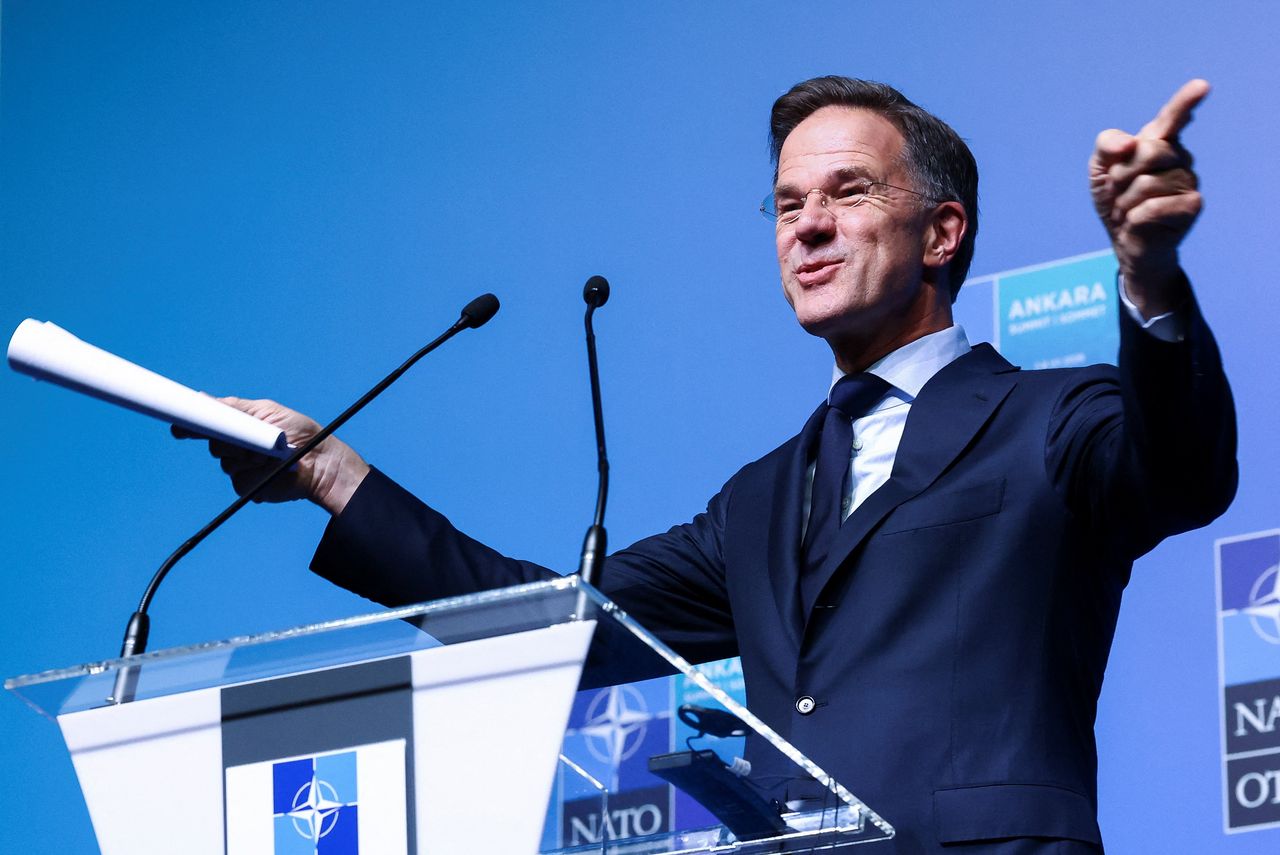
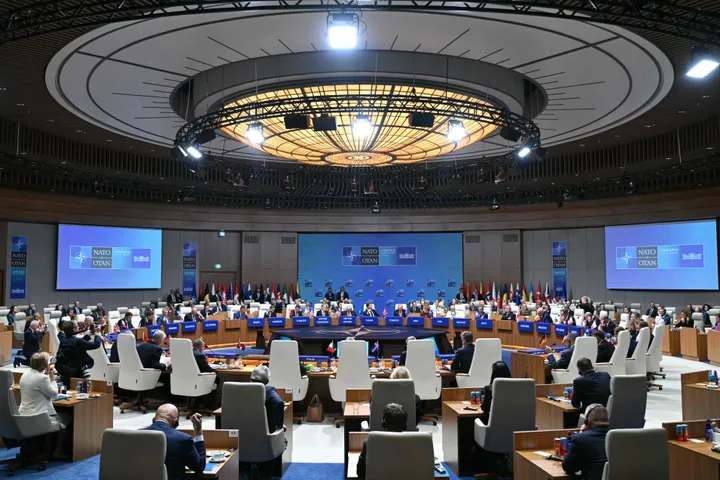
The Turkish capital, Ankara is hosting the 2026 NATO Summit of heads of state and government this week.
This is only the second NATO Summit – after Istanbul 2004 – in the country, which has been a stalwart member of the North Atlantic Alliance since officially joining on 18 February 1952.
A nation that retains the alliance’s second-largest and most conventionally capable armed forces after the United States.
Amid global disruptions, 32 NATO countries, along with leaders from non-NATO partners South Korea, Japan, and Ukraine, are meeting for two days in Türkiye to discuss NATO’s future.
While the summit's high profile attests to Türkiye's central and increasingly vital role within NATO, some have questioned the country’s long-standing commitment to the alliance.
It should be noted that much of the recent criticism against Türkiye’s crucial role in NATO comes from supporters of a non-NATO, non-European country that shows no regard for international norms.
Still, let us entertain the question: How deep and strong is Türkiye’s commitment to NATO?
A quick look at Türkiye’s NATO history shows its long-standing commitment, from the organisation's founding through the Cold War to today’s uncertain world, reflecting its dedication to a free transatlantic world.
Perhaps the strongest evidence of Türkiye's NATO commitments is on the Korean Peninsula, where Turkish soldiers fought under US-led UN command before joining NATO.
NATO, Türkiye, and the Korean War
After World War II, as Europe was at risk of succumbing to yet another totalitarian regime, the US, UK, and 10 Western European and North Atlantic nations signed the North Atlantic Treaty in April 1949.
The first kinetic security challenge to the treaty alliance came, however, from distant Korea in the summer of 1950, when Soviet-backed North Korea invaded American-backed South Korea, even though post-war global peace had come.
The Soviet Union trained and equipped the Chinese People's Liberation Army (PLA), which fought the American and allied militaries to a standstill in the Korean War.
This was a rude awakening for Western policymakers, showing that conventional military power alone would be insufficient to deter the Soviet Union from deploying its vast tank armies across Europe.
This realisation fundamentally shaped Western strategic thinking in two ways:
On the one hand, it reinforced the importance of nuclear deterrence through the doctrine of "massive retaliation", which remained the cornerstone of US military strategy toward the Soviet Union.
On the other hand, it underscored the need to transform NATO from a defence alliance into a permanent defence organisation.
This meant creating an integrated military command structure that brought together forces from all member states under a unified chain of command.
The same Seventh Session of the North Atlantic Council (NAC) in Canada’s capital, Ottawa, in September 1951, which first defined NATO as an “organisation”, also decided to invite Türkiye and Greece, both with combat forces fighting in the Korean War, to join the Alliance.
The decision was officially announced to the world at NAC’s next Eighth Session in Rome, two months later.
In this sense, the two countries have been NATO members since it became an organisation, and Türkiye has never left NATO's integrated command structure, unlike France and Greece.
Türkiye on the Mediterranean and Norway on NATO’s northern flank were the only two NATO members during the Cold War that bordered the Soviet Union.
Türkiye’s road to NATO
But why did the young Turkish Republic decide to join the Korean War on the American side, after staying out of World War II?
Türkiye's decision was shaped by two factors: a shared fear of the Soviet threat and the young Republic's desire to align itself with the transatlantic community and the United Nations.
At the time, Türkiye was under pressure from Stalin's Soviet Union, which posed a direct threat from the north and east.
The country, therefore, urgently needed NATO’s collective security guarantee.
Initially, the US and UK hesitated to admit Türkiye or Greece to NATO in 1949-50, seeing them as liabilities rather than assets for defending Western Europe.
Türkiye and Greece made their first Cold War military deployment during the Korean War, convincing Western leaders they would support NATO and enhance transatlantic peace and security.
Since the alliance's early days, the Turkish Armed Forces (TAF) have reliably met all NATO challenges, including the Cold War's first hot turn in Korea 76 summers ago.
Türkiye and 14 other nations in the US-led “16-nation alliance” believed in the United Nations' goal of lasting global peace, especially after six years of savage war in a world seeking stability.
Seventy-six years from this exact day of the beginning of the NATO Summit in Ankara,on July 7, 1950, the UNSC, via Resolution 84, created the United Nations Command (UNC) under US military leadership to prevent forced changes to borders and governments.
Recognising that the invasion of South Korea could undermine the entire post-WWII liberal international order, Türkiye was among the first countries to commit.
Then-Turkish Prime Minister Adnan Menderes ordered emergency preparations even before parliamentary approval.
The Turkish Brigade became the first non-US/non-UK unit to arrive on the Korean Peninsula between October 17 and 19, 1950, and it would again be the first such unit to engage in combat operations a month later.
The commander of the first Turkish Brigade would be Brigadier General Tahsin Yazici, an Ottoman Macedonia-born pioneer of Turkish tank warfare and a veteran of World War I and the Turkish War of Independence.
Türkiye fought valiantly
Fighting under the UNC was the closest NATO countries ever got to fighting under NATO command, i.e., under an integrated US-led command during the Cold War.
Sending the Turkish Brigade to the Korean Peninsula marked Türkiye’s first overseas military deployment during the Republican era.
Initially fighting under the US Army’s 2nd Infantry Division “Indianhead” and later under the 25th Infantry Division “Tropic Lightning”, both of the Eighth United States Army, the brigade, with its “North Star” insignia-shoulder patch, was the only NATO brigade-level contributor to Korea besides the US, UK, and Canada.
Other NATO members sent only battalion-level units.
Only the UK among NATO European allies contributed a force with clear strategic significance to the war; the Turkish Brigade of the UNC in Korea also had a strategic impact by altering the course of operations across multiple battles, including the first encounter with Chinese forces during the Battle of the Chongchon River (Nov-Dec 1950).
At the Battle of Kunuri-Wawon, part of the wider Chongchon River engagement that ultimately ended in a UN Command rout and the longest military retreat in American military history all the way south of Seoul, the freshly constituted and hastily trained brigade conducted a legendary fighting retreat and delaying action against entire Chinese PLA divisions.
Fighting for three days through heavy snow, icy winds, and temperatures that plunged to -40°C during the winter of 1950, the brigade’s actions prevented US Eighth Army from being completely outflanked and potentially destroyed.
General Ridgway took command of the US Eighth Army a month later and finally launched the counter-offensive Operation Thunderbolt.
During the Battle of Kumyanjangni (25-27 Jan 1951) in the early part of that operation, the Turkish Brigade was among the first UNC units to push back Chinese defences, dispelling the myth of the “Red hordes’” invincibility.
During the static phase from summer 1951 to July 1953, the brigade fought on the sun-baked ridges of the “Nevada Complex" on the Jamestown Line of UNC defences north of the Imjin River, facing immense Chinese PLA pressure to strong-arm armistice negotiations.
All in all, the Turkish Brigades deployed to the Korean Peninsula fought valiantly, and their efforts were recognised with a US Presidential Unit Citation for the action at Kumyanjang-ni, among many other US, UN, and Republic of Korea battle honours.
Fighting side by side with NATO allies also introduced many firsts into the Turkish military's operational art.
The Korean Peninsula was where TAF units carried out offensive mechanised infantry operations and, for the first time, trained in defensive anti-tank tactics using recoilless rifles and the new American 3.5-inch M20 “Super Bazooka” rocket launchers.
NATO allies in the UNC also learned from the Turkish Brigade.
For instance, the performance of Turkish prisoners of war (POWs) in Communist Chinese and North Korean captivity impressed all allied nations, particularly Americans, who were troubled by the poor conduct of their own POWs in captivity.
Turkish POWs uniquely avoided losing any prisoners to disease or defection.
Their conduct, studied after their exchange at war's end, influenced US military training innovations, including the 1955 “Code of the U.S Fighting Force” and new SERE courses designed to improve prisoner survivability and loyalty.
Today largely forgotten outside Korea, the Korean War was “the most bitterly contested of all Cold War battlegrounds”, according to an American doyen of Cold War History, John Lewis Gaddis. (We Now Know. 1997).
The war left the Korean Peninsula in ruins and killed more than three million people, most of them civilians.
On the military side, Türkiye became the fourth-largest force contributor to the UNC after the US, UK, and Canada, rotating more than 20,000 troops through Korea during the war.
The Turks had the third-highest casualties after the US and Britain, with around 900 soldiers killed or missing and more than 2,100 wounded.
The Korean War was the costliest conventional conflict for the US and UK since WWII, and for Türkiye since World War I and the War of Independence.
Lastly, Türkiye was the second-to-last NATO country –slightly ahead of the UK– to withdraw troops from the Korean Peninsula, only in 1957, leaving a small liaison group for another decade and a half. The US still retains the US Eighth Army in Korea under United States Forces Korea (USFK).
Fighting in Korean War provided invaluable experience for both sides – Türkiye and NATO – in conducting joint operations.
This would only be supplemented by multinational exercises that had just been set in motion in Europe, thanks to the alarmed momentum generated by Korea.
The first multinational NATO exercises were held across Europe in late 1952 under the command of the second SACEUR Matthew Ridgway, who had just returned from the top command of the UNC in Korea.
The Turkish military participated in NATO’s earliest exercises, Longstep (1952) and Weldfast (1953), and has since engaged in numerous drills to bolster joint capabilities and deter adversaries.
The latest was Steadfast Dart 2026 near Germany, the year's largest NATO exercise so far.
Beyond the Korean War, NATO's first post-Cold War combat deployments with Türkiye's key role since 1991 included Bosnia, Kosovo (Turkish Major General Ozkan Ulutas currently commands KFOR), Afghanistan's ISAF, and naval ops like Operation Active Endeavour (2001-2006) aiming to maintain safe shipping, and Operation Ocean Shield (2009-2016) against piracy near the Horn of Africa.
‘Century of Türkiye’
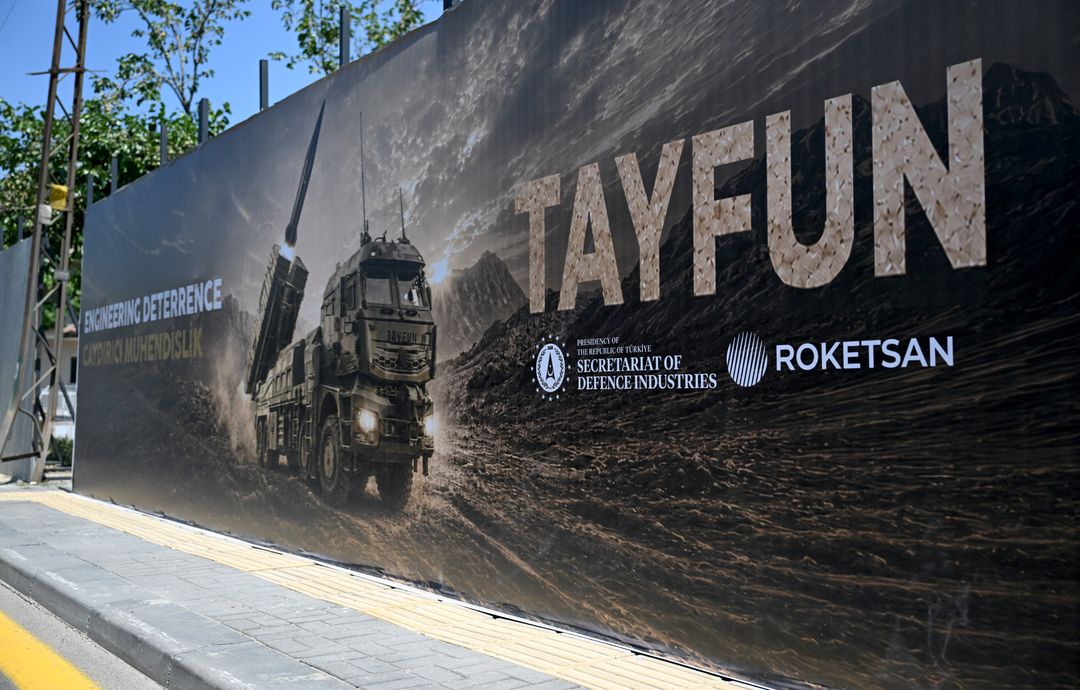
NATO membership benefited Türkiye throughout the Cold War. NATO standards and procurement helped Türkiye's burgeoning defence industries to take off in the twentieth century.
Now, in the twenty-first century, the Turkish nation is confident in a “Century of Türkiye.”
With recent operational successes, the Turkish defence industries and armed forces are prepared to be a key pillar of NATO, the transatlantic community, and European security, leading in technology, tactics, operations, and doctrine.
On the Korean and Indo-Pacific fronts, the Armistice of July 27, 1953, remains a living document because the conflict ended with an armistice rather than a proper peace agreement.
The North-South conflict in Korea still poses a threat to global security as the largest and most intractable of all “frozen conflicts” today, and Türkiye still remains a member of UNC, along with five other European NATO member states.
Korea was the distant field where Türkiye's alliance commitment and military mettle were tested. Turkish troops still lying on the ground of the distant Korean Peninsula are witnesses to the Turkish commitment to NATO and the transatlantic alliance.
While the biggest group –462 men– rests at the UN Memorial Cemetery in Korea in Pusan, South Korea, there are still more than 100 MIA lying presumably on the North Korean side.