 Ansam Elkattaa
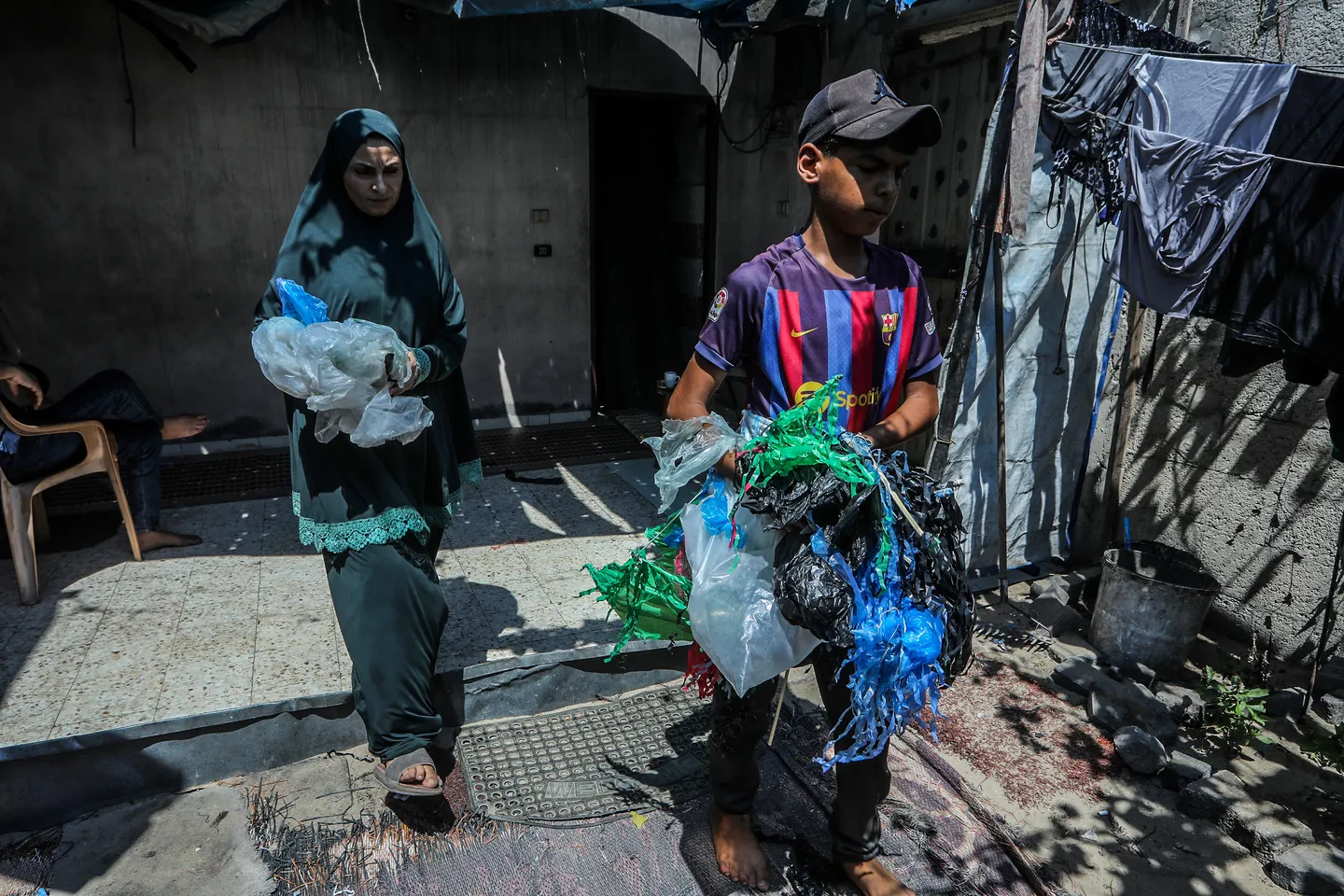
Abdul-Hadi Arafat, an 11-year-old displaced from Gaza City’s Zeitoun neighbourhood, loved gathering wooden sticks, nylon bags and string to make kites.
It kept him busy and brought joy not only to him but to other children around him, his mother, Salwa Arafat, tells TRT World.
“What made him happiest was watching a child run through the neighbourhood flying something he had built himself,” she says.
But after Israel’s Defence Minister Israel Katz ordered the military on August 23 to “act immediately and forcefully” against kites, balloons or drones launched from Gaza, something as ordinary as flying a kite became a source of fear.
The order came after four kites flown from Gaza drifted into the Israeli kibbutz of Nahal Oz. The Israeli military had previously said no suspicious materials were found attached to kites flown from Gaza, according to Haaretz.
For generations, kite flying has been one of Gaza’s most familiar childhood pastimes. In July 2011, children in the enclave set a Guinness World Record for the most kites flown simultaneously.
Fifteen years later, children are tearing their kites apart for fear that flying them could make them targets.
“[Israel’s] ban changed what the kite meant to him,” Salwa says.
“His father asked him to get rid of them. He sat and tore them apart, crying, feeling like he was losing the last thing he had left to play with.”
Eight-year-old Mohamed Mostapha also destroyed his kite, afraid Israeli forces would target him if they saw him flying it.
His grandmother, Kariman Abu Ras, says the order terrified a child already living with the consequences of more than two years of war.
“It’s terrifying for our children,” Abu Ras, 66, tells TRT World.
“Having already been denied schools, safe spaces and parks, they no longer have many options left for simply being children.”
“Our children have been deprived of their childhood,” she says.
A day after Katz’s order, Gaza’s “popular committees”, representatives of local non-profit organisations and charities operating displacement camps and shelters, coordinated with Hamas authorities to urge parents to stop their children from flying kites.
They said the request was made “not to restrict the childhood of our children, who have already been deprived of the most basic rights to play and live in safety, but to protect their innocent lives”.
‘Toys are banned’
Muhammad Ahmad al-Mufti was among the children whose reaction was captured on camera.
Sitting on rubble-strewn ground, tears streaming down his face, he ripped apart his kites. Millions watched the video online. His father had already been killed earlier in the war.
For Palestinian rights groups, scenes of children destroying their toys illustrate why the threat against kite flyers has raised concerns beyond the loss of another childhood pastime.
Alaa Skafi, director of the Al-Dameer Foundation for Human Rights, says statements from Israeli military leaders threatening action against kite launchers raise grave concerns when many of those flying them are children already deprived of recreation and safe spaces.
“This is a call to kill children,” Skafi tells TRT World.
Such statements risk turning civilian children into targets, he says, undermining the distinction between civilians and combatants.
Skafi points to Article 77 of Additional Protocol I to the Geneva Conventions, which sets out special protections for children in armed conflict — protections he says such threats are incompatible with.
The loss of kite flying is only the latest way in which ordinary play has been squeezed out of the lives of Gaza’s children.
Israel has tightly restricted the movement of goods into Gaza throughout the war. Toy vendor Omar el-Khodary, 35, tells TRT World that regular shipments of toys have disappeared entirely.
Occasionally, he says, a stuffed toy makes it through as fabric packed among clothing shipments, leaving parents to stuff and sew it themselves for their children.
Plastic cars, aeroplanes and Lego-like building sets have become virtually impossible to obtain, he says.
“We tried hard to bring in goods from outside, even at higher prices, and we couldn’t manage it. Those toys are completely, totally banned,” el-Khodary says.
Building blocks that once cost a fraction of the price now sell for at least 250 to 300 shekels (roughly $85 to $100), he says, while beach toys that once cost 10 shekels (about $3.40) now cost around 80 shekels ($27).
Play is not the only part of childhood that has been disrupted.
Schools in Gaza normally begin their academic year in late August.
This year, however, the Palestinian Ministry of Education and Higher Education announced that schools would reopen on September 19, attributing the delay to “technical and logistical reasons” specific to the enclave, including the difficulty of holding classes in tents and caravans during the summer heat.






Since October 2023, around 658,000 schoolchildren in Gaza have gone three consecutive academic years without formal, in-person education, according to UNRWA.
If the war continues, Gaza’s children could lose as many as five years of education, the UN agency has warned.
Childhood under shrinking space
The physical space available to Gaza’s children has also continued to shrink.
Israel restricts access to 65 percent of Gaza, up from 53 percent when much of the enclave was cordoned off using the “yellow line” following the October 2025 ceasefire.
Nearly 90 percent of Gaza’s 2.1 million residents have been displaced during the war, according to UNRWA, many of them several times.
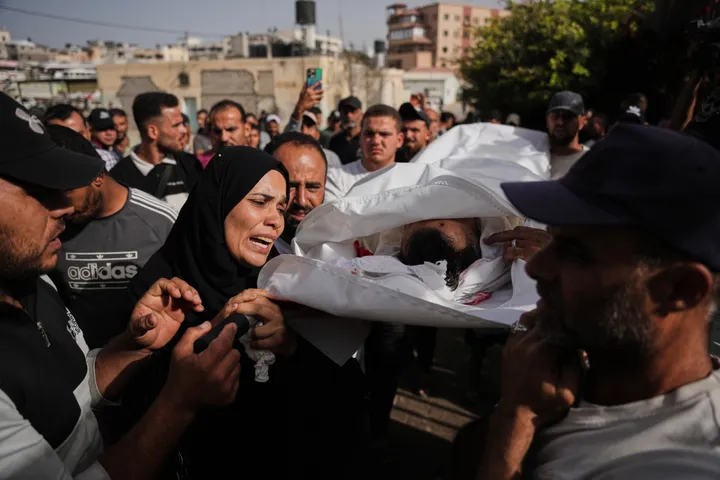
The threat against kite flyers also came as Israeli attacks continued to kill children across the enclave.
On August 23, the same day Katz issued his order, an Israeli attack on a warehouse in al-Zawayda in central Gaza killed two people, including four-year-old Mohammad Abdel-Salam Taha.
Further Israeli strikes days later killed four people, including two children, and destroyed one of Gaza’s oldest mosques.
At least 300 children were reportedly killed in Gaza in roughly 300 days following the October 2025 ceasefire — an average of one child a day — according to UNICEF.
Since the war began in October 2023, at least 21,289 children have reportedly been killed and another 44,500 injured.
Thousands have lost limbs.
Estimates of child amputations range from roughly 1,000 to more than 4,000 since October 2023, while UNRWA Commissioner-General Philippe Lazzarini has said Gaza has the highest number of child amputees per capita in the world.
For psychotherapist Hala Sukkar, the consequences extend beyond the physical loss of places to play.
Linking an ordinary childhood activity to the possibility of being attacked can alter a child’s fundamental sense of safety.
“A child needs to be able to distinguish a safe place from a dangerous one for their nervous system to be able to calm down and regulate itself,” Sukkar tells TRT World.
When something as simple as a kite becomes associated with the possibility of being targeted, she says, children lose some of the “safety cues” they rely on and can enter a state of hypervigilance even during moments meant for play.
Sukkar links this to continuous traumatic stress.
For a child, she says, a kite is not simply a toy. It provides a sense of freedom and control.
When that space becomes associated with danger, children can begin to learn that joy, curiosity and play themselves carry risks.
“If these conditions continue, the long-term effects may appear as withdrawal, behavioural disorders, hypervigilance, or difficulties regulating emotions,” she says.
The kites disappear
With schools disrupted and few places left for recreation, Gaza’s beachfront had remained one of the spaces where children could still play and fly their kites.
Two days after Katz’s order, Gaza City resident Mohammed al-Masri says the kites had disappeared.
“What hurts most is that the children of Gaza have been deprived of almost everything,” al-Masri tells TRT World.
The sea was one of the few spaces still open to them, he says, but even there, families contend with sewage pollution and the presence of Israeli military boats offshore.
Recently, al-Masri watched a father and his young son on the beach.
The boy wanted to fly his kite.
His father refused.
“A rocket will hit you,” he told him.
“I don’t want you to die.”
This article was published in collaboration with Egab.