It was the deadliest attack in the US-Israeli war on Iran, and most of the victims were children.
In almost any other war, these haunting truths would be seared into the national memory. Yet more than 120 days since at least one US missile struck an Iranian primary school, there remains no final accounting of what happened.
The US administration has yet to directly accept the blame or formally release findings of a Pentagon investigation into the bombing, even though the military possessed evidence almost immediately that the site of the school had been struck, a US official with knowledge of the situation, who spoke on condition of anonymity in order to discuss an ongoing investigation, told The Associated Press.
The AP has reconstructed the story of the attack, beginning in the schoolyard on the morning of February 28, drawing from open-source information, video footage, human rights reports and interviews with researchers and civilians inside and outside Iran to reveal previously unreported details about the US bombing in Minab, including the diversity of children murdered.
Still, many details about the attack remain elusive, as a lack of information from the Pentagon and politicisation of the bombing by Iran have complicated independent reporting efforts.
That has created an accountability vacuum, leaving the families of the victims without resolution. Among the mysteries remaining are the number of munitions that hit the school and a complete list of the dead.
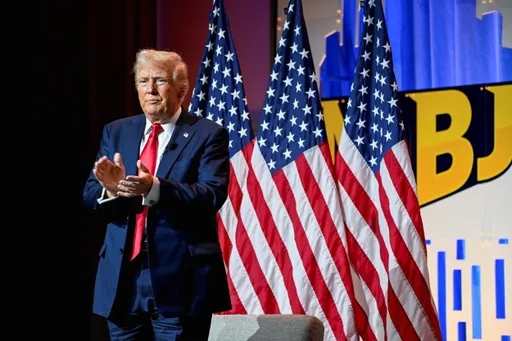
When asked last week about the incident, President Donald Trump said he hadn’t read the Pentagon’s report and had seen nothing to make him believe the US had carried out the attack.
Iran’s mission to the United Nations did not respond to a request for comment from the AP.
A fuller picture
The reconstruction draws from interviews with US officials, Iranian human rights workers, a resident of Minab, an international representative of the Coordinating Council of Iranian Teachers’ Trade Union and researchers from major international rights groups.
Several people who spoke to the AP were in direct contact with the families of victims and rescuers who rushed to the scene. Most requested anonymity for fear of retribution against them and those with whom they spoke.
Skies over the city of Minab, located in southeastern Iran about 25 km from the Strait of Hormuz, were clear and bright on the morning of Saturday, February 28, a school day in Iran. It was the holy month of Ramadan.
Students of the Shajareh Tayyebeh school, Farsi for "Good Tree," jostled past the colourful murals lining the schoolyard and into the building. Boys and girls filtered into separate spaces with brightly painted desks.
The school they entered was one of over 30 with the same name established to serve children from families closely tied to Iran’s Revolutionary Guard Corps or other state institutions, said Shiva Amelirad, the international union representative who also worked as a teacher in Iran for 18 years and has been in contact with people in Minab.
She said that children are civilians regardless of their family backgrounds, and "any attack targeting a school is unequivocally condemnable."
The school lay within the same walled compound as a Guard base, according to an AP assessment of satellite imagery and open-source mapping. It was once part of that neighbouring base, before it was fenced off and converted over a decade ago.
Though some of its pupils were the children of Guard officers working on the nearby base, others were local children from Minab, which is populated predominantly by people of the majority-Sunni Baluch ethnic minority.
Hundreds of students are believed to have been inside the building by the time teachers and administrators received the news that bombs had begun falling on Tehran around 9:40 am.
Teachers and administrators thought it prudent to send the children home. They called parents on landline phones, summoning them for an early pickup, two people told the AP.
A recently released report by Airwars, a London-based independent group that tracks recent conflicts, also found that parents were called to pick up their children.
At 10:15 am, Iran’s state media sent out an advisory, closing schools across the country.
One father, who lived a short distance away, went immediately to pick up his 10-year-old son, said a resident of Minab, who relayed the stories of several families to the AP. The AP verified details of the residents’ stories against available lists of the victims and rights groups’ chronologies of the day’s events.
The father noticed his 6- and 7-year-old relatives among the students waiting for their parents, said the resident. He asked them if they’d like a ride home and they said no, that their own father was on the way.
He left with his child and headed to the supermarket. Ten minutes later, he heard the explosions.
Multiple munitions pummeled the compound, striking at least five buildings, according to an AP analysis of satellite imagery. Hundreds of pounds of explosives collapsed the school.
A tiny arm, suspended in the rubble
The father raced back to a scene of chaos, where onlookers gathered, screaming, as men pawed through smoking rubble to dig out bodies, according to video of the aftermath circulated by Iranian state media.
Eventually, the father made out two burned figures he believes were those of his relatives, but he couldn’t be sure.
People kept coming. One man from a nearby Sunni village arrived to search for his nephew after receiving a panicked call from the boy’s mother. In the rubble, he found her dead son.
Rescuers found small backpacks and children’s drawings, colored pencils and worksheets. Gently suspended, a tiny arm lay in the wreckage.
Men carried disfigured limbs and torsos to the local hospital, said the Balochistan Human Rights Group, whose staff spoke with two families of those killed. The AP has not been able to verify how many munitions specifically hit the school, but the attack had left flesh so mutilated that many body parts were unrecognisable.
By the end of the day, doctors at the hospital estimated they had at least 108 bodies, but cautioned that it was likely an undercount, said the resident of Minab.
By the next day, state media was saying around 150 had been killed. Soon, it was reporting a death toll had gone up to 168.
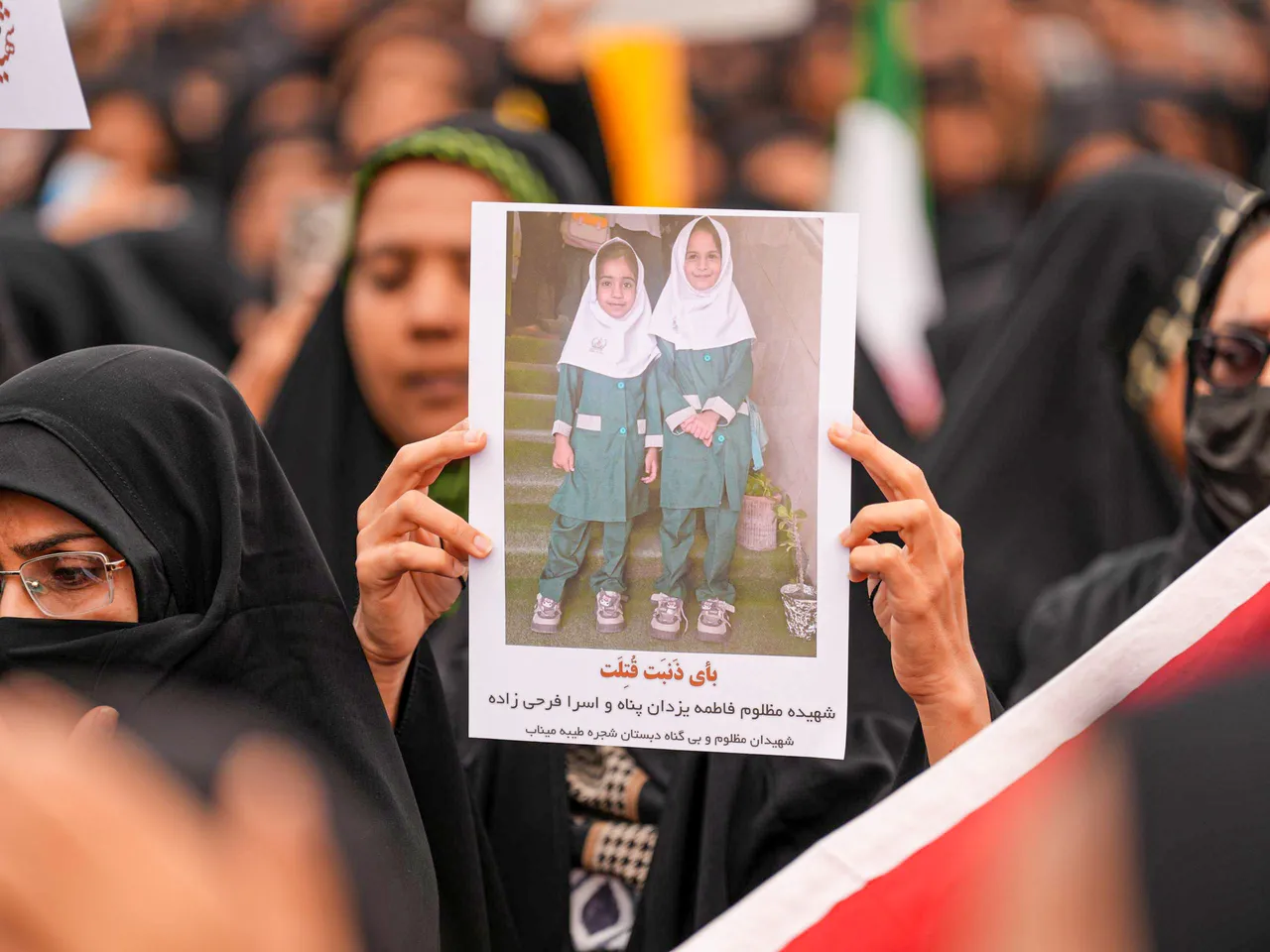
Three days after the bombing, state TV showed thousands of Iranians packing a Minab roundabout, where the crowds faced a podium and a large portrait of Khomeini, the late founder of Iran.
The gathering might have been mistaken for a demonstration, if it were not a funeral. All the parents of victims, regardless of ethnicity or religion, had to participate, said the Minab resident.
Most women in the crowd donned the black chador garment customary to Iran.
Parents were told they’d be permitted to take their children’s bodies back to their villages and conduct their own observances, said the resident. In the end, though, many decided to bury their children together.


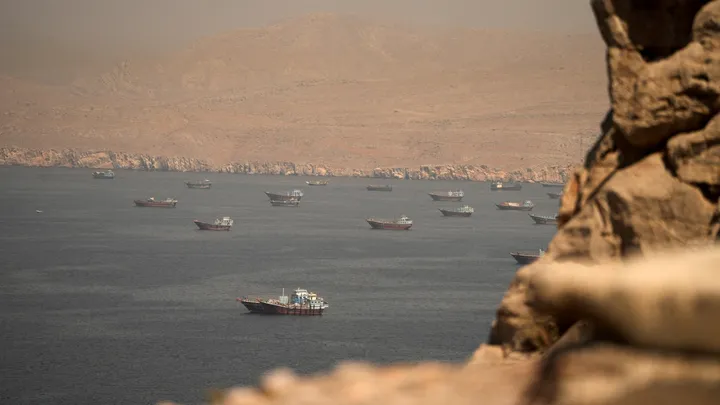




In footage captured by drone cameras and circulated by state media, workers broke ground on an earthen lot, creating a grid of tiny, identical, unmarked graves.
The story grows harder to tell
US and Israeli attacks continued to ravage Iran, targeting more sites in its opening days than the start of recent military strikes, including in besieged Gaza, an Airwars analysis found.
Racing to document the ongoing bombardment, journalists and rights groups struggled to verify details from Minab. They had no access to the target site. Government restrictions in Iran prevented most foreign journalists from entering the country.
The opening day of the war, Iran shut down the internet, making it nearly impossible to hear from ordinary civilians.
As the war progressed and the Strait of Hormuz became a major battlefield, the situation in the province grew more tense, said the resident.
All branches of the military were deployed heavily in the area. Families of the victims feared retribution for speaking out. People were reportedly being detained for trying to communicate with foreign media.
That left Iran’s government in control of the messaging around the strike.
Iran’s football team wore golden "#168" pins on their jackets upon their arrival at the FIFA World Cup.
The Iranian team negotiating for a pause to the war with the US named itself "Minab 168."
The children were depicted as animated Lego figures in viral videos made by pro-Iran groups.
Through it all, there remained no public list of the names of the dead.
Pentagon finds clues in archive
Locked out of Iran, researchers focused on the question of responsibility.
Iran blamed the US. Trump cast doubt on American culpability and pointed the finger at Iran. Defense Secretary Pete Hegseth said only that the Pentagon was investigating.
Internally, the US military knew more than it initially let on. The clues were buried in their archives.
When the news first surfaced, the US military knew they had conducted attacks in the vicinity — though it took the military time to verify the Iranian claims that a school was struck and begin a formal investigation, said a US official with knowledge of the situation, who spoke on condition of anonymity to discuss the ongoing inquiry.
It appears that while the building housing the school was identified as such by one analyst as early as seven years ago, that discovery was not sufficiently made known across different intelligence and military staffs and agencies, the US official said.
Ultimately, the building was not known among target developers as a school, revealing potential systematic shortfalls in the target analysis and review process, they said.
One former Pentagon official, similarly speaking on condition of anonymity, said the bombing came as a natural result of changes made by the Trump administration to reduce staff to mitigate civilian harm and Hegseth’s emphasis on lethality.
When Hegseth took charge, he slashed the size of an office called the Civilian Protection Center of Excellence, created at the direction of Congress in late 2022.
That stopped the office’s work on updating "no-strike lists," which are lists of protected sites such as hospitals, schools, churches and mosques, that the Pentagon keeps, said Wes Bryant, who began working at the office in 2024 as the Branch Chief of Civil Harm Assessments.
When he was working at the Pentagon, it was well known that the list was out-of-date, he said.
The search for more answers from Minab
In the last weeks, researchers have made some progress.
Airwars, the conflict research group, spent months combing through open-source information to verify the identity of victims.
The group determined the names and identities of 157 of the dead, including 123 children, all 13 or younger, and 34 adults. Among the adults are 26 school staff members (one of whom was pregnant) and five parents — each of whom lost at least one child.
The group puts the death toll between 157 and 168 and says between 95 and 111 people were wounded.
It’s unclear if the formal results of the US military’s Minab investigation will be published.
Much of the investigative work has been completed, but the US military’s Central Command, which commissioned the investigation, is currently reviewing the findings.
Findings from similar past investigations have been more timely.
When a Hellfire missile killed 10 civilians in Kabul, Afghanistan, on August 29, 2021, the Defense Department claimed responsibility and gave details on its operations in less than a month.
When asked about the Minab investigation last week, Trump said, "I don’t know that they’re ever going to solve that problem." Hegseth said the report would be divulged "when the appropriate time is right."
Some members of Congress still push for transparency.
In a recent interview, Senator Mike Rounds, a Republican from South Dakota and a member of the Armed Services and Intelligence committees, said Congress has not gotten enough information on the bombing and expected a full report.
The issue "has not gone away," he said.