 Noureldein Ghanem
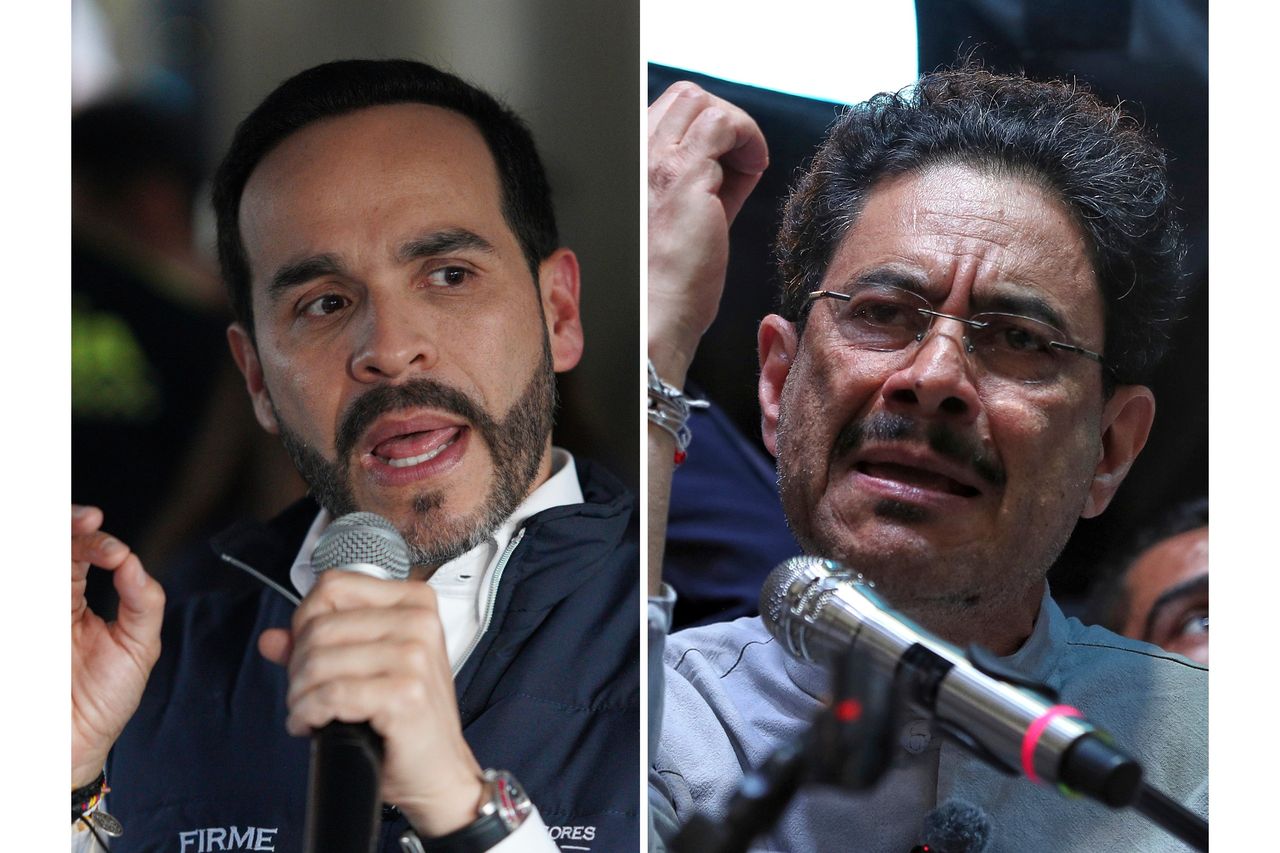
Washington, DC — Abelardo de la Espriella, who was endorsed by US President Donald Trump, is expected to enter Colombia's presidential palace with one of the narrowest mandates in the country's recent history after edging left-wing rival Ivan Cepeda by less than one percentage point in a deeply polarised runoff election.
Official results gave the conservative lawyer and political outsider roughly 49.6 percent of the vote, just over 250,000 votes ahead of Cepeda, capping a bruising campaign that exposed sharp divisions over security, the economy and the legacy of outgoing President Gustavo Petro.
The razor-thin margin underscored the South American country's split almost evenly between competing visions for its future. De la Espriella built his campaign around promises of a tougher crackdown on organised crime, stronger security policies and a pro-business economic agenda, themes that resonated with voters frustrated by rising violence and economic uncertainty.
His message helped him consolidate support in densely populated regions carrying significant electoral weight, allowing him to overcome Cepeda's broader geographic reach across the country.
Yet, the narrow victory also ensures that the election's aftermath will be contentious.
Cepeda has conceded defeat, telling the country in an address, "We assume with serenity, responsibility, and absolute resolve — and let there be no doubt about it — the role that circumstances demand of us… We will exercise a democratic, vigilant and constructive opposition."
The narrow victory sends a clear message to de la Espriella that the country is "deeply divided," Elizabeth Dickinson, interim deputy director for Latin America at the International Crisis Group, tells TRT World.
"Neither candidate managed to get more than 50 percent of the vote, which means that they are governing a country that is deeply divided," argues Dickinson.
She adds that the most important message for the incoming president to absorb is the importance of political reconciliation and "looking for a pathway forward that makes all Colombians feel included in the government."
This is not a mandate for extreme policies, Dickinson stresses, adding it's a mandate to unite a country that has been deeply divided for many years by many differences on many issues.
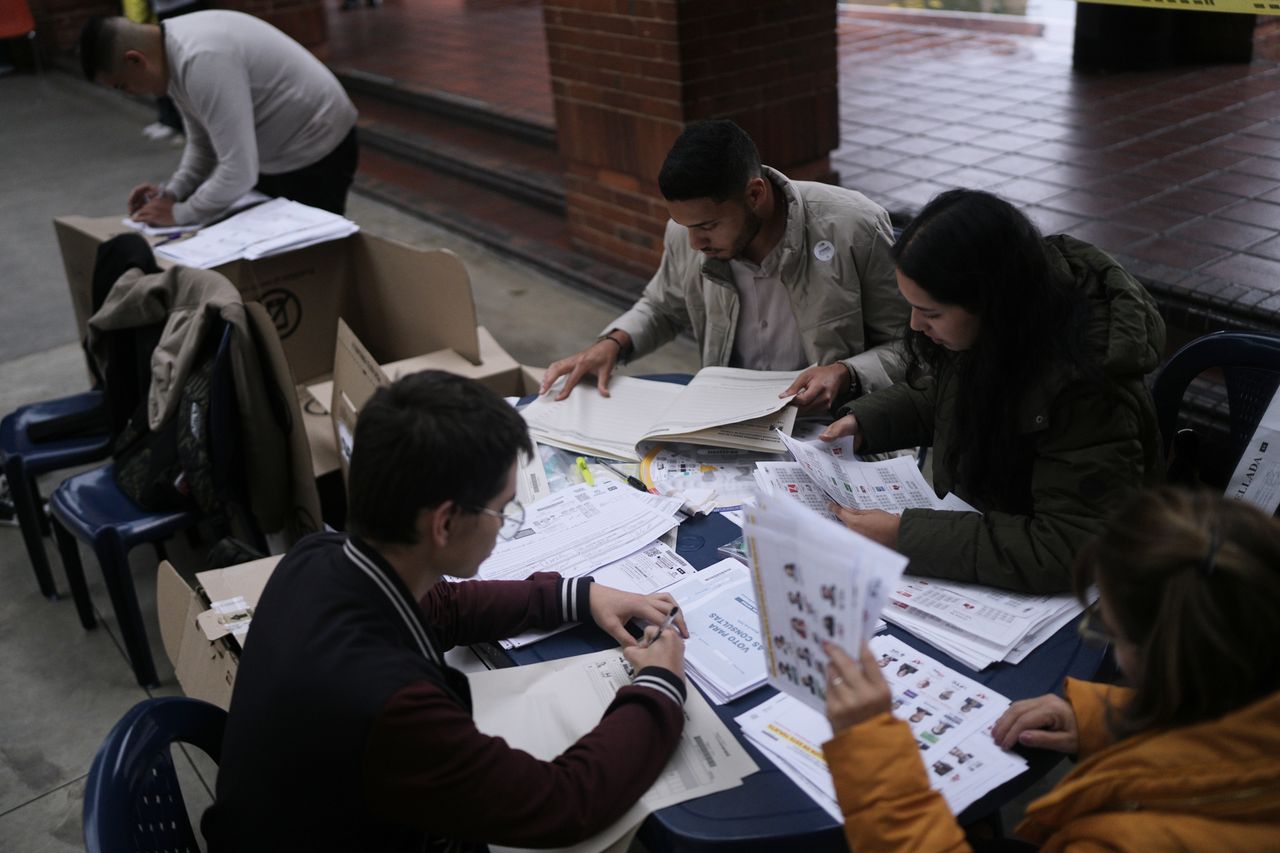
More than 26 million voters cast their ballots in the run-off election. Over 426,000 people expressed dislike of both candidates, and about 29,000 people cast blank ballots.
"It is important to emphasise that the results would need to be certified and that any interpretation should be approached with caution given the narrow margin," Jenaro Abraham, a political scientist and professor of Latin American politics at Gonzaga University, tells TRT World.
"If confirmed by the judiciary, however, the outcome would signal several important developments."
Social policies in balance
One of the main issues that concerned voters in the election was the social policies implemented by outgoing President Gustavo Petro.
After the election results, the fate of those policies came into question.
Abraham says the results could put pressure on social and economic policies, particularly Petro's labour and health reforms.
"While the extent of any rollback remains uncertain, debates over labour protections, healthcare, social spending, and rural development would likely intensify under a more conservative administration," Abraham notes.
Dickenson explains that de la Espriella needs to remember that Petro remains enormously popular in Colombia because of those policies.
"There's really a constituency in Colombia of disenfranchised voters who care about things like access to opportunity, improving poverty, inequality, that now can speak with a very loud political voice in Colombia and deserves to be treated as a political constituency, and their support for the left has really been in hopes of continuation of those social policies that under the Petro administration have improved unemployment, multi-dimensional poverty," she says.
"That's a message as well to the incoming government that there are fundamental inequalities and structural issues within Colombian society that will require a policy."
Organised crime and armed groups
For many decades, Colombia's politics and security landscape have been shaped by a complex conflict involving guerrilla groups and criminal organisations.
What began in the 1960s as an ideological insurgency led by groups such as the Revolutionary Armed Forces of Colombia (FARC) and the National Liberation Army (ELN) gradually evolved into a multifaceted struggle fuelled by drug trafficking, illegal mining and extortion.




Entire regions of the country fell beyond effective state control, while civilians often found themselves caught between rival armed factions competing for territory and influence.
Although the landmark 2016 peace agreement between the Colombian government and the FARC formally ended Latin America's longest-running insurgency, violence did not disappear.
Abraham believes that de la Espriella's victory represents a significant setback for the implementation of this fragile accord.
"Abelardo de la Espriella has repeatedly expressed scepticism towards the 2016 Peace Accord and has aligned himself with sectors of the Colombian right that favour a more militarised approach to security," he says.
De la Espriella pledges to combat crime by ending dialogue with armed groups and building El Salvador-style mega-prisons to address public fears of renewed conflict.
Abraham says the rhetoric by de la Espriella — the self-described 'El Tigre' — towards marginalised groups has raised concerns about political violence in a country where social and political leaders are being assassinated at an alarming rate.
TRT World previously spoke to first-round voters, many of whom identified security as their defining issue.
It remains to be seen whether de la Espriella's approach will yield positive results.
Generating economic investment
During his campaign, de la Espriella presented himself as a pro-business figure who argued that Colombia's economy needed faster growth, greater investor confidence and a stronger private sector after years of sluggish expansion and fiscal pressures.
He pledged to reduce regulatory burdens on businesses, encourage domestic and foreign investment, and expand support for sectors such as energy, mining, agriculture and infrastructure, which he said could generate jobs and boost government revenues.
He also criticised aspects of Petro's economic agenda, particularly policies that he said had created uncertainty among investors.
De la Espriella's support for expanding extractive industries could very well generate economic investment across many sectors. However, this is a part where the economy and security intertwine.
The president-elect frequently linked economic recovery to his broader law-and-order platform, saying that defeating criminal organisations and reasserting state authority in conflict-ridden regions would be essential to unlocking investment and development.
Abraham believes this will be a tough and complex challenge for the upcoming administration, given the fact that many regions with extractive enterprises already contain strong concentrations of armed actors.
"More generally, Colombia continues to face a fragmented post-accord landscape in which multiple armed organisations exercise varying degrees of control over local economies and territories," says Abraham.
Ties with US, Latin American countries
In recent years, there has been a wave of right-wing victories across many Latin American countries, including Chile, Argentina and others, with many leaders influenced by US President Trump and his approach to multiple issues.
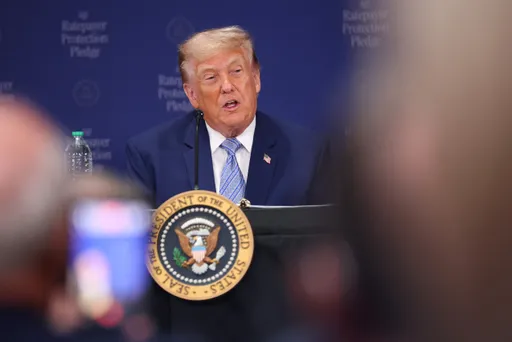
And de la Espriella aligned himself with Trump during his campaign, saying in one of his rallies, "I defend the same values as Trump."
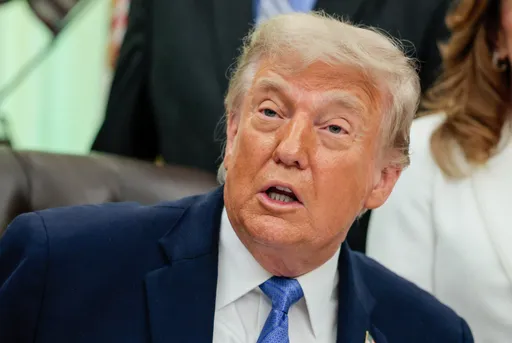
After the vote counting, Trump congratulated de la Espriella, who holds dual Colombian and US citizenship, writing in a social media post that, "It was my Great Honor to endorse him, and I look forward to working together to build a powerful relationship between Colombia and the United States of America, which will bring new levels of Greatness for both of our Countries!"
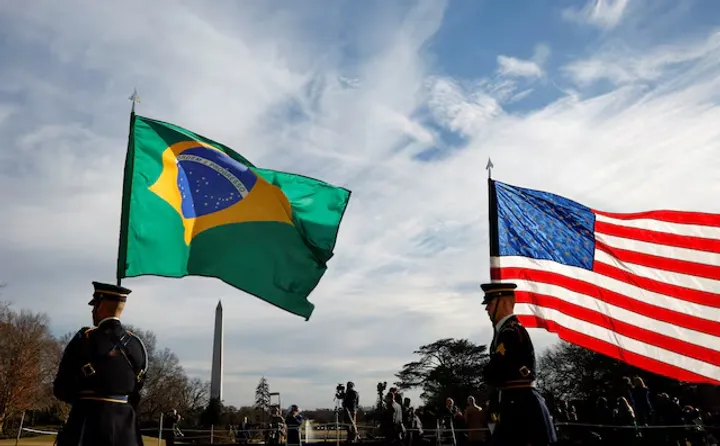
Experts say this could only suggest that Colombia's ties with the US and other Latin American countries are likely to strengthen, particularly on issues related to security cooperation, investment, counternarcotics policy, and regional diplomacy.
"Regionally, Colombia could move closer to governments that have adopted more conservative political agendas and seek stronger ties with the United States. This would likely alter Colombia's role within Latin America's increasingly polarised political landscape," says Abraham of the Gonzaga University.
US regional interests, driven by migration and drug trafficking, may prompt Washington to seek alignment with the incoming government, according to Dickinson of the Crisis Group, who notes that De la Espriella will have to balance this with Colombia's domestic considerations.
"This is going to be quite the balancing act in terms of using the US support and resources and political alignment to also ensure that Colombia's own domestic politics, domestic considerations and the needs in terms of protecting communities affected by conflict are taken into account," she notes.