The Worldwide Lawyers Association (WOLAS) has accused India of implementing a dangerous plan of "assimilation, dispossession, and settler colonialism" in India-administered Kashmir, likening it to Israeli occupation practices in Palestine and announcing the initiation of legal proceedings under universal jurisdiction in foreign courts against Indian officials linked to rights abuses in the region.
Members of WOLAS, who released their damning report titled "Longest Siege: Settler Colonialism and Structural Violence in Indian Occupied Jammu Kashmir" to mark the 79th anniversary of landing of Indian troops in Jammu and Kashmir following 73 days of Kashmir's independence — an occasion commemorated by many Kashmiris and Pakistan as "Black Day" — said they aim to bring human rights violations in Kashmir before courts worldwide under universal jurisdiction.
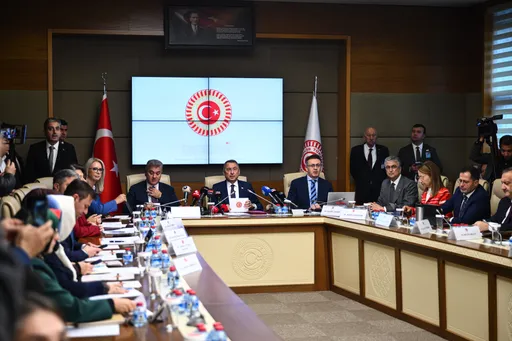
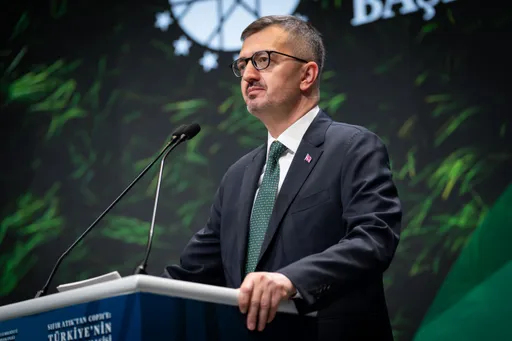
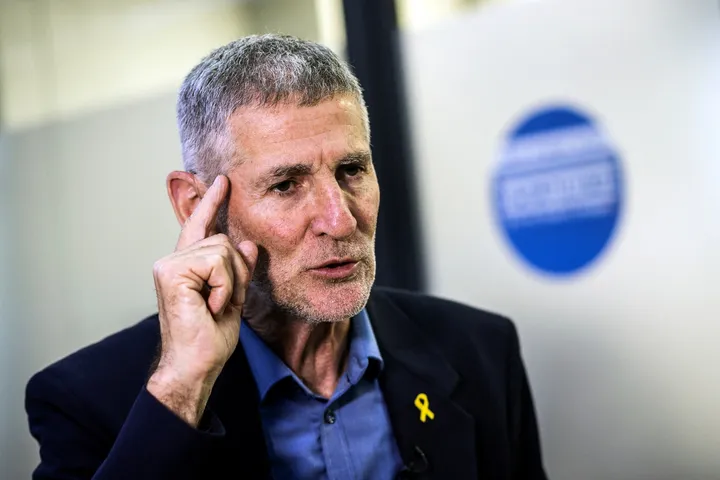
During a press conference in Istanbul on Monday, WOLAS Chairman Enes Kafadar stressed that although Kashmir is geographically distant from Türkiye, it is "historically, culturally, and strategically close."
Kashmir was introduced to Islam in the 14th century by Turkic Sufi Bulbul Shah, Kafadar noted, recalling support of subcontinent Muslims to Türkiye during the War of Independence.
He highlighted parallels between Kashmir and Palestine, arguing, "The drones in the skies of Kashmir are Israeli-made Herons. The weapons pointed at the people in the streets are Israeli-made Tavor rifles. Lawyers, human rights defenders, and journalists are being wiretapped with Israeli-made Pegasus spyware."
"The suffering experienced by the Palestinian people and the Kashmiri people is very interconnected," the WOLAS chairman added.
Kafadar stated that WOLAS aims to activate international legal mechanisms through the reports it prepares, adding, "This report is not actually an end result, but the beginning of a legal operation."
"It is precisely at this point that we, as the Lawyers of the World Association, aim with this report to bring the human rights violations in Kashmir to many courts around the world under universal jurisdiction and to ensure that those responsible are held accountable."
'Israeli officials were present in torture centres in Kashmir'
Kafadar stated the report shows events in India-administered Kashmir are "planned assimilation and settler colonialism" by New Delhi breaching international law, not a mere security or border dispute.
He stated that several UNSC resolutions mandate Kashmir's status be decided via plebiscite, adding India's 2019 revocation of Article 370 and annexation of the region breached UN resolutions and the right to self-determination.
He said the new residency laws imposed by India in the disputed region breach the Fourth Geneva Convention, "granting outsiders rights to reduce Kashmiris to a minority in their own homeland."
"The colonial methods of repression in the occupied West Bank and Gaza are being transferred to [India-administered] Kashmir," Kafadar added.
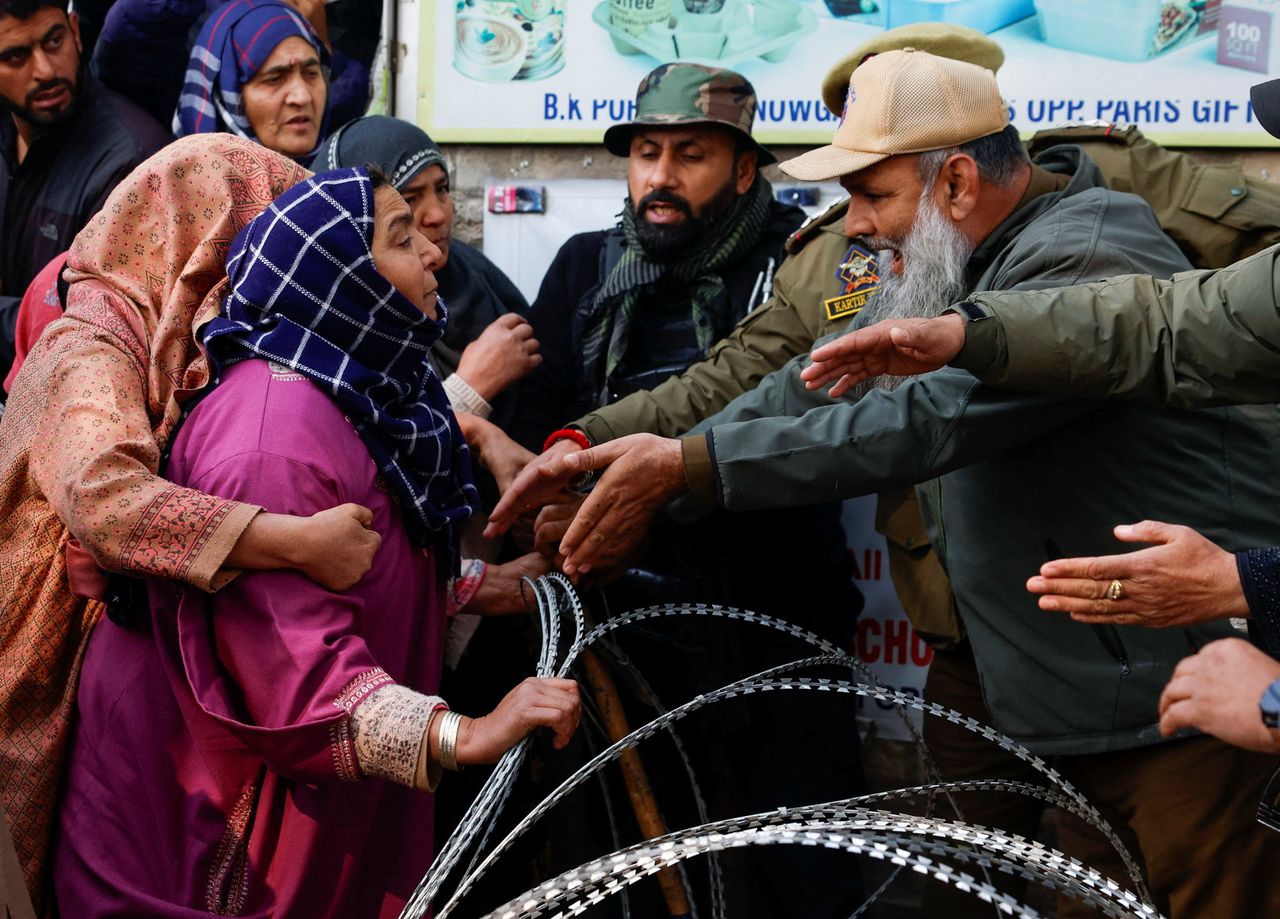
He said that an information blackout persists in Kashmir, with journalists detained, their passports revoked, civil society organisations shut down, and books seized.
"While the Indian administration uses Bollywood productions and media manipulation to present the occupation to the world public as an 'internal security' issue, it is simultaneously implementing the colonial repression methods that Israel uses in the West Bank and Gaza in Kashmir," he added.
Kafadar said while Indian diplomats openly declare that they are basing their operations in the region on Israel's illegal settlement model, "witness statements in files submitted to the UK Metropolitan Police War Crimes Unit indicate that Israeli officials were present in interrogation and torture centres in Kashmir."
During the Israeli genocide in Gaza, the WOLAS chairman said they identified Israeli soldiers guilty of war crimes and sought Interpol Red Notices against them under universal jurisdiction, vowing to pursue Indian officials next.
"Today, we publicly announce that we are also pursuing the same legal mechanism against Indian military and civilian officials who committed crimes of torture, demolition with explosives, arbitrary executions, and demographic displacement in Kashmir," he promised.




Seven concrete steps
Hasan Basri Bulbul, a member of the WOLAS Board of Directors who presented the key issues highlighted in the 95-page report, said New Delhi has been rapidly changing the demographic structure in India-administered Kashmir since 2019.
Bulbul revealed that India had imposed 890 federal laws on the region, repealed 205 local laws, and amended 130 others, calling for the establishment of a UN Commission of Inquiry to investigate human rights violations and for those responsible to be prosecuted under universal jurisdiction.
In August 2022, he said, approximately 2.5 million new voters (a 30 percent increase) were added to the electoral rolls by granting voting rights to Indian citizens temporarily residing in the disputed region.
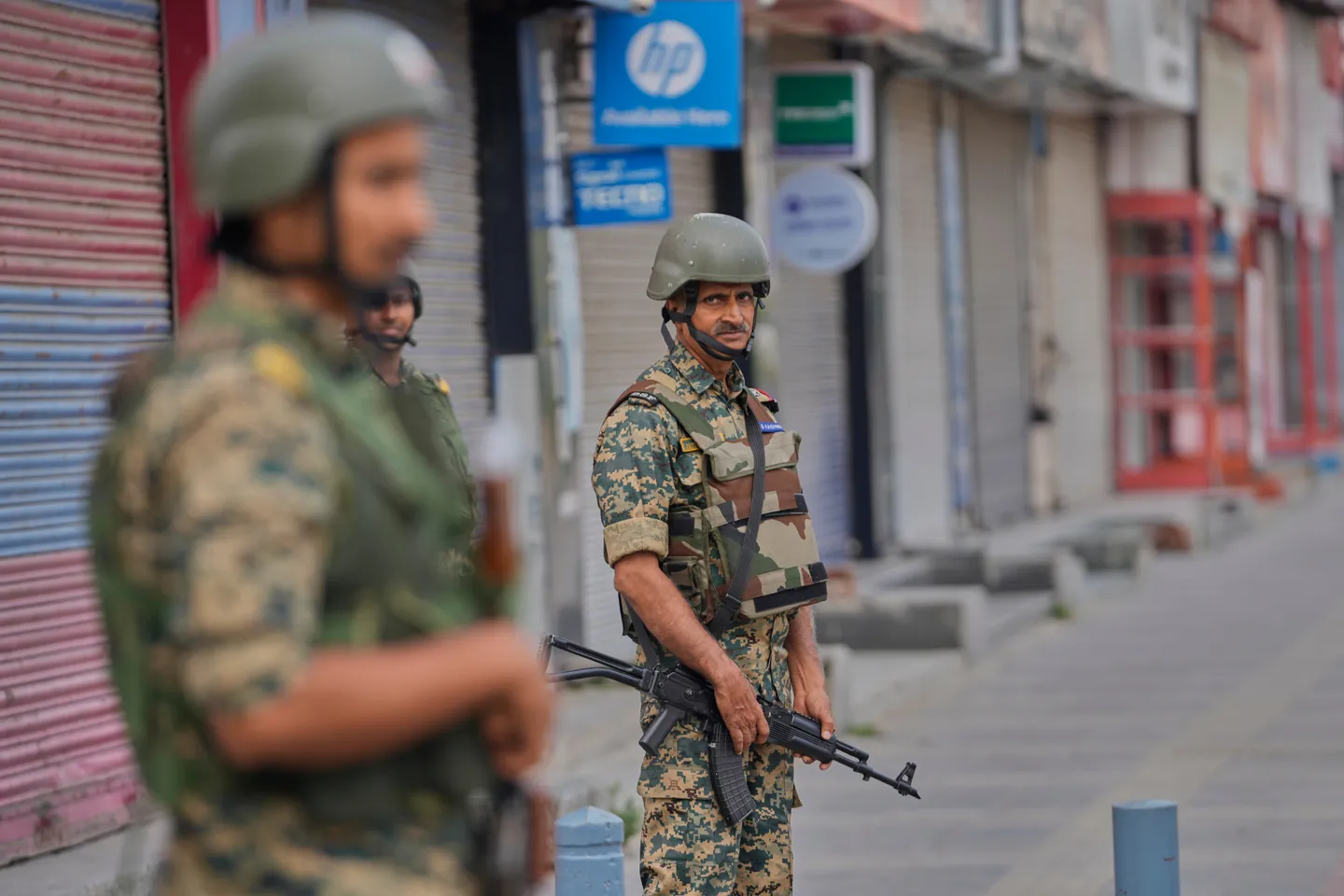
Bulbul said that India-administered Kashmir has the highest military-to-civilian ratio in the world "with over 900,000-armed Indian personnel", adding "not a single military officer has been allowed to be prosecuted in civilian courts for 36 years under the Special Powers of the Armed Forces Act (AFSPA)."
Between 2019 and 2026, he said, 26,129 arbitrary detentions were recorded under draconian laws such as Public Safety Act (PSA) and the Prevention of Unlawful Activities Act (UAPA). With convictions below 1 percent, he said, massive indictments and prolonged detention serve as punishment before any verdict.
The WOLAS official accused India of violating privacy of Kashmiris through household-level biometric registration and digital identity applications, "while the archives of local newspapers and human rights monitoring organisations are seized."
"As of September 2026, 4,249 books have been removed from circulation from universities and libraries; journalists, lawyers, and academics have had their passports revoked, systematically restricting their freedom of travel. Eid prayers at the central Friday Mosque and Eid Prayer Ground (Eidgah) in Srinagar have been blocked for eight consecutive years, including May 2026," he added.
Bulbul said the international community and legal institutions could implement seven concrete steps without requiring India’s consent or approval — implementation of UN Special Procedures and the establishment of an independent commission of inquiry, making legal applications in third states under universal jurisdiction based on documented concrete facts, implementing targeted sanctions against officials responsible for violations committed under AFSPA protection, and observance of human rights conditionality in international trade relations and defence transfers.
The steps he suggested also include continuous independent field and evidence documentation activities in accordance with international verification standards, requesting an advisory opinion from the International Court of Justice via the UN General Assembly on the repeal of Article 370 and the conformity of the settlement regime with Article 49(6) of the Fourth Geneva Convention, and establishing a permanent Peoples' Tribunal that will convene at regular intervals to challenge the policy of invisibility.
New Delhi has not responded to the report yet.
India and Pakistan each administer a part of Kashmir, but both claim the territory in its entirety. The neighbouring rivals have fought two of their three wars over the territory since they gained independence in 1947. China also administers a portion of Kashmir, known as Aksai Chin, following the defeat of India in the 1962 Sino-Indian War — making the Himalayan region the world's only nuclear tri-junction.
Rebel Kashmiris in the New Delhi-administered portion of Kashmir have been fighting Indian rule since 1989. The majority of Muslim Kashmiris support deciding the future of the region through a UN-mandated plebiscite.
India claims the Kashmir revolt is funded by Pakistan. Islamabad denies the charge and insists it only lends Kashmiris moral, political and diplomatic support. Many Kashmiris consider it a legitimate freedom struggle. Tens of thousands of civilians, rebels and Indian troops have been killed in the conflict.
India has deployed more than 500,000 troops to the region, making it one of the planet's most militarised zones.