 Kazim Alam
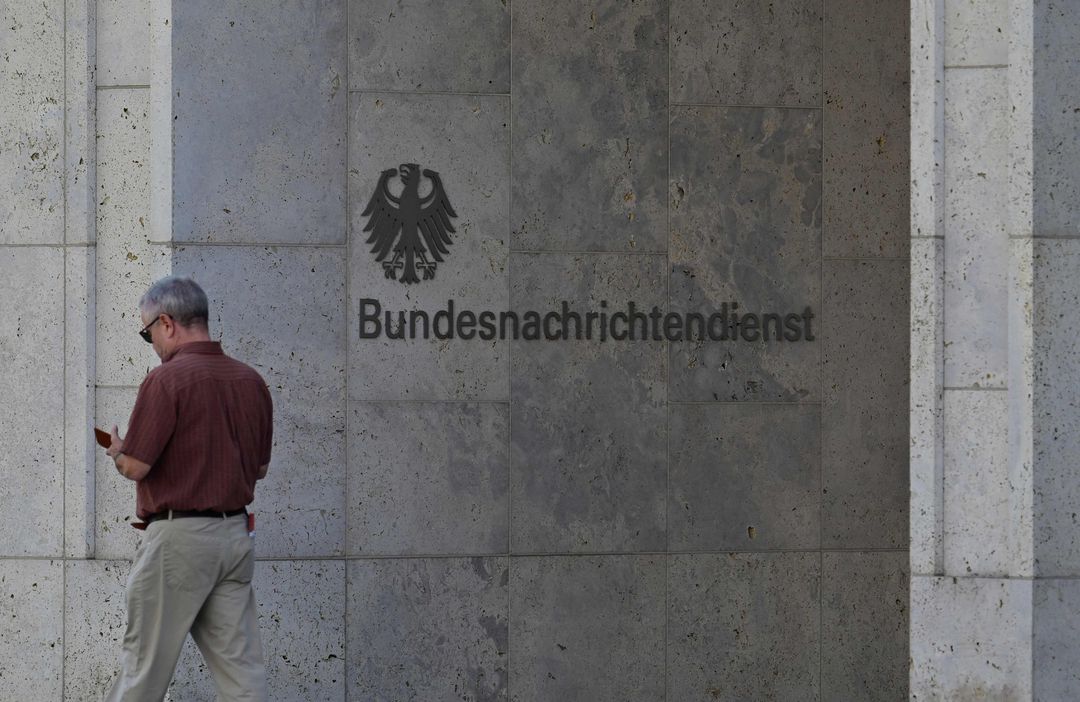
Early this month, German federal prosecutors arrested August Hanning, the 80-year-old former president of the country’s top intelligence agency BND, on charges of treason and espionage for a foreign entity.
A court ordered his pre-trial detention, along with that of his former chief of staff, Manfred D.
Prosecutors say that from 2010 to mid-2022, Manfred D, who remained in a senior BND role until March 2026, supplied Hanning with roughly 2,000 documents – many of them classified – including material originating from foreign partner intelligence services.
Hanning, who led the BND from 1998 to 2005 before becoming a private consultant, is accused of using the material for commercial work and, in at least one instance, preparing an analysis for an officer of an unnamed foreign intelligence service.
The case has prompted partner services to review intelligence previously shared with Berlin.
Analysts point out that the scandal is only the latest in a series of breaches that have repeatedly exposed the BND’s weaknesses.
For example, authorities arrested in December 2022 a man named Carsten L, a German BND employee, on suspicion of treason after he allegedly passed state secrets obtained in the course of his work to a Russian intelligence agency that year.
It is important to note that the tip that helped identify him came from a “friendly Western intelligence agency”. At that time, BND chief Bruno Kahl publicly stressed the need for discretion, noting Russia’s willingness to exploit any detail.
Such episodes have left partner intelligence services wondering whether material they had shared with Berlin remained secure.
Sabir Askeroglu, a Eurasia expert at the Istanbul-based think tank Dunya Siyaseti, sees such cases as more than isolated failures.
“When allegations of espionage emerge within an intelligence service, there are generally two possible explanations: institutional vulnerabilities or a change in the country’s strategic orientation,” he tells TRT World.
In Germany’s case, both dimensions deserve consideration, he adds.

He points to the institutional legacy of German reunification in 1990, saying former East German security officials with residual Moscow ties could possibly carry networks into the unified state.
Secondly, Germany’s increasingly confrontational policy towards Russia, particularly since the beginning of the war in Ukraine, has transformed its domestic political and security environment, Askeroglu adds.
Individuals associated with the more cooperative approach towards Russia from the years of Angela Merkel – Germany’s chancellor from 2005 to 2021 – may find themselves under greater scrutiny, he notes.
“These historical and political factors should be treated as possible explanatory contexts rather than established causes,” Askeroglu says, while stressing that the central question remains whether individual breaches reflect deeper systemic weaknesses.
Intelligence interdependence or a source of friction?
The BND’s analytical shortcomings have been apparent to the world.
In August 2021, as the Taliban prepared to take over Kabul, German intelligence assessments proved overly reassuring.
Internal reporting had flagged the rapid erosion of Afghan security forces, but a key BND assessment presented to the crisis staff concluded that a Taliban takeover before September 11 was “rather unlikely”.
But the Taliban captured Kabul within days, which left critics questioning the BND’s poor intelligence assessments and delays in ordering an evacuation that put German nationals in danger.






The episode reinforced a perception among some partner intelligence agencies that the BND has struggled with independent, timely strategic analysis, even when it possesses substantial raw material.
Germany’s foreign intelligence service has long operated in close partnership with the CIA and the NSA of the US, MI6 of the UK, and intelligence services of other European nations.
Post-World War II arrangements placed the BND within a NATO intelligence architecture heavily influenced by the US.
But that interdependence has also been a source of friction.
For example, the Snowden revelations documented deep BND-NSA collaboration on German soil and, separately, the monitoring of Merkel’s communications.
“The trust has been destroyed by the US when the CIA was listening to Merkel,” said Selcuk Aydin, assistant professor of international relations at Istanbul’s Bogazici University.
“Germany’s defence, specifically its intelligence system, has been organised by the US and NATO after WWII. This causes a problem with the established institutionalised system,” he tells TRT World.
Europe, and Germany in particular, has since sought to revise its defence and intelligence posture, Aydin says, adding that he anticipates a “more dramatic transformation” in defence and intelligence sooner rather than later.
The Hanning case has once again placed that trust under pressure.
European intelligence services are examining whether material previously shared with the BND may have been compromised.
A German security official described the implications for partner relations as “very, very serious”.
MI6 and other agencies have conducted internal reviews of information passed to Berlin, while CIA material was reportedly among the documents later found in Hanning’s possession.
Askeroglu says that repeated breaches can undermine the confidence of partners, such as the US, the UK, and France, especially when sensitive information is involved.
“Intelligence cooperation depends not only on shared interests, but also on confidence that information will remain secure,” he says.
Consequently, Germany’s ambition to assume greater strategic responsibility in Europe must be accompanied by the “credibility and reliability of its intelligence services”.
Aydin framed the problem in structural terms rooted in the post-1945 order.
The institutionalised system built under the US and NATO umbrellas created lasting dependencies, while the Merkel surveillance episode shattered residual assumptions of reciprocity.
As Germany and Europe revise their defence and intelligence arrangements, the Hanning and Carsten L episodes illustrate the gap between aspiration and performance.
Askeroglu says Germany’s intelligence vulnerabilities can’t be fully separated from the country’s “longstanding dilemma between engagement with the East and security cooperation with the West”.
“As long as Germany’s political and strategic orientation remains subject to significant shifts, tensions between strategic priorities, institutional loyalties and intelligence cooperation may continue to emerge,” he says.