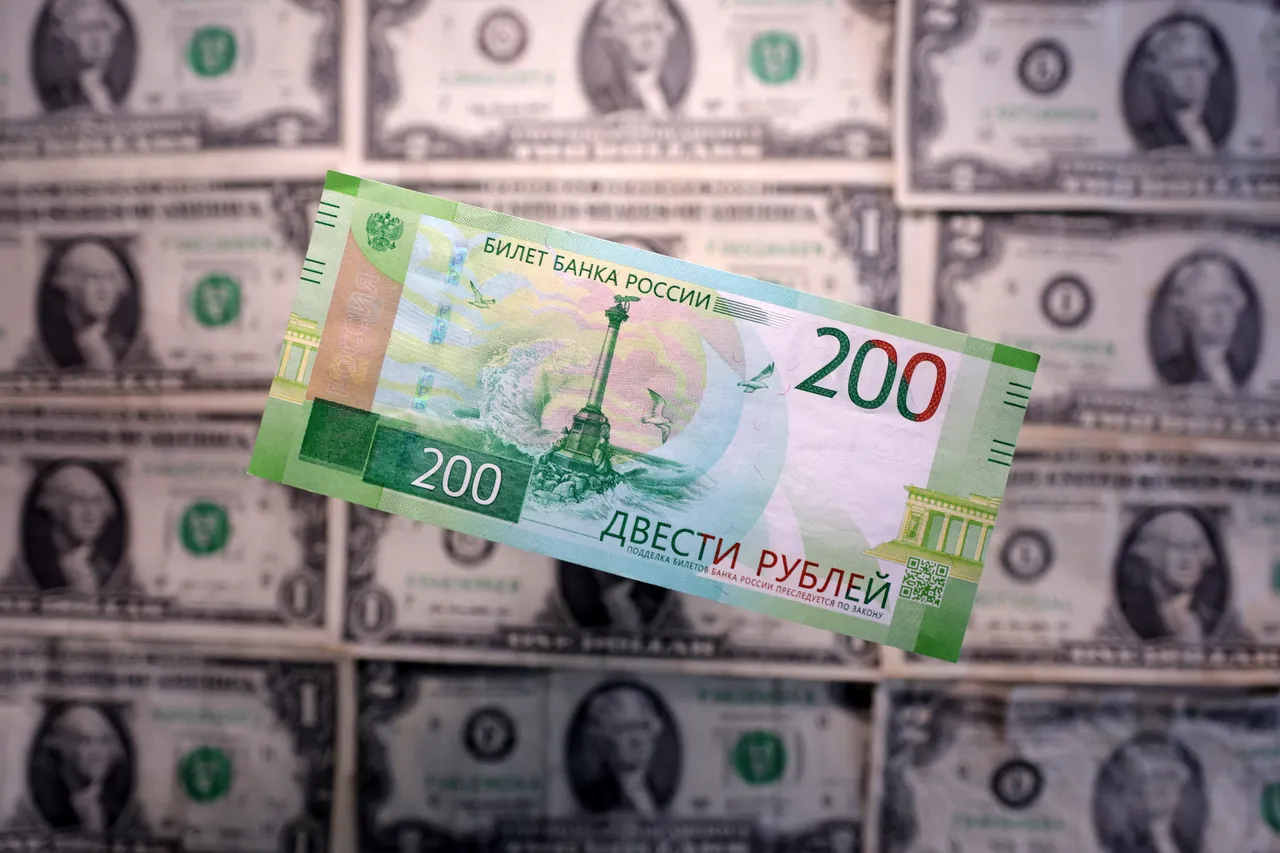
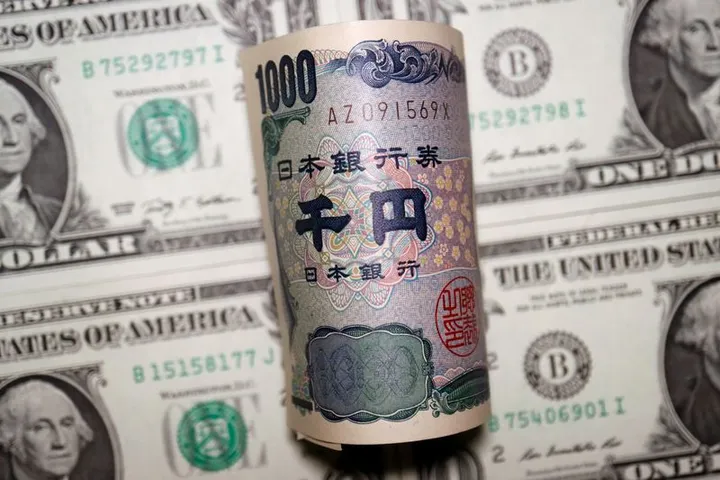
The rouble has steadily strengthened over the past two months, becoming the world's best-performing currency against the dollar, according to Bloomberg.
On 20 March, the dollar was worth more than 86 roubles, whereas it is now trading at around 71. The dollar has not traded at such a low level since spring 2023.
As experts explain, several factors that coincided in time played a role.
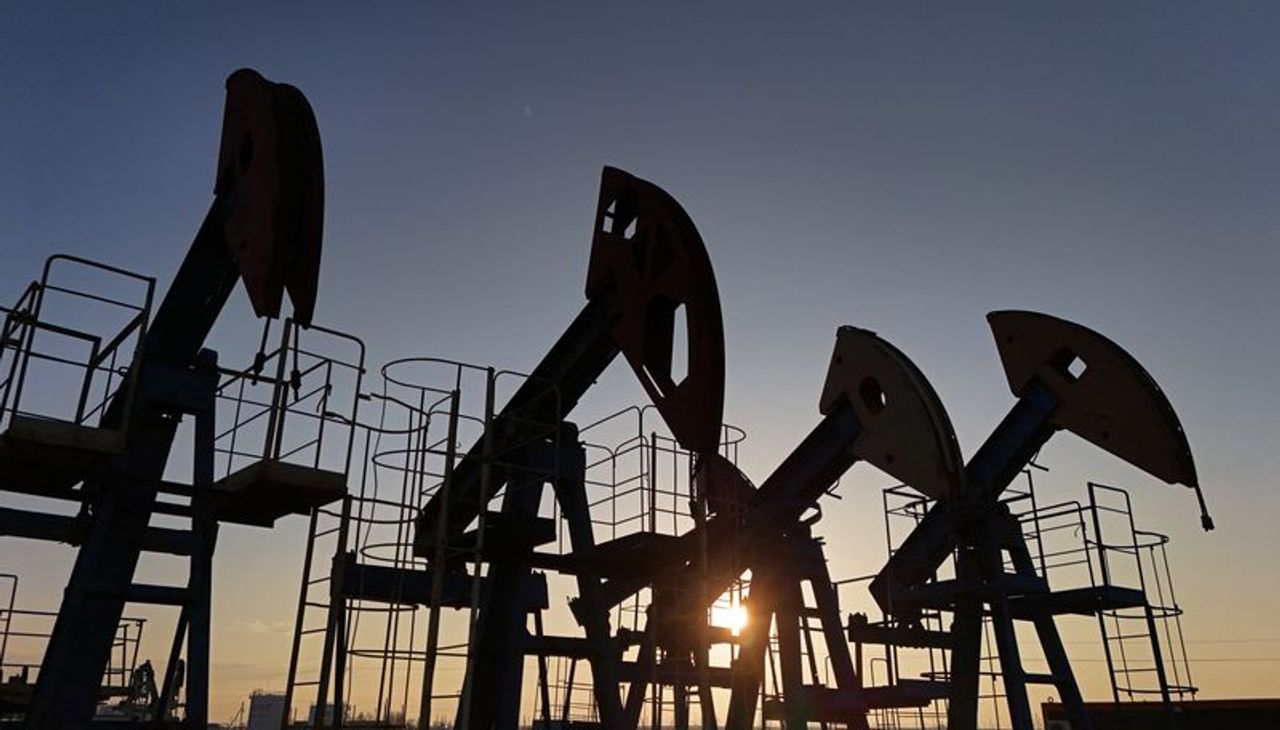
Firstly, the conflict in the Middle East and the blockade of the Strait of Hormuz drove up oil prices, including those for Russian Urals crude. While it cost $44 per barrel in February, it reached $94 in April.
As a result, exporters experienced a significant increase in foreign exchange earnings.
Moreover, experts explain that this revenue enters the market with a time lag of approximately one and a half months.
In other words, the market is now processing March’s volumes, when the conflict in the Middle East was just flaring up.
As a result, a simple formula worked: oil prices rose and the rouble strengthened.
Secondly, in March, the Russian Ministry of Finance suspended operations under the budget rule until July 1.
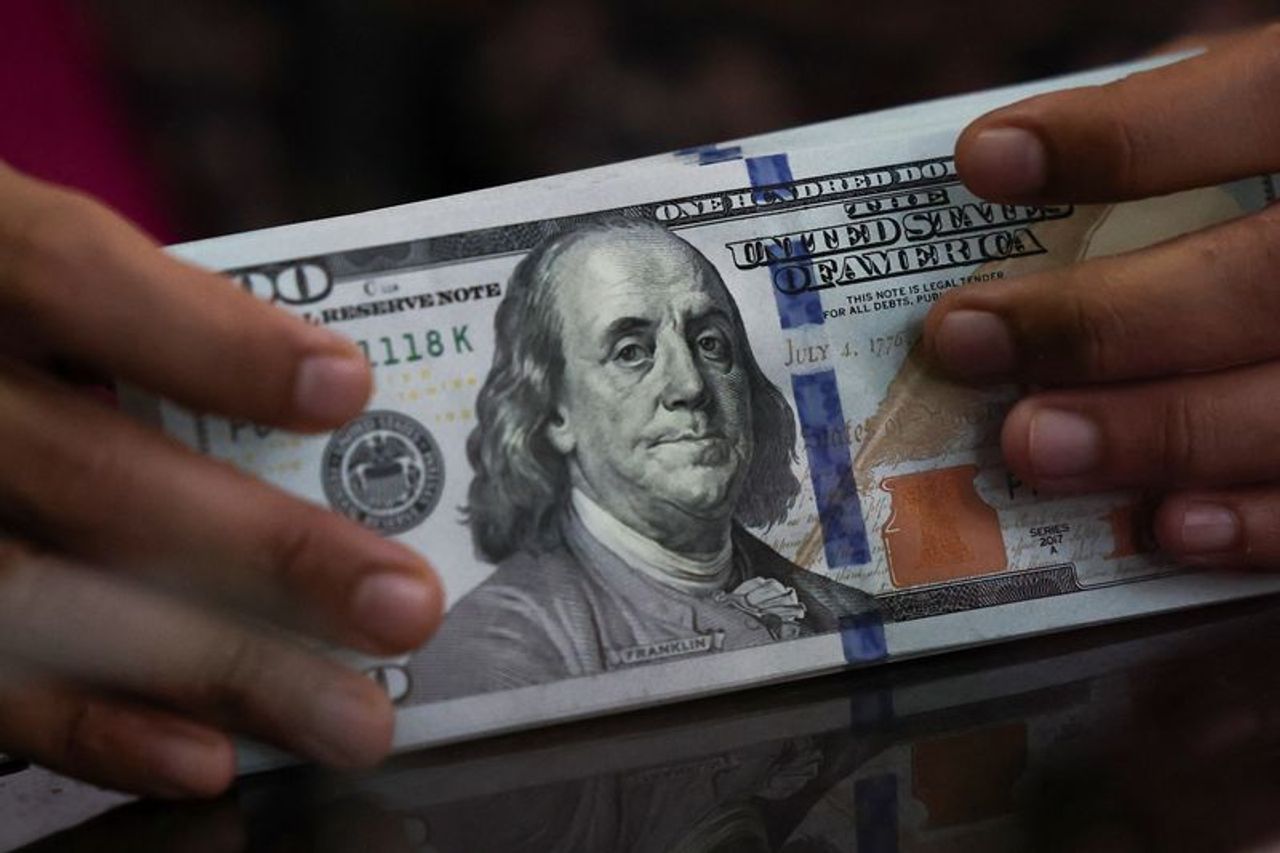
However, it returned to the market earlier. In May, the ministry resumed purchasing foreign currency.
But the volume of purchases was small—1.2 billion rouble per day. The government's limited demand did not curb the rouble’s appreciation.
Incidentally, the Ministry of Finance previously discussed revising the budget rule to adjust the oil cutoff price. When the price is above the target, the Ministry of Finance buys foreign currency. These funds are channelled into the National Welfare Fund, a financial safety net.
If the cut-off price is lower, funds from the "piggy bank" are used to offset the loss of budget revenue.
Therefore, the Ministry of Finance planned to lower this mark from the current $59, since Urals was trading below it. But then the conflict between the US and Iran erupted, and the price of black gold skyrocketed.
Experts note that the rouble’s performance will depend on developments in the Middle East.
If there is an escalation and oil prices rise, the rouble will strengthen further.
Furthermore, structural factors influence the Russian currency's exchange rate. "The high key rate is holding back lending and imports, and the rouble’s share of settlements has reached almost 60 percent," Igor Rastorguev, an analyst at Amarkets, tells TRT in Russian.
Buying up ‘greenbacks’
However, there are two sides to the coin. The lucrative status of "the world's best currency in terms of performance against the dollar" conceals a harsh reality.
"The Russian budget is losing 100-150 billion rouble’s a month. Exporters are forced to scale back their investment programmes," a source who wishes to remain anonymous, tells TRT Russian.
But there are also those who benefit from the rouble’s strengthening. Among those who benefited were importers, IT companies with foreign-currency expenditure, and retailers.
A strong rouble means, first and foremost, cheap imports. Inflation is slowing. For example, in April, it was 5.7 percent.




As a result, foreign goods, equipment, medicines, auto parts, and foreign travel become more accessible.
"My husband and I went on vacation in mid-May. A week's stay at a four-star hotel cost us about 150,000 roubles. But we had to leave within a few days," Volgograd Region resident Tatyana Mishchenko told TRT in Russian.
The strong rouble has boosted tour sales by 30-90 percent, experts say.
The most noticeable growth in demand is for tours to the countries most popular with Russian tourists: Türkiye, Egypt, Vietnam, and China.
Türkiye leads the way, with total sales increasing from 38 percent to 43 percent.
"For those planning a trip abroad, now is a good time to buy foreign currency," Rastorguev says.
Is the dollar no longer a safe bet?
As soon as the dollar fell, Russians' old reflex kicked in—buy while it's cheap. Some fear the moment will pass, taking the favourable exchange rate with it. Others are stocking up on foreign currency before travelling abroad.
However, experts advise caution.
"For long-term investments, cash is not the best instrument today," Rastorguev says. Relying solely on cash is a risky proposition.
Among the disadvantages of holding greenbacks: they don't generate income and don't protect against inflation. And don't forget about the spread—the difference between the purchase and sale price. Typically, it turns out later that the spread and commissions are part of the potential gain.
Non-cash currency also doesn't generate profit. Transactions with it are subject to fees, and there are no guarantees of safety.
Meanwhile, experts say the rouble’s strengthening hasn't yet fully taken hold. Russians will continue to feel its effects for several more months, primarily in their wallets.
A strong rouble helps to reduce inflation by making imports cheaper. And this includes the lion’s share of non-food goods.
However, experts believe this trend will not last.
Further strengthening of the rouble is simply unprofitable for the Russian treasury and exporters. Therefore, the authorities will take measures to weaken the national currency.
For example, the Ministry of Finance will increase foreign-currency purchases under the budget rule.
Alternatively, the Central Bank will ease administrative restrictions on currency.
"Sinara Investment Bank forecasts an average annual exchange rate of 81 roubles per dollar in 2026, and 85 roubles per dollar in 2027. The baseline forecast for the end of 2026 is 80–90 roubles per dollar," Rastorguev tells TRT Russian.
He notes that the rouble is currently in a unique situation: importers and consumers are winning, while the budget and exporters are losing.
However, this situation could change in the coming months.
This article was first published on TRT Russian.