Syria has welcomed the International Atomic Energy Agency (IAEA) Board of Governors’ consensus adoption of a resolution closing outstanding issues related to the country’s nuclear file and removing the matter from the board’s agenda.
In a statement late on Wednesday, the foreign ministry said the decision “closes a chapter that has lasted for years” and opens “new prospects” for Syria to cooperate internationally on the peaceful uses of nuclear energy and technology.
The ministry described the resolution as an “important diplomatic and legal achievement for Syria,” saying it reflected the country’s “success in building consensus within the IAEA Board of Governors.”
It said Damascus had adopted “transparency, cooperation and respect for international obligations as a consistent approach since the country’s liberation,” in an effort to address the legacy left by the regime of Bashar al Assad.
On Wednesday, the IAEA Board of Governors decided to end the noncompliance finding on Syria’s nuclear obligations after the completion of technical and legal requirements, according to the Syrian state television Alikhbariah.
A ‘historic breakthrough’







In August, the head of the Syrian Atomic Energy Commission, Mudar al Akaleh, said Syria was moving towards closing the noncompliance file and expanding peaceful nuclear applications.
He said the commission, in coordination with the foreign ministry, had worked in recent months to provide all technical requirements needed to assess nuclear materials and waste linked to the former regime, in accordance with international safeguards and the IAEA’s legal framework.
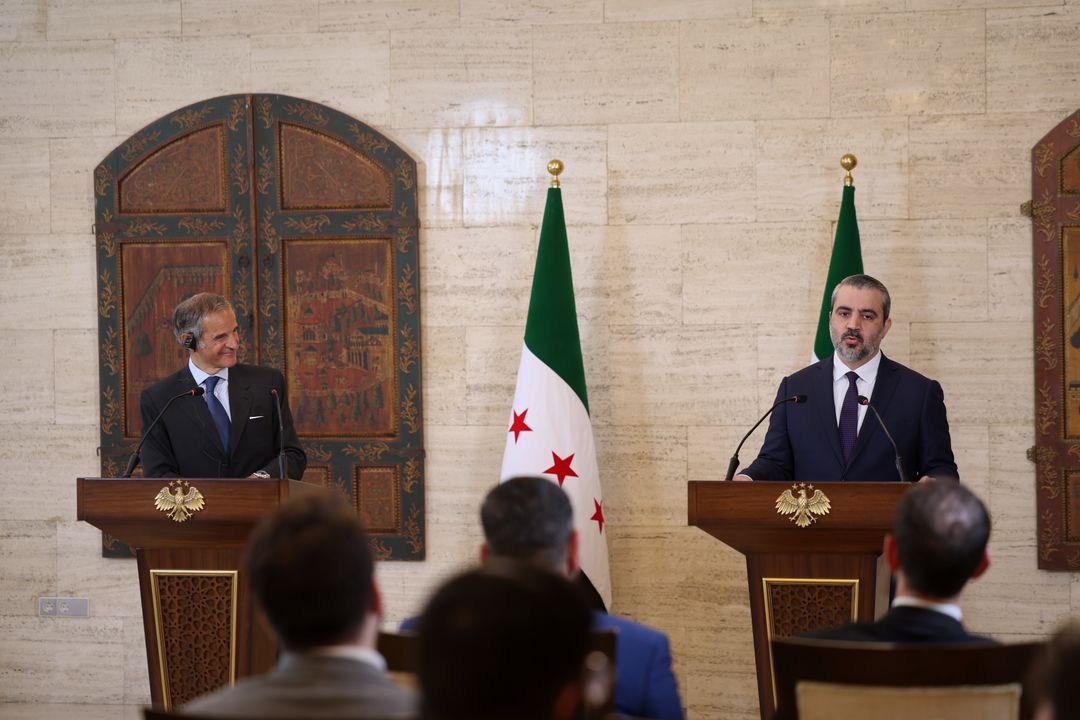
Speaking in Damascus on August 18, IAEA Director General Rafael Grossi announced the presence of “several tons of nuclear materials” remaining from the Assad era in Deir ez-Zor province, adding that inspectors had been granted access to the site.
An IAEA report circulated to member states and leaked to the media said agency inspectors conducted verification and investigative work at various sites in Syria in August.
The report said the site visits revealed that the ousted Assad regime had failed to declare nuclear materials, facilities and types of activities that should have been reported under Syria’s comprehensive safeguards agreement with the NPT.
On Monday, opening a meeting of the IAEA Board of Governors in Vienna, Grossi said the agency made a “historic breakthrough” after Syria’s new administration provided required information and allowed access to the Deir ez-Zor facility and other sites.