 Ozcan Akinci
When Greek Defence Minister Nikos Dendias recently admitted that Greece's defence budget remains insufficient despite major sacrifices by Greek taxpayers, he unintentionally highlighted a deeper strategic dilemma.
Between 1995 and 2025, Greece allocated approximately €170-200 billion ($197-$232 billion) to defence. Yet today, its own defence minister continues to argue that available resources remain inadequate to address perceived threats.
This raises a fundamental question: is the problem the size of the budget, or the strategic model behind it?
The issue is not whether Greece faces legitimate security concerns. Long-standing disputes with Türkiye over maritime jurisdiction, airspace interpretation, island militarisation, the Cyprus island and competing claims in the Eastern Mediterranean remain politically sensitive and strategically important.
The more significant question is why three decades of extraordinary spending have not generated greater strategic confidence.
For decades, Greek defence planning has been heavily shaped by the perception of Türkiye as the country's principal security challenge. Dendias himself has repeatedly described Türkiye as a direct and even existential threat.
This perception has translated into consistently high defence expenditures. Greece spent approximately $8.4 billion on defence in 2025, equivalent to around three percent of GDP, placing it among NATO's highest spenders relative to economic size.
Over the past three decades, cumulative defence spending totalled approximately €170-200 billion ($197-$232 billion). During several periods, defence expenditure remained above 4 percent of GDP and was rarely allowed to fall significantly, even during severe economic crises.
Yet despite these investments, Greek leaders continue to argue that available capabilities remain insufficient.
The persistence of this argument suggests that the central challenge may not be purely financial.
It may instead reflect the limitations of an import-dependent security model.
The opportunity cost of thirty years
The most important aspect of the debate is not military expenditure itself but what economists describe as opportunity cost.
Every euro allocated to defence is a euro unavailable for industrial development, research and development, education, technological innovation or infrastructure investment. States naturally face difficult choices among these priorities.
Greece repeatedly chose defence spending even during periods of extraordinary economic hardship.
The 2008 financial crisis illustrates the scale of the trade-off. Between 2008 and 2016, the Greek economy contracted by more than 25 percent. Real GDP per capita fell from approximately €22,600 to €17,000 ($26,200 to $19,700), while unemployment climbed from 7.8 percent to 27.4 percent.
Youth unemployment reached 61.4 percent in 2013, one of the highest rates recorded anywhere in Europe. Public debt expanded dramatically, and an estimated 650,000 educated Greeks left the country between 2007 and 2013.
Despite this economic collapse, defence spending remained largely protected. Military expenditures continued absorbing between 2.3 and 2.7 percent of GDP throughout much of the austerity period.
A similar pattern emerged during the COVID-19 crisis. Greece's economy contracted by 8.2 percent in 2020, yet defence spending rose from $5.77 billion in 2020 to $8.3 billion in 2021, an increase of nearly 44 percent in a single year.
The pattern is difficult to ignore. Economic crises repeatedly forced painful sacrifices across society, while defence spending remained a political priority.
How those resources were spent may be even more important than how much was spent.
Most major Greek defence acquisitions over the past decade relied on foreign suppliers. These include Rafale fighter aircraft, Belharra frigates, Exocet missiles, F-16 modernisation programmes and various air-defence systems purchased primarily from France, Israel and the United States.
According to SIPRI data covering 2021-2025, Greece became France's third-largest arms customer after India and Egypt, accounting for roughly 10 percent of French arms exports.
These acquisitions undoubtedly improved military capabilities. However, they also reinforced structural dependence on external suppliers for technology, maintenance, upgrades and future procurement cycles.
As military technology evolves towards drones, artificial intelligence, cyber systems and advanced sensors, that dependence may become increasingly expensive.
Dendias himself recently acknowledged the transformative role of drones in modern warfare. Yet Greece remains primarily a buyer rather than a producer of such technologies.
Every new technological cycle, therefore, requires another round of imports.
What if the money were invested differently?
The most revealing question may be the simplest one.
What would Greece look like today if even part of that €170-200 billion ($200–230 billion) had been invested differently?
Assume that roughly 60 percent of cumulative defence spending, approximately €100-120 billion ($116–140 billion), had been directed toward domestic industrial development instead of imported military platforms.
Such resources could have supported defence research, drone programmes, naval technologies, advanced manufacturing, renewable energy systems, university-industry partnerships and strategic infrastructure.
The comparison with Türkiye is instructive.
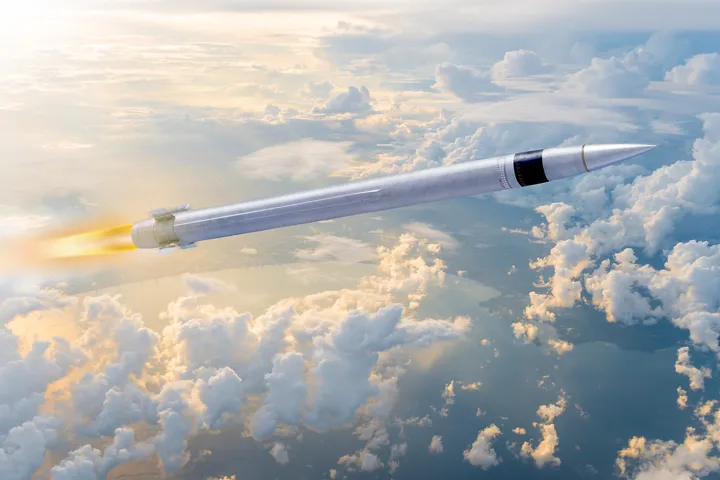
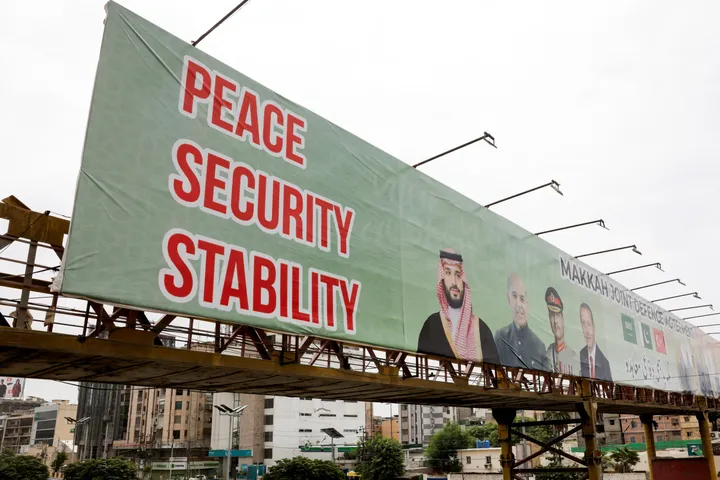
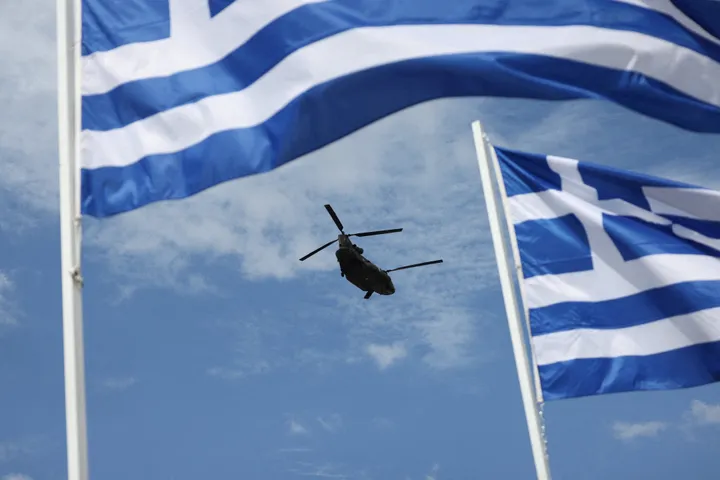
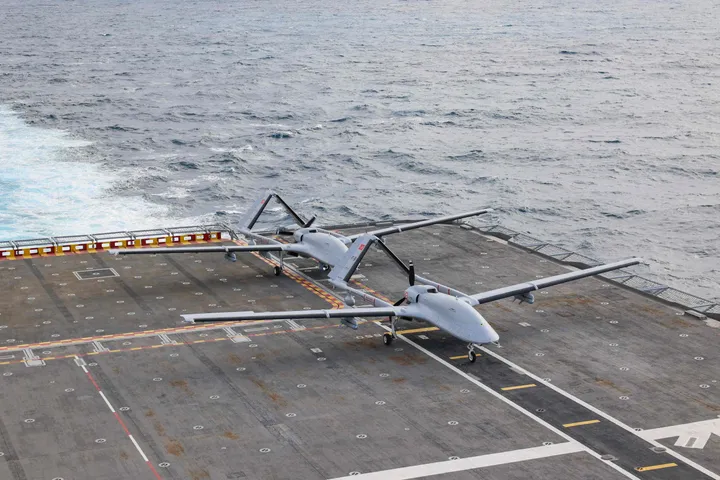
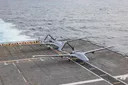
In the early 2000s, Türkiye's defence industry met roughly 20 percent of domestic requirements.
Today, official figures place domestic production above 80 percent, while some recent assessments suggest it exceeds 90 percent.
More than 4,000 companies operate within the sector. The industry employs over 100,000 people, generated a record $10.5 billion in exports in 2025 and invests roughly $3.3 billion annually in research and development.
The broader significance is not military alone.
Defence spending increasingly became a mechanism for technological development, industrial expansion and export growth. Military investment generated engineering jobs, strengthened research ecosystems and contributed to broader economic capacity.
Had Greece pursued a comparable long-term strategy, scaled to its own economic and demographic realities, it could plausibly possess a substantially larger technological and industrial base today.
Instead, much of the spending flowed abroad through procurement contracts.
The consequences extend beyond economics.
One of Greece's most serious long-term challenges is demographic decline, compounded by a persistent brain drain. Hundreds of thousands of highly educated Greeks emigrated in the years following the financial crisis.
Many remain abroad today.
This matters because advanced industrial ecosystems depend on engineers, researchers, technicians and entrepreneurs. Countries cannot achieve technological sovereignty without retaining skilled human capital.
The link between industrial weakness and demographic decline is therefore direct. A country that struggles to create high-value employment opportunities inevitably finds it harder to retain the talent needed for future growth.
In this sense, defence dependence and brain drain reinforce one another.
A second strategic window
Greece may now be approaching a second strategic window.
Athens recently announced a new twelve-year modernisation programme worth approximately €25-28 billion ($29–33 billion). Significantly, the plan includes references to strengthening domestic defence industry capabilities.
That emphasis reflects the growing recognition that long-term security requires more than procurement alone.
Yet the broader geopolitical environment has also changed.
Germany is now focused on its unprecedented rearmament effort. The European Union is increasingly preoccupied with Russia and collective defence. Meanwhile, the United States continues to shift strategic attention towards China and the Indo-Pacific.
External balancing has therefore become more uncertain and potentially more expensive than it was three decades ago.
This reality increases the importance of domestic industrial capacity.
There is also an alternative path.
The long-running disputes between Türkiye and Greece remain difficult and politically sensitive. However, the ongoing rivalry imposes substantial economic costs on Greece.
More ambitious frameworks for cooperation in maritime development, energy exploration, fisheries management, logistics and regional connectivity could reduce some of these costs and create space for practical cooperation.
Such arrangements would not immediately eliminate disagreements. However, they could redirect resources from permanent competition towards productive investment.
The opportunity cost of unresolved disputes remains considerable.
Ultimately, the central lesson extends beyond Greek-Turkish relations.
The evidence suggests that the key challenge facing Greece is not simply the volume of defence spending. Between 1995 and 2025, the country spent approximately €170-200 billion ($200–230 billion) on defence while remaining heavily dependent on imported systems.
At the same time, Greece experienced a severe economic crisis, large-scale brain drain, demographic decline and persistent industrial weakness.
Today, Greek leaders continue to argue that existing resources remain insufficient. This suggests that spending alone cannot generate lasting strategic confidence.
Sustainable security depends not only on acquiring weapons but also on developing technology, retaining talent and building resilient industrial foundations.
Greece now faces a choice. Future resources can continue to finance external dependence, or they can help build the industrial, technological, and human-capital foundations needed for long-term security and prosperity.
That choice, more than any procurement contract, may determine Greece's strategic position for decades to come.