 Aya Jebari Laakel
While bombs continue to fall in the Middle East despite the ceasefire between the United States and Iran, another, quieter form of violence persists: sanctions, defined in the UN Charter as measures that do not involve the use of armed force.
But the most significant measures today are, above all, unilateral: restrictions imposed by one party to force another state to change its behaviour.
Their impact depends on the power imbalance between those imposing sanctions and those targeted.
Cuba, under US sanctions since 1960, and Iran since 1979, illustrate this clearly.
In Iraq, sanctions were multilateral and imposed from 1990, but the United States and the United Kingdom blocked their removal.
They are presented as a non-military alternative aimed at governments, but they disproportionately affect civilians by weakening health systems, restricting trade, and eroding the economies of countries struggling to provide basic necessities.
A study published in The Lancet Global Health links unilateral sanctions to about 564,000 excess deaths per year, a figure comparable to some estimates of total annual war deaths, including civilians.
The authors also note that 51 percent of these deaths occur among children under five.
The study underscores that the longer these measures remain in place, the higher the associated mortality. If this annual estimate is averaged over 1971 to 2021, it suggests a total of 28.8 million deaths.
It is therefore not surprising that a specialised legal report argues that sanctions can be more “lethal,” function as “war by other means,” and even pave the way for the renewed use of force.
In many countries of the Global South, these measures are imposed as tools of punishment and attrition, aimed not only at forcing behavioural change but also at weakening the state’s capacity to function.
In an interview with Al Jazeera, Narges Bajoghli warned that when sanctions are combined with bombing campaigns, they add “one layer of war on top of another.”
Their growing use by the United States, increasing by more than 900 percent over the past 20 years, shows how deeply this logic of coercion has become entrenched.
The cases of Iran, Cuba, and Iraq show how this pressure takes different forms and intensities, yet follows the same logic: economic strangulation, coercive negotiation, and the ever-present threat of military intervention.
Iran
The United States has imposed unilateral sanctions on Iran since 1979, following the Revolution that overthrew the Shah, one of its main regional allies, and the takeover of its embassy in Tehran, where 52 American diplomats were held for 444 days.
Over time, Washington has expanded these sanctions, citing “terrorism,” “human rights abuses,” and Iran’s nuclear program.
Tehran rejects these accusations and describes the US sanctions as “outlandish and absurd,” arguing that they do not open the door to negotiation and instead “permanently” close off diplomatic avenues.
The initial trade embargo was followed by restrictions on oil, gas, banking, and transportation, as well as penalties on foreign companies and banks trading with Iran.
From 2006 onward, the United Nations and the European Union joined the effort, though with more limited measures focused on the nuclear program.
The Joint Comprehensive Plan of Action, agreed in 2015 between Iran, the United States, and five other world powers, limited and monitored Iran’s nuclear program in exchange for sanctions relief.
This provided a brief economic respite, which ended in 2018 during the first term of US President Donald Trump, who unilaterally withdrew from the agreement and launched a “maximum pressure” campaign. Washington targeted key sectors of Iran’s economy, including crude oil exports, banking, and transportation.
Then-Secretary of State Mike Pompeo summarised the objective: Tehran had to make a “180-degree turn” or watch “its economy crumble.”
Although only the United States withdrew from the agreement, many companies ceased operations in Iran out of fear of retaliation.
The pressure became critical: the Iranian currency fell from around 34,000 to the dollar in 2016 to approximately 270,000 in 2021 and is projected to reach nearly 1.5 million by January 2026.
Inflation has remained above 40 percent annually, and the basic food basket has become prohibitively expensive. Although “humanitarian exceptions” exist, banking restrictions hinder essential payments, while residents report shortages of essential medicines.
In January 2026, US Treasury Secretary Scott Bessent presented sanctions as a strategy to weaken Iran from within, claiming they had “worked” because the economy “collapsed” in December and that, as a result, “people took to the streets,” referring to protests that shook the country.
Nuclear talks between the United States and Iran resumed in May 2025, but an attack launched by Tel Aviv on June 13 halted the process. Less than a year later, on February 6, 2026, both sides restarted negotiations.
It was in this context that another attack occurred: on February 28, Iran was struck by the United States and Israel while talks were still ongoing.
Just a day earlier, Omani mediator Badr Albusaidi had stated that an agreement was “within reach.”
Cuba
Cuba shows another version of the same logic, hardened with Trump’s return: not open war, for now, but a strategy of prolonged suffocation accompanied by threats of intervention to subdue the country.
Following the Cuban Revolution of 1959, which ended a regime allied with Washington and affected US interests on the island, the United States began its economic pressure on Cuba.
It started with a partial embargo in 1960 and became a full trade embargo in 1962. In the 1990s, the embargo was codified in US law, solidifying it as a structural policy towards the island.
Since then, it has restricted access to fuel and basic imports, with profound effects on Cuban economic development, exacerbating energy vulnerability and weakening the food supply.
In January 2026, when Washington launched a military operation in Venezuela and abducted President Nicolas Maduro, the White House further intensified pressure on Cuba: it cut off Venezuelan crude oil that was still sustaining the island and threatened tariffs on any country that continued to supply it.


UN experts described the blockade as “a serious violation of international law.”
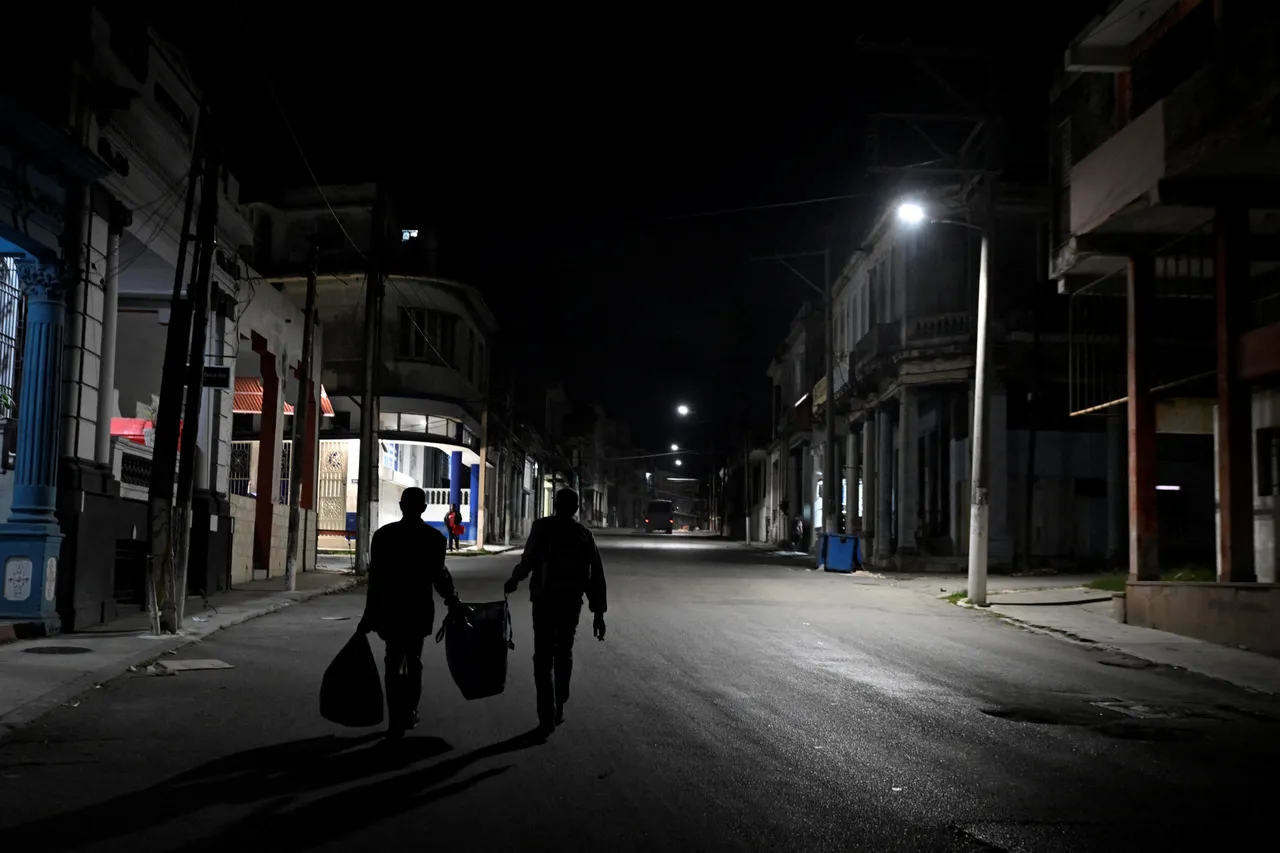
In March 2026, Cuba suffered three nationwide power grid collapses. The government activated small, localised power plants to provide essential services, but some hospitals had to cancel surgeries.
President Miguel Diaz-Canel stated that the island had not received any oil in three months and that domestic production covered only 40 percent of fuel needs.
Trump summarised the logic behind the pressure: Havana has no money, oil, or food and therefore wants “help” from Washington.
He added that after Iran, “Cuba will be next” and that it will reach an agreement or, failing that, he would do “whatever it takes.” Diaz-Canel accused Washington of trying to “seize the country and its resources,” strangling the economy to force its surrender.
The Iraq precedent
Iraq demonstrated how sanctions imposed by the Security Council can go beyond their stated objective and, by blocking their lifting, become a protracted instrument of attrition.
Following Iraq’s invasion of Kuwait in 1990, broad sanctions were imposed through Resolution 661. After the 1991 war, Resolution 687 made their lifting contingent on Iraqi disarmament.
Their effects were drastic: within six weeks, supplies were running low, and by the end of 1990, food shortages were widespread.
The humanitarian catastrophe led to the resignation of three high-ranking UN officials, Denis Halliday, Hans von Sponeck, and Jutta Burghardt.
Halliday described its impact as “genocidal,” in line with a 1995 estimate by the Food and Agriculture Organization of the United Nations, which attributed more than one million adult deaths and 567,000 child deaths to the sanctions.
Over time, it became clear that disarmament alone was insufficient to explain the situation.
Although the responsible agencies concluded their work between 1997 and 1998, the United States and the United Kingdom voted against lifting the embargo.
This prolonged a punishment that kept Iraq exhausted and ultimately became part of a regime change strategy.
The final blow came in 2003 with the US-led invasion of Iraq, decisively supported by the United Kingdom, under the pretext of “weapons of mass destruction.”
Kofi Annan declared it contrary to international law. In the two decades that followed, the invasion produced a cycle of occupation, state disintegration, fragmentation, and violence whose consequences continue to weigh heavily on the country.
As with Iran today, the force was justified by a “threat” that international inspectors deemed improbable.
Sanctions: an alternative to war or war by other means?
The Iraq case discredited the model of comprehensive sanctions against a state at the United Nations, opening a broad debate about their humanitarian impact.
Since then, the Security Council has not reimposed such measures, and the focus has shifted to unilateral sanctions, which are now central to Western coercive policy.
Various experts question whether sanctions are truly a “cleaner” alternative to war. Mark Weisbrot, co-author of the study in The Lancet, warns that they are erroneously assumed to be less lethal and almost non-violent.
In her article Weapons Against the Weak: International Law and the Political Economy of Coercion, Aslı U. Bali, a professor at Yale Law School, emphasises that they produce “hunger” and “avoidable epidemics” and often mask strategic objectives under the language of “human rights” or “democracy.”
Sanctions usually pursue two goals: either to exert enough pressure on a regime to change its behaviour, or to pressure society into rising against the state and ultimately bringing it down, summarises Narges Bajoghli.
Even for these purposes, they do not guarantee results. They rarely achieve regime change or their stated political objectives on their own.
Often, they do not replace force but operate alongside it: they can project the image of a weakened country to third parties, or even encourage those imposing sanctions to resort to military action.
Who sanctions whom? The North-South asymmetry
The UN General Assembly repeatedly condemns unilateral coercive measures, but voting patterns are clear: most Global South countries support these resolutions, while much of the Global North either votes against them or abstains.
This power imbalance also defines the real scope of so-called “humanitarian exceptions.”
On paper, they may exclude food or medicine, but as UN experts have warned, in practice they are ineffective and inefficient.
As Special Rapporteur Alena Douhan points out, if banks, shipping companies, insurers, and suppliers refuse to operate for fear of secondary sanctions, the exception becomes meaningless.
Sanctions as a ‘tool of economic warfare’
Narges Bajoghli defines sanctions as a “tool of economic warfare” whose violence is largely invisible: “Photojournalists cannot photograph what sanctions do over time or how they affect people”.
They do not need to achieve their stated objectives in order to function. Although they do not reliably democratise or overthrow regimes, they wear them down, reduce their room for manoeuvre, and punish them without the political cost of armed intervention.
At the same time, this punishment impoverishes populations and can strengthen elites who control scarcity, smuggling networks, and access to basic goods.
The fundamental question is not only what sanctions do, but who can impose them and on whom.
In other words, who sanctions those with the power to impose sanctions?
Who sanctions the United States when it acts alongside Israel, even after the International Criminal Court ordered the arrest of Israeli Prime Minister Benjamin Netanyahu and former Defence Minister Yoav Gallant, and after the International Court of Justice issued provisional measures in the genocide case?