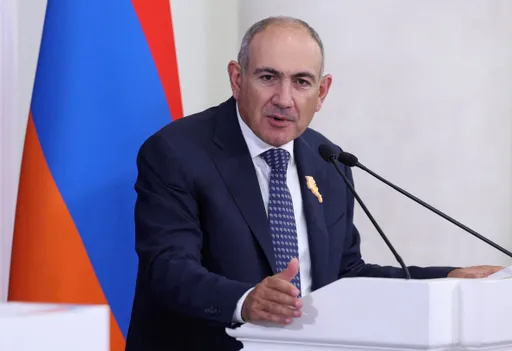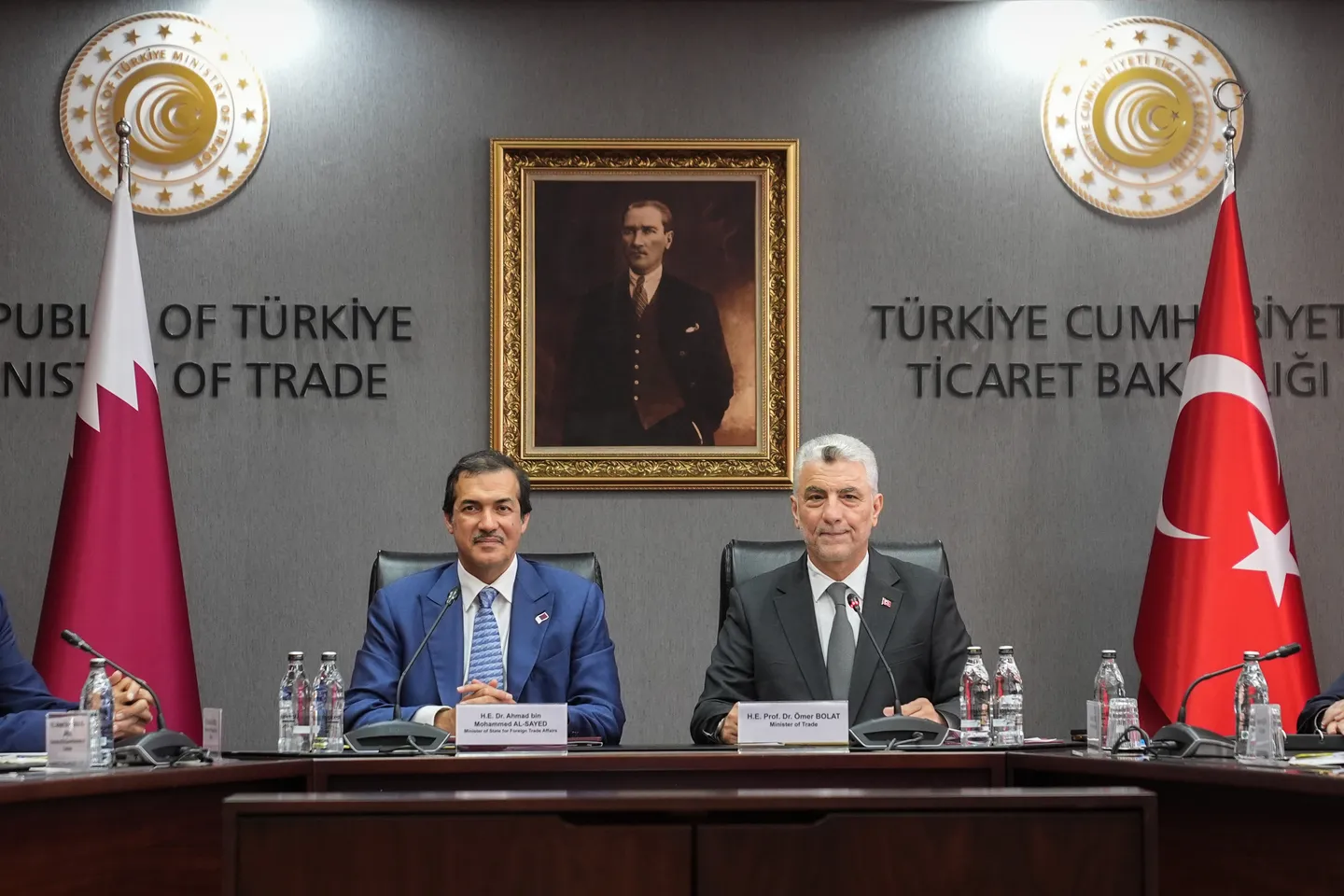
Türkiye and Qatar have set a target of increasing their bilateral trade volume to $5 billion, Turkish Trade Minister Omer Bolat said following talks in Ankara.
Bolat met with Qatar's Minister of State for Foreign Trade, Ahmed bin Mohammed Al-Sayed, at the Trade Ministry to review bilateral commerce and investment ties.
"Türkiye-Qatar relations have truly made tremendous progress. Our total annual foreign trade increased 53-fold over the past 21 years, reaching $1.3 billion last year," Bolat told reporters after the meeting.
Trade between the two nations previously climbed to $2.5 billion during preparations for the 2022 FIFA World Cup in Qatar, driven largely by construction projects, he added.
Bolat noted that the Trade and Economic Partnership Agreement, which entered into force last year, will make a significant contribution towards achieving the $5 billion target.
Corporate investments
Turkish contractors have undertaken 206 projects worth a combined $21 billion in Qatar, Bolat said.



Approximately 1,116 Turkish companies currently operate across Qatar's construction, services, and manufacturing sectors.
Meanwhile, around 250 Qatari companies hold investments totalling $7.8 billion in Türkiye, covering finance, banking, energy, logistics, media, and agriculture.
Bolat added that Al-Sayed conveyed the Qatar Investment Authority's desire to expand its investments in Türkiye, with related initiatives underway.
Addressing regional logistics challenges, Bolat stated that the closure of the Strait of Hormuz due to regional conflict has created supply bottlenecks, underscoring the urgent need for alternative trade routes.
"The current circumstances have shown that alternative routes are greatly needed to avoid dependence solely on maritime transport and the Strait of Hormuz," he said.
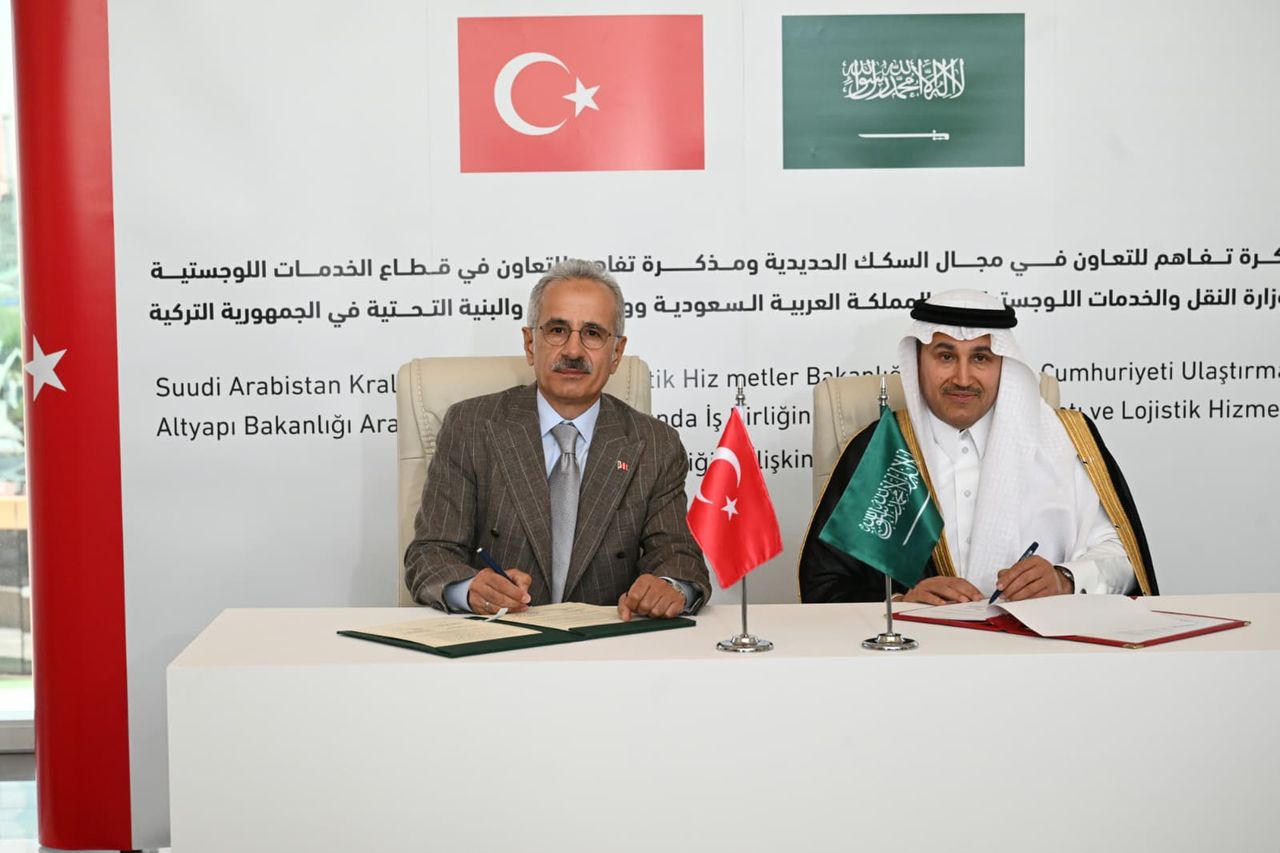
Under a transit transportation agreement with Saudi Arabia that took effect on April 15, Turkish carriers are conducting intensive shipments to Gulf countries through Syria, Jordan, and Saudi Arabia, as well as via Iraq and Saudi Arabia.
"We will work together to establish these transit and trade corridors on a stronger and more stable basis," Bolat noted.