Energy security, investment, and the financial infrastructure needed to support greater economic connectivity across Eurasia took centre stage on Friday, the second and final day of the Verona Eurasian Economic Forum in Istanbul.
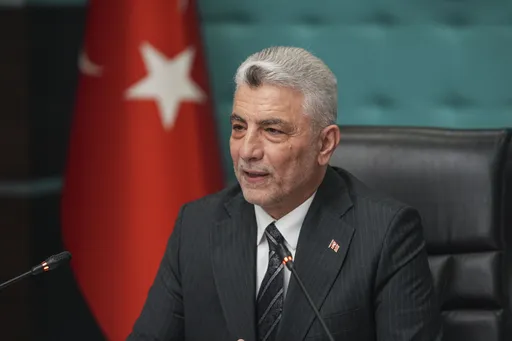
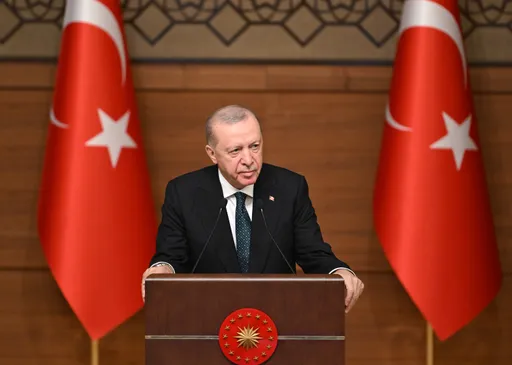
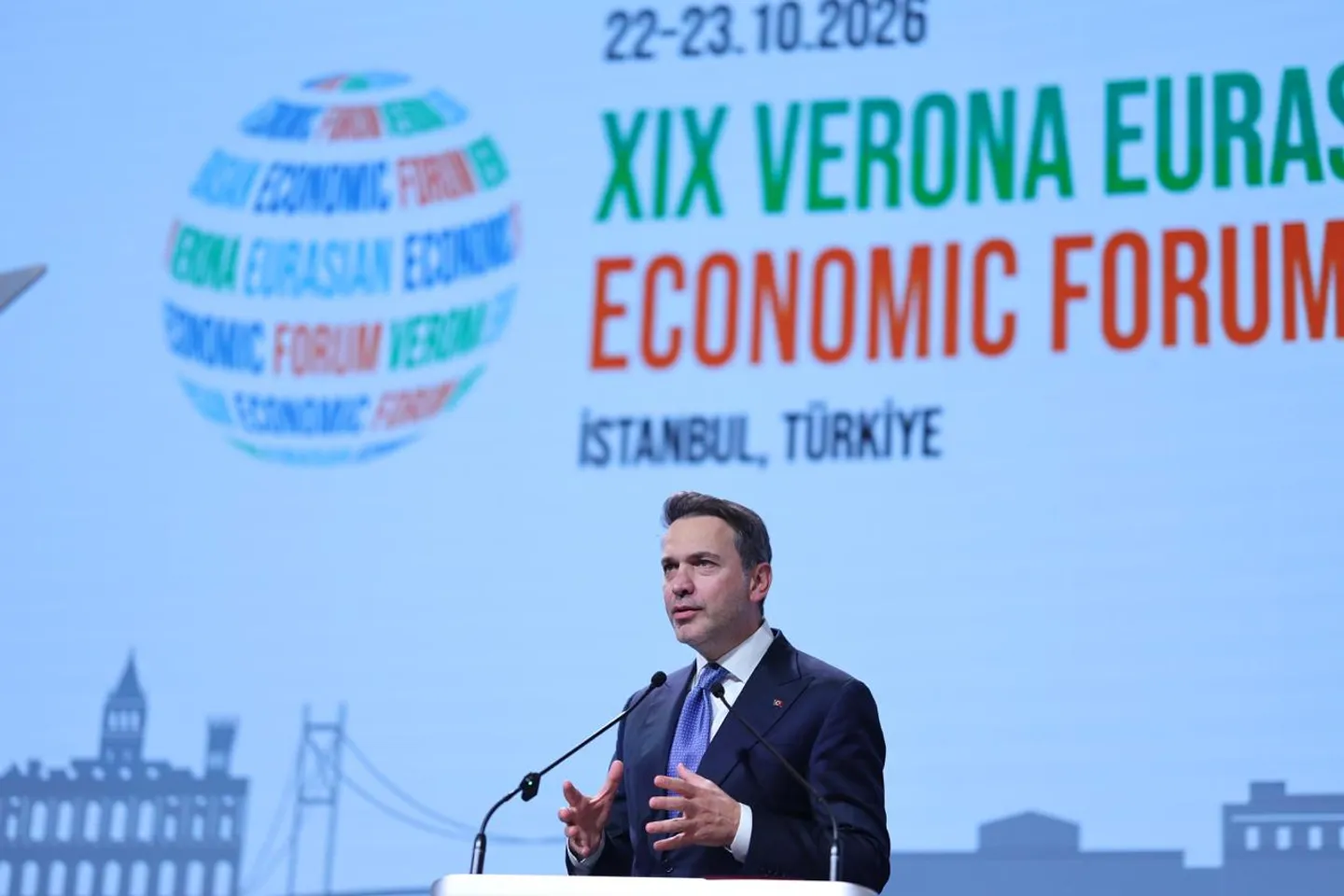
Speaking at the forum, Turkish Energy and Natural Resources Minister Alparslan Bayraktar said a world facing geopolitical tensions, supply disruptions, and rising energy demand needs greater diversification, investment, and international cooperation.
Bayraktar said Türkiye imports almost 70 percent of its energy needs, making reducing external dependence a strategic economic and national security priority.
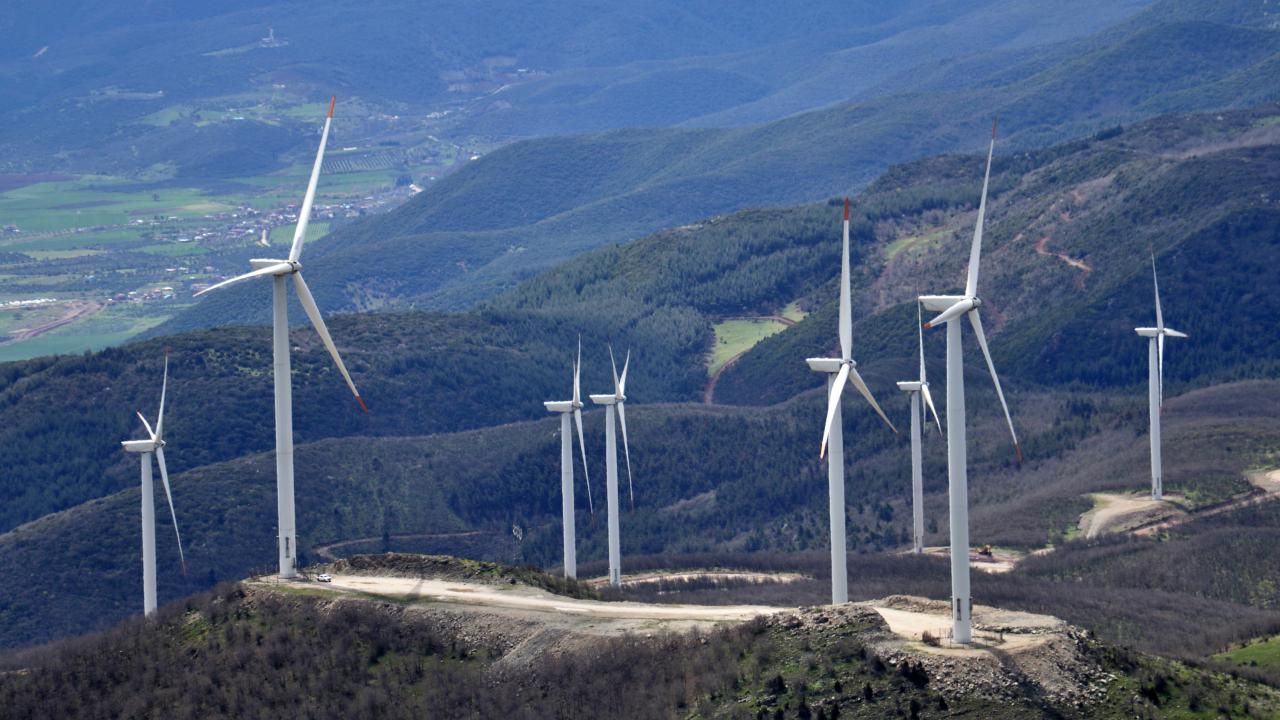
Renewable sources account for more than 62 percent of Türkiye's installed electricity generation capacity, while combined wind and solar capacity has exceeded 43 gigawatts, he said.
Türkiye eyes major energy investments
Bayraktar said Türkiye will need significant investment in its electricity networks in the coming years as it seeks to integrate more renewable capacity, improve grid resilience, and expand cross-border electricity trade.
Türkiye is also preparing to hold its first offshore wind tenders in the first half of 2027, while its Renewable Energy Resource Area program aims to allocate 2 GW of new capacity annually.
On nuclear energy, Bayraktar said it is continuing work with Russia's Rosatom to commission the first reactor at the Akkuyu Nuclear Power Plant in the coming months. Once all four reactors are operational, the 4.8-GW plant is expected to meet around 10 percent of Türkiye's electricity demand.
The country aims to reach 20 GW of nuclear capacity by 2050, including conventional reactors and small modular reactors.
Bayraktar also pointed to Türkiye's position between energy-producing and consuming regions, saying Ankara wants to strengthen its role as a reliable partner connecting regional energy markets.
COP31 presidency to focus on implementation
With Türkiye set to host next month’s COP31 UN Climate Change Conference in Antalya, Bayraktar said the Turkish presidency will put implementation at the center of the climate agenda, focusing on turning commitments into investment, technology deployment, and concrete results.
He stressed that countries have different energy systems and development needs, arguing against a one-size-fits-all approach to the energy transition.
Bayraktar said Türkiye would also advance a voluntary "35 by 35" global electrification pledge to boost electricity's share of global final energy consumption to 35 percent by 2035.
Mobilising private capital, international financial institutions, and technology partnerships would be critical to delivering the investments required for the transition, he added.



Eurasia looks to deepen financial links
The broader question of strengthening financial connectivity was also taken up in the "Financial markets in the heart of Eurasia: Resilience, Infrastructure, Undervalued Opportunities" panel, where officials and financial executives discussed how regional capital markets could become more connected.
Russian Deputy Finance Minister Ivan Chebeskov said deeper and more liquid capital markets would become more attractive and efficient, arguing that Eurasian economies still have considerable room for financial integration.
He said the Eurasian Economic Union has already begun introducing mechanisms to facilitate cross-border market access for investors and issuers, while a mechanism to provide access for professional market participants is nearing completion.
Chebeskov said another priority is integrating market infrastructure, including exchanges and depositories. Within the BRICS group – also including Brazil, India, China, and several other nations – he said pilots involving the Moscow Exchange and Russia's National Settlement Depository are testing links between the capital markets of interested member countries.
He also pointed to national currencies as an area likely to play a growing role in financial markets.
Russian capital markets shift toward domestic financing
Moscow Exchange Chairman Viktor Zhidkov said activity in Russian equities is now concentrated in the domestic market, with stock and bond placements taking place locally and domestic demand sufficient to absorb them.
He said retail investors' stock market assets had nearly doubled over five years to 16 trillion rubles ($199 billion), while private investors had put more than 4 trillion rubles ($50 billion) into corporate bonds on the Moscow Exchange since 2022.
Corporate bond placements reached 7.2 trillion rubles ($89.6 billion) in the first nine months of 2026, up 20 percent from the same period last year, according to Zhidkov.
Gazprom's First Deputy Head of Department Ignat Dirks described a similar shift at the corporate level, saying the share of foreign markets in the company's financing portfolio had fallen from 77 percent in 2022 to 13 percent by mid-2026.
Dirks said Gazprom had raised more than $14 billion on the domestic market in the last four years for refinancing and around $20 billion to finance new projects. He said the restructuring of the company's financing portfolio had been made possible by the growing maturity of Russia's domestic financial market.
Common standards seen as key to integration
Gazprombank Deputy Chairperson Elena Borisenko highlighted the importance of greater complementarity and specialisation among financial centres.
She said common standards, compliance rules, and approaches would help build greater financial compatibility, while the quality of settlement systems, capital flows, trade finance, and investment products would determine the resilience and effectiveness of Eurasia's financial architecture.
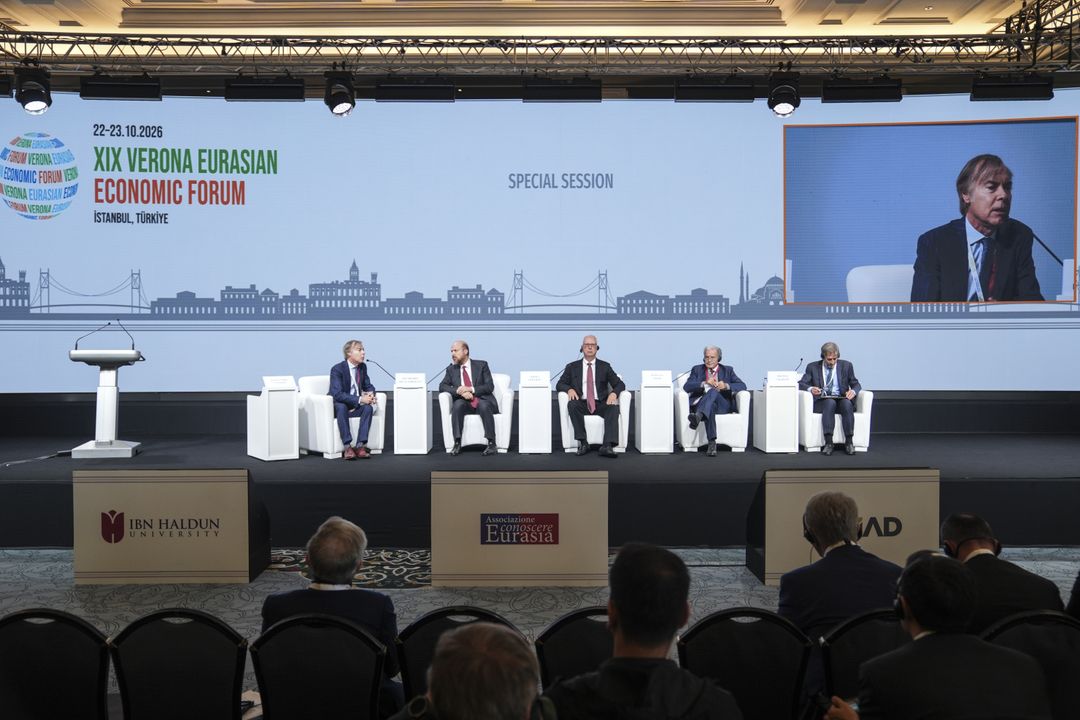
The 19th Verona Eurasian Economic Forum, held at Istanbul's Ciragan Palace on Thursday and Friday, was organised by Italy's Associazione Conoscere Eurasia with the support of Türkiye's MUSIAD and Ibn Haldun University, bringing together political, diplomatic, academic and business representatives from more than 30 countries.