 Pooja Agarwal
In February, Canada witnessed one of its deadliest mass shootings in decades. In Tumbler Ridge, British Columbia, 18-year-old Van Rootselaar killed eight people, including her mother and 11-year-old step-brother, and injured more than 25 others before dying from a self-inflicted gunshot wound.
Later investigations revealed that Van Rootselaar had interacted with ChatGPT for months before the shooting.
The chats were harmful enough for OpenAI, which owns the chatbot, to ban her account almost six months before the attack. But the company did not initially alert law enforcement about the violent nature of her posts.
Seven families affected by the Tumbler Ridge shooting have since sued OpenAI and its CEO, Sam Altman, alleging negligence and wrongful death. The lawsuits claim the company had specific knowledge of Van Rootselaar's plans and failed to warn authorities.
Altman later apologised, saying he was "deeply sorry” for not going to police with information on a ChatGPT account.
The case is one of several in which people have allegedly used large language models (LLMs) before harming themselves or others, intensifying debate over the role AI chatbots can play in interactions with vulnerable users and whether developers have adequate safeguards in place.
The emergence of generative artificial intelligence (AI) has transformed daily life, with people turning to chatbots for everything from historical questions to medical advice.
Chatbots such as ChatGPT, Claude and Gemini are also increasingly being used as sources of emotional support. That makes a fundamental question increasingly urgent: who, or what, is responsible for regulating their use?
A patchwork of AI laws
There is currently no globally binding framework to regulate AI. As of 2026, more than 70 countries have proposed or introduced AI-related legislation and national AI strategies in their own capacity.
Kelsey Farish, an entertainment lawyer who has worked on AI-related cases for the past seven years, says there is no single global authority overseeing the technology.
“There is no global body regulating AI at the moment. Most AI law focuses on the sector. Other than the EU Act, most countries are taking a sector-wise approach. For example, people in the media and entertainment sector have different issues regarding AI than people in other sectors. So the laws will differ,” she tells TRT World.
The European Union’s AI Act, adopted in 2024, is the world’s first comprehensive legal framework governing artificial intelligence. It takes a risk-based approach, imposing different requirements depending on how AI systems are used.
But other countries have chosen different paths.
China, South Korea, Brazil and Australia have introduced national AI frameworks, while the United States continues to rely largely on executive actions and sector-specific regulation rather than a single comprehensive federal AI law.
In July, China and 28 other countries signed an agreement establishing the World Artificial Intelligence Cooperation Organization (WAICO), an intergovernmental body headquartered in Shanghai that aims to promote international cooperation and global governance on AI.
Yet Farish believes national and sector-specific approaches may ultimately be insufficient for a technology that transcends borders.
“Like the Global Ocean Treaty and the Treaty on the Non-Proliferation of Nuclear Weapons (NPT), there could be a global AI treaty. A state-level law will not work. But coming up with an AI law would be very difficult,” she says.
The difficulty, she argues, lies in the fact that AI is no longer simply a technological issue. It has become intertwined with economic competition, geopolitics, national security and military capabilities, making international consensus particularly challenging.
The global race to regulate AI
The complexity of regulating AI has also been evident in the different positions taken by major technology companies on the EU’s voluntary AI Pact.
Companies like OpenAI, Adobe, Anthropic, Google, Microsoft and Mistral AI have agreed to incorporate EU-compliant tools for customers in the region. Apple, Meta, Airbus and several others did not sign the voluntary commitments. Meta described the EU AI Act as an “overreach - that will stunt growth”.
For Ritwik Batabyal, chief technology and innovation officer at Mastek, regulation can be a double-edged sword.
“Poor regulation might slow innovation, whereas good regulation will generate trust. AI Regulation in sectors like health, banking and insurance will help scale the operations because of the trust factor,” he says.
Even as the debate over regulation continues, some technology leaders have argued that action is needed sooner rather than later, given the pace at which AI is developing.
In testimony before a US Senate committee, OpenAI CEO Sam Altman called for the creation of a regulatory body that could licence AI companies. Other prominent technology executives, including Elon Musk, Sundar Pichai and Mark Zuckerberg, have also spoken in favour of greater independent oversight and audit of AI systems in the US.
But as AI becomes more deeply embedded in everyday life, regulators face a difficult balancing act: how can safeguards keep pace with a rapidly evolving technology without stifling innovation?
According to Farish, creating a single global AI law will be particularly difficult because AI is not simply a technological issue.
“AI is an economic, geopolitical and military issue. AI is a type of technology that can be used in different ways. And I certainly think that there is an emerging AI tech battle between countries,” she says.
Farish says some of her clients prefer Chinese AI tools because they consider them superior to their Western counterparts, but concerns remain over safeguards and intellectual property.
“There are a lot of intellectual property issues, like we saw with Huawei,” she says.
Batabyal believes common ground could eventually emerge. “In the future, there will be an evolution of commonalities. Different nations will find common ground and the law can evolve based on that common ground,” she says.
As countries attempt to develop their own frameworks, experts say AI regulation cannot necessarily be applied uniformly across jurisdictions.
The technology is developing at different speeds around the world, while governments compete to gain an advantage in the global AI race.
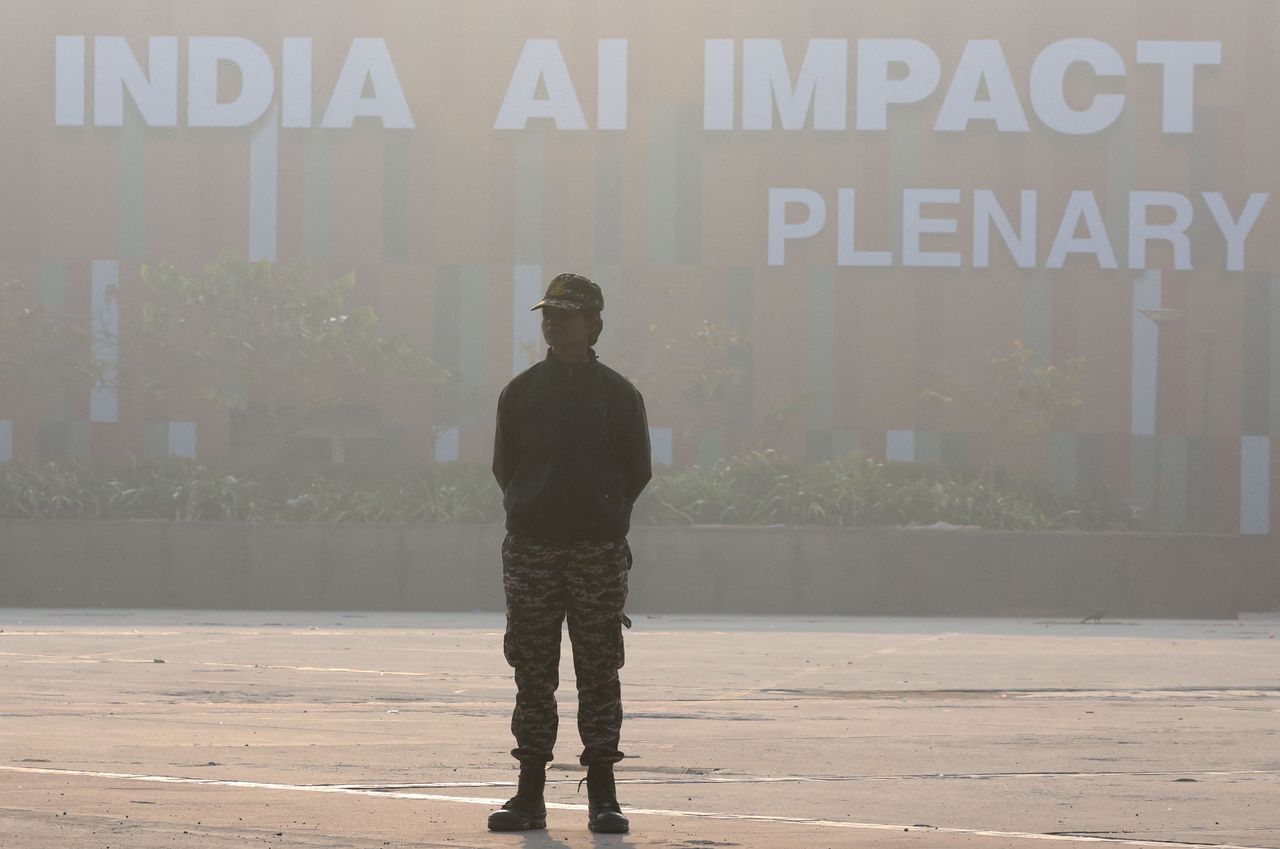
One technology, different approaches



Public attitudes towards AI also vary considerably by geography. Studies suggest that while the West is more pessimistic about AI, countries in the East have a more favourable opinion of the technology.
According to Stanford University research, respondents in China (83 percent), Indonesia (80 percent) and Thailand (77 percent) expressed significantly higher levels of optimism about AI than those in Canada (40 percent), the United States (39 percent) and the Netherlands (36 percent).
That optimism is reflected in the efforts of countries such as Singapore and the United Arab Emirates to build AI ecosystems.
Singapore has committed more than $770 million to public AI research through 2030, alongside government initiatives aimed at boosting research, development and adoption.
The UAE, meanwhile, has emerged as the world's leading adopter of AI. According to the Microsoft AI Economy Institute, AI use among the UAE's working-age population reached more than 70 percent in early 2026, compared with a global average of 17.8 percent.
So what kind of safeguards are needed when cultural, economic, social and historical factors differ from one region to another?
‘It should be seen through a creative lense. I definitely feel that AI laws in each geography will differ from one another,” Batabyal says.
“While the EU law is more horizontal and risk-based, the US Act might be more dependent on political and geographical factors. Similarly, while the AI Act in India will be more democratic because of the nature of its policies, in China the Act will reflect its own statutory laws — the way China operates,” he says.
When AI causes harm, who is responsible?
AI is not only transforming industries, but also changing how we operate in our daily lives — from modern farming, AI food delivery drones in China to AI chatbots acting as therapists for people.
While the technology is often marketed as a force for good, the Tumbler Ridge case raises a more difficult question: who should be held responsible when an AI system is alleged to have contributed to harm?
One concern is the tendency of some AI systems to be overly agreeable, or “sycophantic”. Research has increasingly highlighted the risks of chatbots reinforcing users’ beliefs rather than challenging them.
A Stanford Report published in 2026 found that leading AI models were excessively agreeable when users sought advice on interpersonal dilemmas, including situations involving harmful or illegal behaviour.
Researchers warned that such responses could make users more convinced they were right and less willing to reconsider their actions.
Other research has raised concerns about AI companions and their potential impact on adolescents and emotionally vulnerable users.
OpenAI itself acknowledged a sycophancy problem in a 2025 update to GPT-4o, rolling back an update after the model became excessively flattering and agreeable. GPT-4o was later retired from ChatGPT in February 2026, although the retirement was not solely attributed to the sycophancy issue.

Another persistent concern is AI “hallucinations” — instances in which models generate inaccurate or fabricated information.
Because LLMs generate responses probabilistically, their answers can sound convincing even when they are wrong. That creates particular risks when users rely on them for sensitive decisions involving health, legal matters or personal safety.
“It’s the Big Tech companies versus everyday users. The companies have a perspective — they want to make money,” Farish says.
“For example, when there’s a car accident, do we blame the car company or the driver of the car? However, what the authorities and people are saying is that AI technology is so powerful and its impact on people is also varying. So that’s where the debate is at.”
She says accountability becomes even more complicated when questions of copyright, transparency and technological expertise are added to the equation.
“Currently, even the lawmakers are not experts on the issue because it’s different,” she says.
Learning to live with AI
AI is already restructuring supply chains, workplaces and workflows. It is here to stay. For users, therefore, one of the most important safeguards may be developing a better understanding of what AI can — and cannot — do.
“People often forget that they are talking to a machine,” Farish says.
She compares the current moment to the early days of social media, when societies were still learning how quickly information and misinformation could spread.
Farish says she regularly encounters clients who use AI-generated contracts without understanding that laws differ across jurisdictions.
“A lot of them come to me with AI-generated contracts, which are often quite misplaced because laws are different in different countries. But the LLMs often misinform people,” she says.
She adds that some clients have even asked her to provide specific questions they could pose to AI models to generate contracts. “I respectfully deny, of course,” she says.
Her broader advice is simple: people should not allow AI to replace human judgement. “So what I can say is that as a society, we need to spend more time offline and be disconnected from time to time,” Farish says.
Batabyal takes a more distributed view of accountability.
“It will be dual accountability on a case-by-case basis. It’s the people using AI, the companies as well as the regulators. Something like low-risk AI should be encouraged. When it comes to policy compliance, data risk and so on, governments will have to take accountability,” he says.
As governments race to regulate AI and companies race to develop it, the central challenge may not be stopping the technology but determining who bears responsibility when it goes wrong.
AI may be inevitable. Accountability still has a long way to catch up.