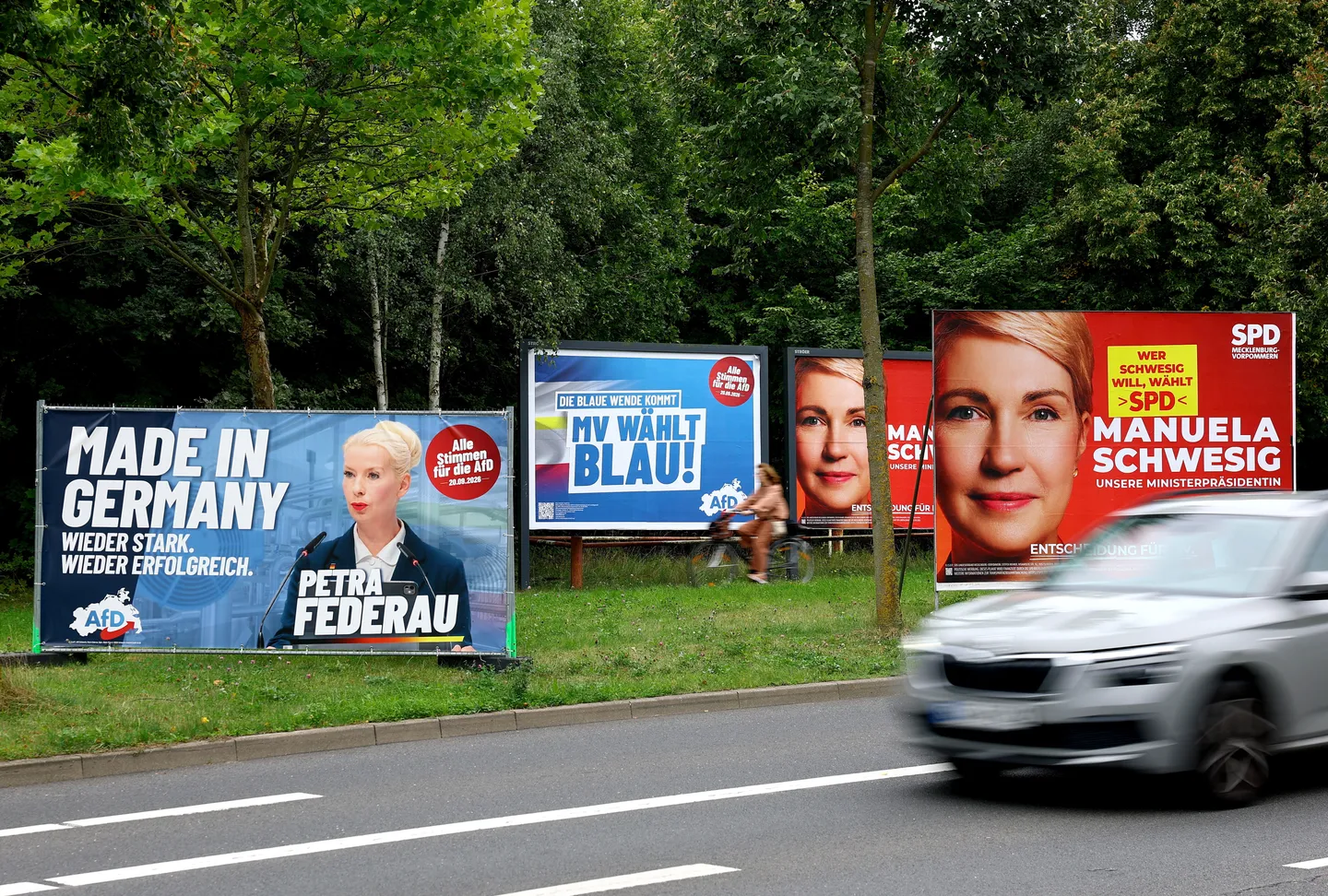
Voters across the eastern German state of Mecklenburg-Vorpommern cast ballots on Sunday to elect a new state parliament in a tense race.
Premier Manuela Schwesig's centre-left Social Democrats (SPD) and the far-right Alternative for Germany, known as the AfD, were running neck and neck throughout the campaign.
Polling stations open at 8 a.m. and close at 6 p.m. local time, with about 1.3 million residents eligible to cast a vote.
The electorate included 16- and 17-year-olds voting in a state election there for the very first time this year.
The contest followed the AfD's record 43.8 percent showing in Saxony-Anhalt two weeks earlier, its strongest result yet in any German state.
A final public broadcaster ZDF poll put the Social Democrats (SPD) narrowly ahead at 37 percent, with the AfD trailing just one point behind at 36 percent.
The socialist Left Party polled at 9 percent, while Chancellor Friedrich Merz's conservative CDU hovered close to the 5 percent entry threshold, at 6 percent.
The Greens stood at 5 percent, the left-wing Sahra Wagenknecht Alliance (BSW) trailed at 4 percent, and 21 percent of respondents remained undecided before the vote.

What’s at stake
Mecklenburg-Vorpommern is a thinly populated state on the Baltic Sea, with Schwerin as its capital. The SPD has governed there since 1998 with changing partners.
Schwesig, premier since 2017, won 39.6 percent in the 2021 election and has since governed alongside the Left Party.
A recent ZDF survey found 61 percent would back Schwesig in a direct vote, against just 30 percent for her AfD rival.
Her AfD challenger, federal lawmaker Leif-Erik Holm, campaigned on economic grievances and a pledge to end 28 years of Social Democratic rule.








Possible coalition scenarios
Neither the SPD nor the AfD is expected to win an outright majority in the state parliament, meaning both would need partners to form a government.
Analysts said the likeliest outcome remained a three-way alliance of the Social Democrats, the Left Party and the Greens.
Every mainstream party ruled out governing alongside the AfD, leaving its path to power unclear even in victory.
Beyond Schwerin, the vote doubled as a referendum on Merz, who cancelled a UN trip to New York to stay in Berlin.
Test for Merz
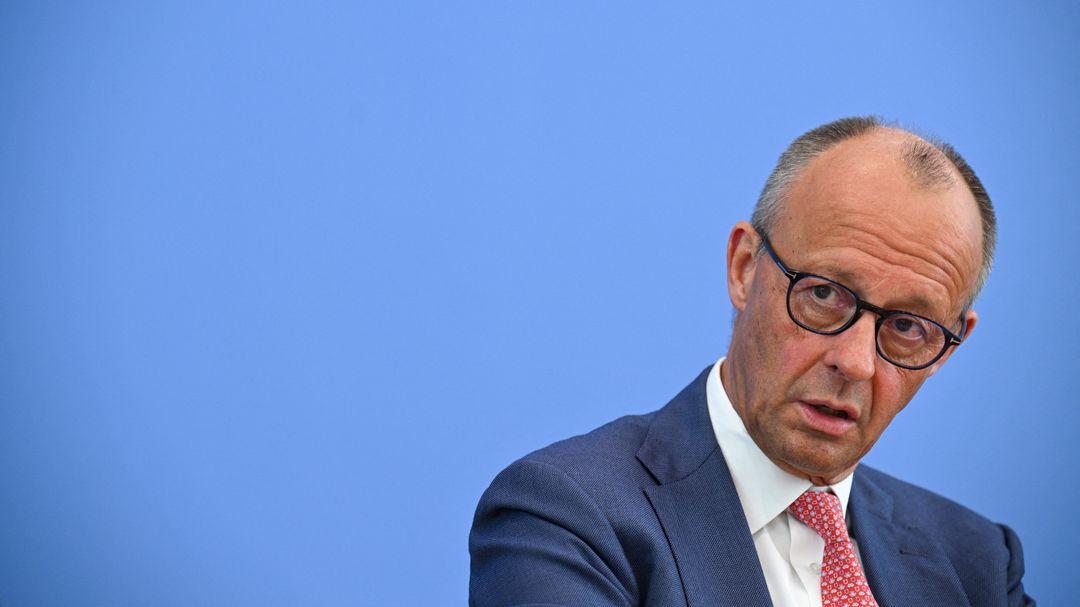
In Berlin, Sunday's election served as a barometer of Chancellor Friedrich Merz's standing, whose support has slid to historic lows.
In Mecklenburg-Vorpommern, the CDU polled around 6 percent, risking a fall below the 5 percent threshold for parliament entry, a result that would leave it without seats in Schwerin for the first time since reunification.
Merz cancelled a UN trip to New York to stay in Berlin, meeting senior CDU leaders late Sunday, with further talks continuing on Monday and a CDU-CSU lawmakers' gathering two days later.
Leadership speculation has built for weeks, though all 8 CDU state premiers backed Merz on Wednesday.
Observers said a strong AfD result paired with another CDU defeat could still spark a leadership fight.