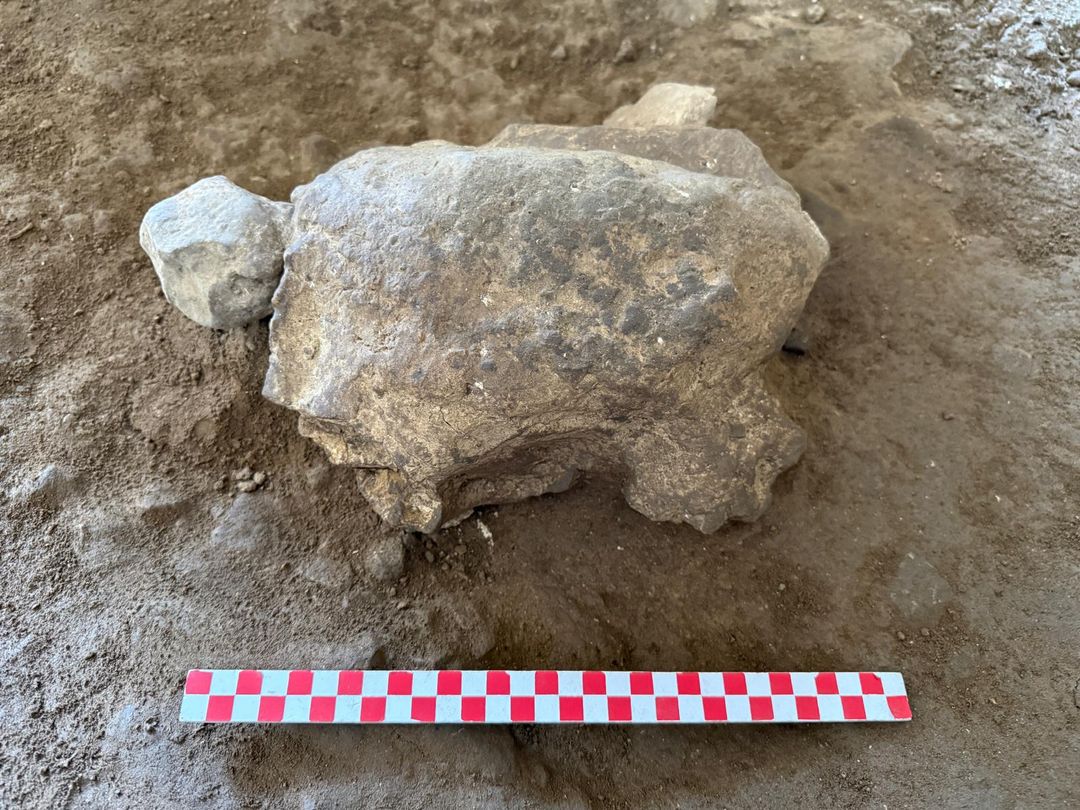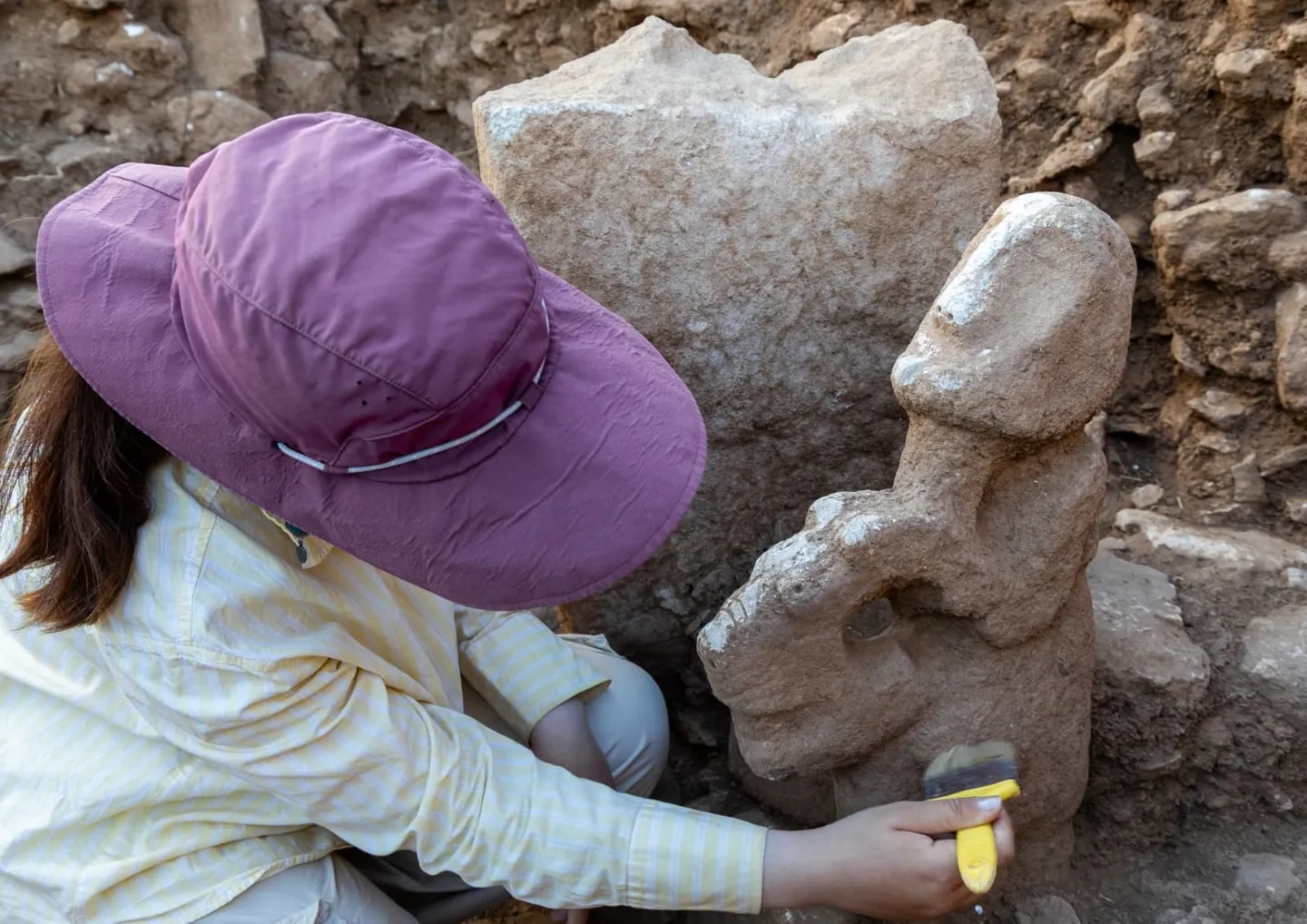
Archaeologists have unearthed an 11,000-year-old stone sculpture depicting a human figure sitting on the back of a leopard at Karahantepe, one of a group of prehistoric sites in southeastern Türkiye that are reshaping the understanding of early human settlements.
The 70-centimetre sculpture was found during excavations this year at Karahantepe, near the city of Sanliurfa, Culture and Tourism Minister Mehmet Nuri Ersoy said on Tuesday.
In a post on Turkish social media company NSosyal, Ersoy described the work as a “composite sculpture” in a style not previously encountered at the site. It was found on a bench running along the wall of a structure about 3 metres in diametre, whose floor was paved with flat stones, he said.
The discovery is part of Türkiye’s ongoing excavations under its “Heritage to the Future” project, which aims to expand archaeological research and preservation at sites across the country.
Karahantepe is a separate prehistoric settlement about 30 kilometres from Gobeklitepe and one of more than a dozen sites in the region collectively known as Tas Tepeler, or “Stone Hills,” archaeological project.






The sites date to the Neolithic period, more than 10,000 years ago, when communities in the region were transitioning from mobile hunter-gatherer lifestyles towards more settled forms of life. Their monumental stone structures, sculptures and other remains have provided evidence of complex social and ritual practices long before the emergence of cities and written records.
Gobeklitepe, discovered in the 1960s and extensively excavated since the 1990s, is the best known of the sites. Its massive T-shaped stone pillars and animal carvings have challenged earlier assumptions about the development of permanent settlements and organised societies.
Karahantepe has emerged as another important site in the region since excavations began there in 2019. Archaeologists have uncovered monumental structures, human and animal representations and other remains dating to roughly the same period as those at Gobeklitepe.
Ersoy said the discovery “opens the door to new questions about the earliest periods of human history” and would have a broad impact on the scientific community.