 Murat Sofuoglu
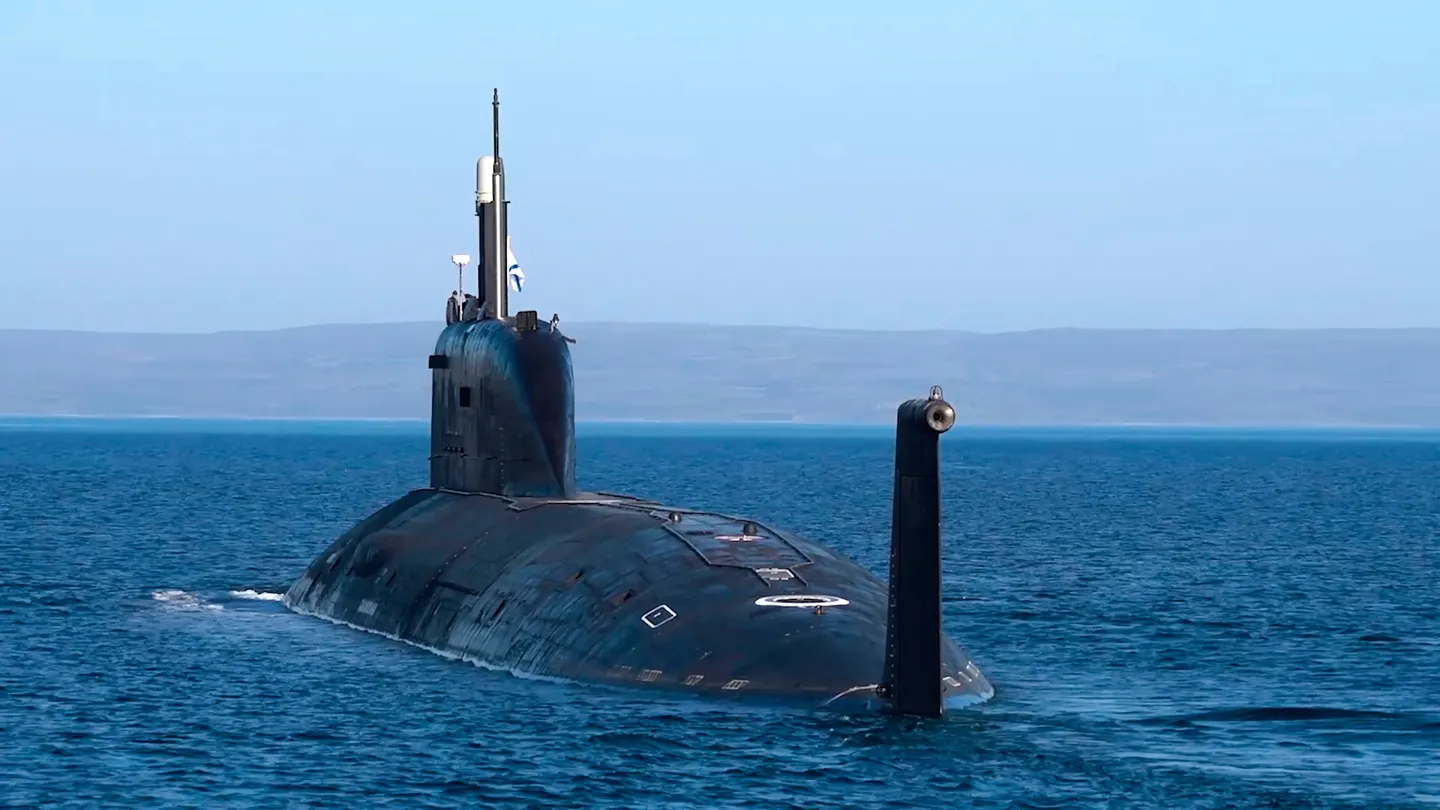
Russia and Belarus recently staged a joint military exercise involving tactical and strategic nuclear weapons, prompting renewed concerns in Europe over what message Moscow intends to send.
The drill comes as Russia’s influence is tested in the former Soviet space. The Ukraine war has weakened Moscow’s standing in Eastern Europe, and political events in countries like Armenia highlight growing challenges to Russia's traditional sphere.
Russian leader Vladimir Putin and Belarusian President Alexander Lukashenko personally oversaw the drills as Moscow showcased its nuclear capabilities from the territory of a key ally in Eastern Europe, fuelling debate over whether the exercises reflect a genuine escalation or are primarily intended to project strength and deter the West.
“Russia has clearly intensified nuclear signalling through Belarus,” Linas Kojala, CEO of the Geopolitics and Security Studies Centre in Lithuania, tells TRT World.
Belarus played a key role in the early stages of Russia's war in Ukraine, allowing Moscow to use its territory as a staging ground for the failed assault on Kiev.
Although Russian forces ultimately withdrew from northern Ukraine, Minsk has continued to host Russian troops and to support Moscow's military posture, including by deploying Russian nuclear weapons on Belarusian soil.

Despite Russian nuclear signalling, which indicated strengthening ties between the two states and heightened fears that Minsk could escalate its involvement in the Ukraine war, Kojala offers caution.
“We should be precise: there is no independently verified public count proving a new permanent increase in actual nuclear warheads in Belarus. Russia wants ambiguity. That ambiguity itself is part of the political effect,” Kojala tells TRT World.
According to Kojala, Russia's nuclear messaging is aimed less at demonstrating new military capabilities than at exerting “political coercion” by intimidating NATO, discouraging further Western support for Ukraine, and reinforcing Belarus's dependence on Moscow.
It also serves as a reminder that Russia can position nuclear-capable systems closer to NATO's eastern flank.
Other analysts share that assessment, arguing that there is little operational need for a major expansion of Russia's nuclear presence in Belarus and that such a move would create unnecessary logistical and security risks.
“There is, really, no need for it: first, the number of warheads is limited by the number of delivery vehicles and, second, any possible nuclear use from Belarus will be limited, so there is no operational need to have a large stockpile,” Nikolai Sokov, a senior fellow at the Vienna Centre for Disarmament and Non-Proliferation, tells TRT World.
Belarus-Russia ties matter
Russian analysts offer a very different interpretation of Moscow's nuclear deployment in Belarus.
Rather than viewing it as a threat to Europe, they argue that the move is intended to strengthen the defence of a close ally under growing pressure from NATO and neighbouring states.
“Russia deployed nuclear weaponry to Belarus because Moscow was asked to do so,” Sergei Markov, a Russian academic and a former advisor to Putin, tells TRT World.
Belarus's relationship with the West has deteriorated sharply since the disputed 2020 presidential election, when President Alexander Lukashenko faced mass anti-government protests.
The government responded with a crackdown on the opposition, prompting many activists and opposition figures, including Sviatlana Tsikhanouskaya, to continue their political activities from abroad.

Since then, Belarus has moved even closer to Russia politically and militarily. Following Russia's invasion of Ukraine, Minsk openly supported Moscow's war effort, while Belarusian opposition figures aligned with Kiev.
Minsk is “afraid of Poland”, a neighbouring country that is four times larger than Belarus and which occupied the western parts of the Russian ally state between the two world wars, reflecting the difficult historical relations between the two states, according to Markov.
“Belarus fears that it could face aggression from Poland,” Markov says.
According to Markov, “Polish elites want to recover their old empire”, the Polish-Lithuanian Commonwealth, which included the territories of Poland, Ukraine, all of Belarus, Lithuania, and Latvia, as well as parts of Estonia and western Russia.
From this perspective, Russia is a defender not only of Belarus but also of Ukraine and other non-Polish states.
During the 2020-21 protests, “Polish intelligence service organised a failed coup against Lukashenko government similar to Ukraine's 2014 Maidan uprising, which Markov claims was engineered by American intelligence, leading then-President Viktor Yanukovych to flee Kiev for Russia”.
According to Markov, because Polish “aggression” against Belarus has continued since then, Minsk has asked Russia to deploy nuclear weapons on its territory to defend itself against Polish and European threats.
But Western experts reject that assessment.
“Talking about an imaginary threat from Poland is a classic Russian framing: militarise first, then describe NATO’s response as a threat. Poland is strengthening defence because of Russia’s war against Ukraine and Belarus’s role in enabling it – not the other way around,” Kojala says.
While Moscow has made its nuclear presence more visible in Belarus and in Kaliningrad, a Russian enclave in the Baltic region with no direct connection to the Russian mainland, NATO is also considering deploying nuclear weapons in Poland and the Baltic states, according to US officials.
Poland has long demanded such a deployment from the US.
“The US and some European states want to deploy middle-range rocket missiles with nuclear warheads in territories of Eastern European countries like Poland, Romania and Baltic countries to threaten Russia, which is another reason why Moscow deployed its nuclear weapons to Belarus,” says Markov.
Markov argues that such proposals would violate the spirit of the 1997 NATO-Russia Founding Act, under which NATO stated it had no intention of permanently deploying nuclear weapons in new member states, while Russia made commitments regarding its military posture in Europe.


Will Russia use nukes?
Throughout the Ukraine war, senior Russian officials – from Security Council head Dmitry Medvedev to deputy foreign minister Mikhail Galuzin – have repeatedly raised the prospect of nuclear escalations if Moscow faces what it perceives as a serious threat.
Most recently, Galuzin referenced both Russia and Belarus when discussing the conditions under which nuclear weapons could be used. But how credible are these threats?
Experts largely agree that the likelihood of Russia using nuclear weapons remains low, even as the Kremlin continues to invoke its nuclear arsenal in public messaging.
“As war goals drag on and metamorphose in a multidimensional battlespace which has become a scene of multiple grievances and setbacks on the international arena, the nuclear option remains a distinct asset, utilised as a last resort by responsible actors,” Ecaterina Matoi, a Bucharest-based Romanian political analyst, tells TRT World.
Recent battlefield developments, including reports of Ukrainian advances in some areas after months of Russian gains, have reignited questions about whether setbacks on the front line could influence Moscow's calculations.
However, Matoi does not consider territorial losses alone sufficient to trigger a nuclear response.
“In any case, no matter how much of the occupied territories in Ukraine Russia may lose, I do not believe it will use nuclear weapons strictly in response to territorial losses in Ukraine,” Matoi tells TRT World.
Instead, she notes that there are two potential triggers for Moscow’s resort to a nuclear option: “significant asymmetric attacks on Russian territory and the weakening of Russia’s defence capabilities to such an extent that, combined or separately, the very existence of the Russian state would be imminently threatened”.
Markov broadly agrees with the latest assessment.
“According to Russian military doctrine, Moscow will only employ nuclear weapons if it sees an existential threat to its statehood,” says the Russian analyst.
At the same time, Markov argues that Russian officials may interpret the concept of an existential threat broadly, potentially including attacks on territories that Moscow considers part of Russia, such as Donbass and other occupied areas of Ukraine.
For Western analysts, however, Russia's nuclear rhetoric is primarily aimed at shaping the decisions of its adversaries rather than preparing the ground for actual use.
While Kojala says he never assesses the possibility of Russian nuclear use “as zero” because Moscow “deliberately uses nuclear ambiguity”, he does not see it as the most likely outcome.
“Russian nuclear threats are mostly designed to shape Western decisions – to make governments hesitate before providing Ukraine with longer-range weapons, air defence, or deeper military cooperation. We have seen this pattern repeatedly since 2022,” he says.
Sokov, the Vienna-based analyst on nuclear arms, draws attention to a “truly significant recent development”, namely the deepening of Ukrainian drone strikes on Russian industrial and transport infrastructure, which worries Moscow greatly.
“If Russia is unable to deal with this new problem, I expect that one way or the other Russia will bring conflict to the Europeans. It does not necessarily mean nuclear – Russia prefers to leverage nukes without using them – but escalation could eventually bring the situation to the threshold,” he warns.
Is Russia under pressure?
Whether Russia's increasingly visible nuclear posture signals growing weakness or enduring strength remains a matter of debate among analysts.
For Kojala, Moscow's heightened nuclear signalling comes at a time when Russia's geopolitical influence has been eroded across parts of Europe and the former Soviet space.
He points to Finland and Sweden's accession to NATO following Russia's war on Ukraine, a development that has reshaped the strategic landscape in Northern Europe and strengthened NATO's position around the Baltic Sea.

“In Eastern Europe, Ukraine has survived as a state, built a much stronger national identity, and moved irreversibly away from Moscow’s orbit. Russia has occupied territory, but it has lost political influence over Ukraine,” he says.
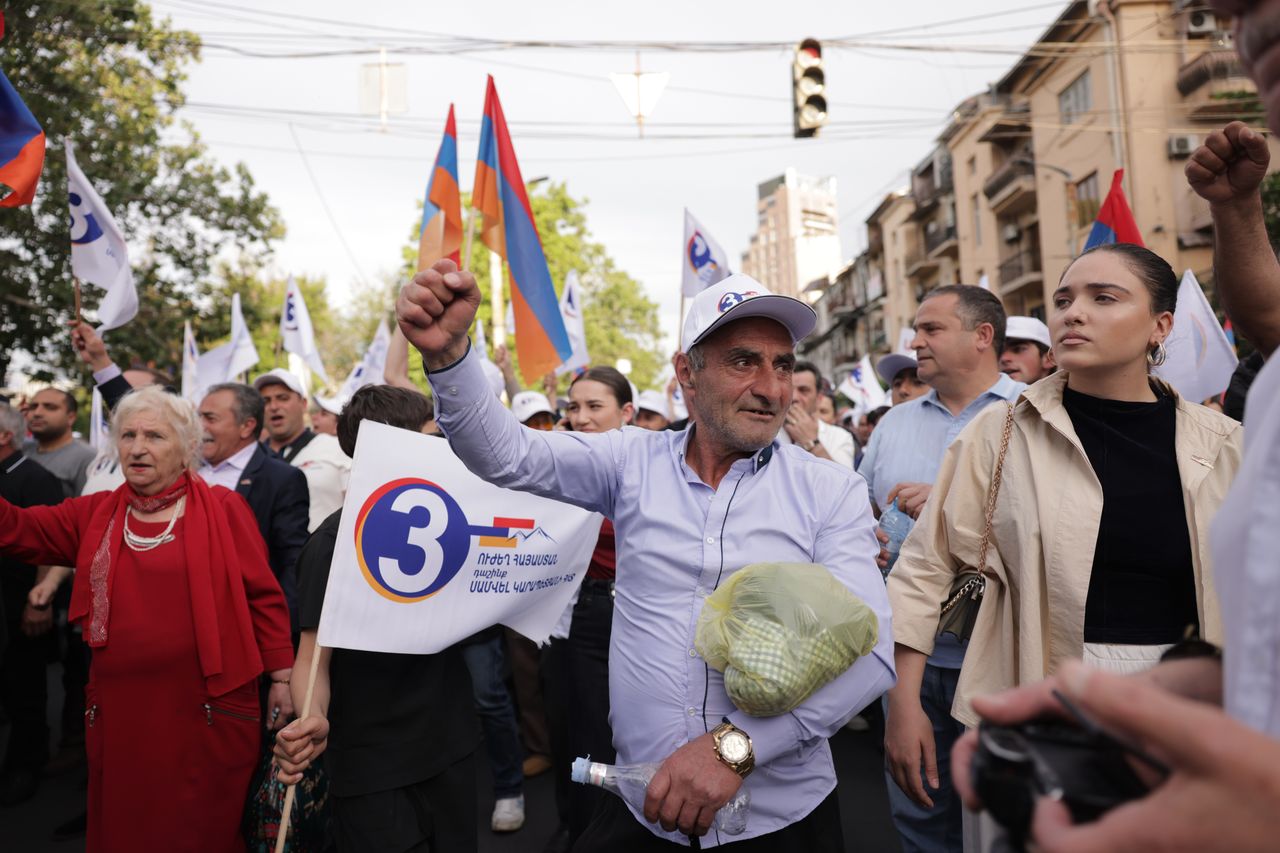
Moscow’s loss of influence in the South Caucasus, which used to be part of the Soviet Union, is also clear, he says, referring to pro-Western Nikol Pashinyan’s election victory in Armenia, which will allow him to continue “diversification away” from Moscow’s orbit.
“So the paradox is this: Russia remains militarily aggressive, but geopolitically it has made its neighbourhood less dependent, less trusting, and more resistant to Moscow.”
Other experts, however, caution against drawing definitive conclusions about Russia's long-term trajectory.
Sokov argues that while Moscow has faced setbacks in parts of Eastern Europe, the broader geopolitical picture remains fluid.
He points to political divisions within Europe and Russia's growing engagement with Asian partners as factors that could offset some of its losses in the West.
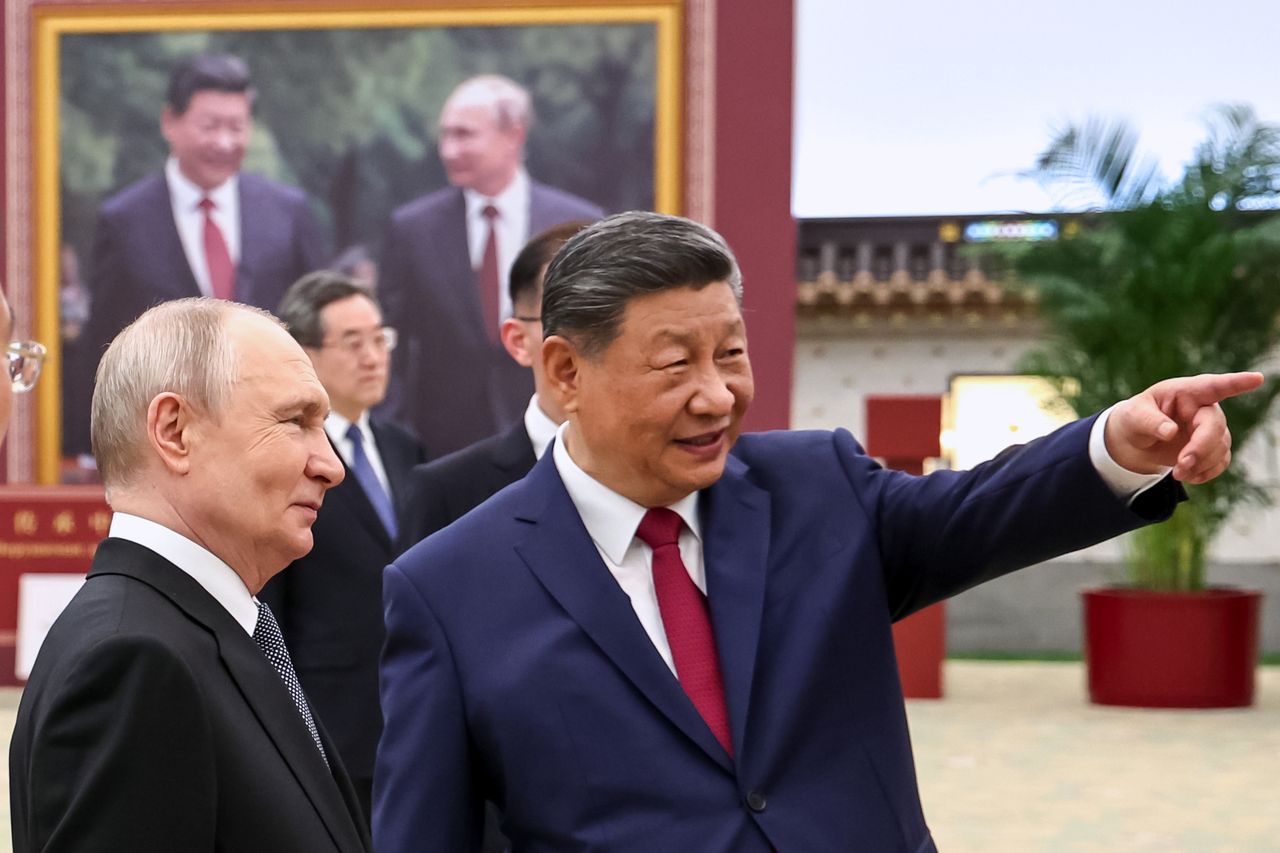
“Russia has completely reoriented towards Asia in both the political and business domains,” he says.
Matoi likewise rejects the idea that Russia is undergoing a fundamental geopolitical decline. Instead, she sees the contest for influence across Eastern Europe and the South Caucasus as far from settled.
“The competition for influence in these territories from Eastern Ukraine to the Caucasus is likely to grow rather than settle in favour of Europe,” she says.