 Murat Sofuoglu
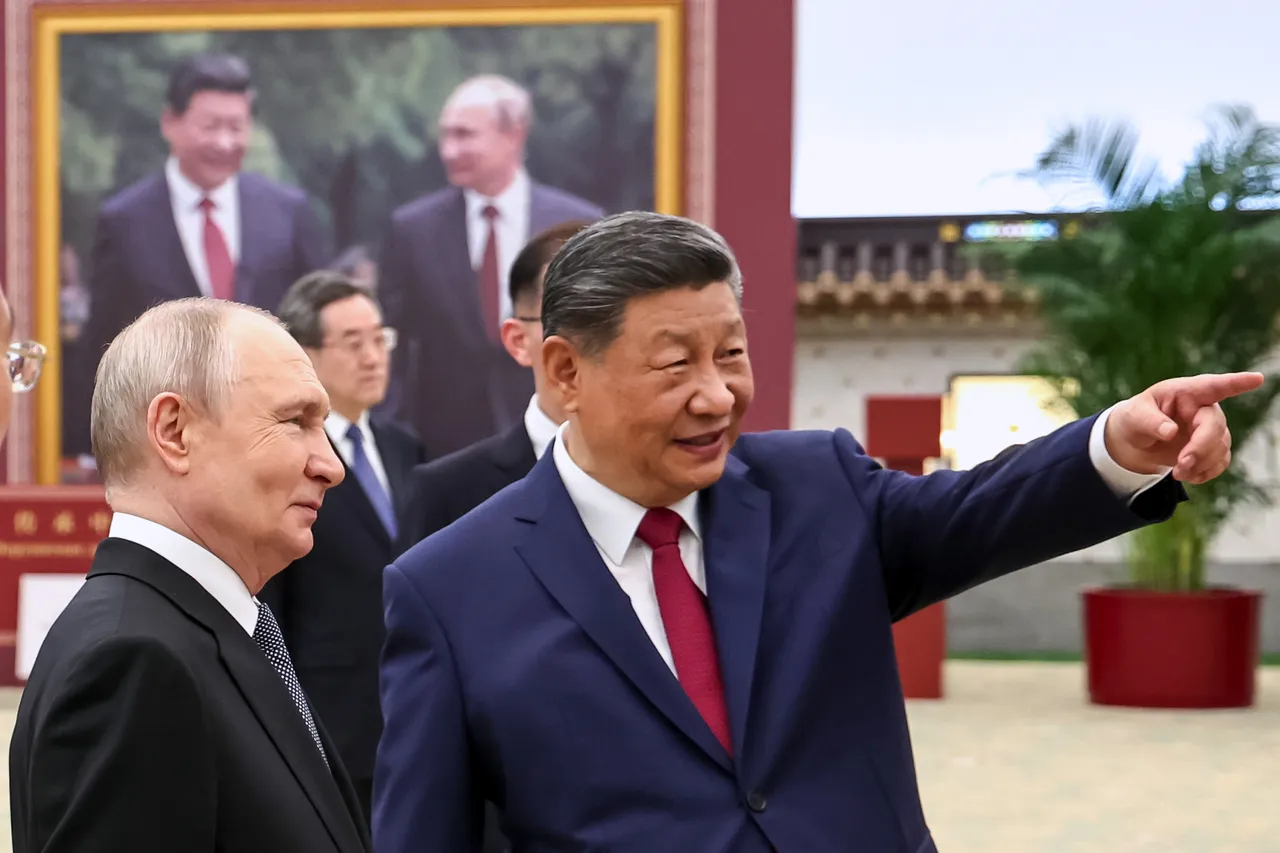
Russian President Vladimir Putin’s 25th visit to Beijing followed US President Donald Trump’s summit with Chinese President Xi Jinping, fueling speculation that Moscow aims to reaffirm its role in Beijing’s strategy amid the war in Ukraine and Western pressure.
During the visit, Putin leaned into the symbolism of the relationship, quoting a Chinese proverb to Xi that “one day apart feels like three autumns”, a strikingly personal gesture from the typically reserved Russian leader.
But analysts say the timing of the trip reflects less a sudden diplomatic manoeuvre than the deepening structural realities of Russia-China relations.
“Trump's recent visit to China should be interpreted not as weakening Russia-China relations, but rather as highlighting the structural nature of these relations,” Ozgur Korpe, an academic at Türkiye’s National Defence University, tells TRT World.
Although Moscow and Beijing stop short of calling their partnership a formal alliance, both leaders have repeatedly described it as a “friendship without limits.”
During their latest meeting, the two sides signed 42 agreements covering sectors from energy to the film industry.
Yet behind the rhetoric of equality, experts increasingly see signs of Russia’s growing dependence on China as the war in Ukraine drags on and Western sanctions deepen Moscow’s economic isolation.
“Russia's turn towards China is not a choice, but a dependency stemming from the necessities created by sanctions and the war economy,” Korpe tells TRT World, citing the fact that Moscow needs Chinese technology to run its war machine.
China now supplies more than 90 per cent of Russia’s sanctioned technology imports, according to a recent Bloomberg analysis, and Beijing has also become a key buyer of discounted Russian oil and gas. Yet the relationship remains highly asymmetrical: while China is Russia’s largest trading partner, Russia accounts for only about 4 per cent of China’s global trade.
At the same time, Russia’s wartime momentum appears increasingly strained. Economic growth has slowed sharply, while advances in Ukraine have largely stalled amid heavy battlefield losses that some Western estimates place at 15,000 to 20,000 Russian soldiers killed each month.
Against this backdrop, some analysts interpret Putin’s recent “peace” messaging as an attempt to ease growing domestic pressure over the war's costs.
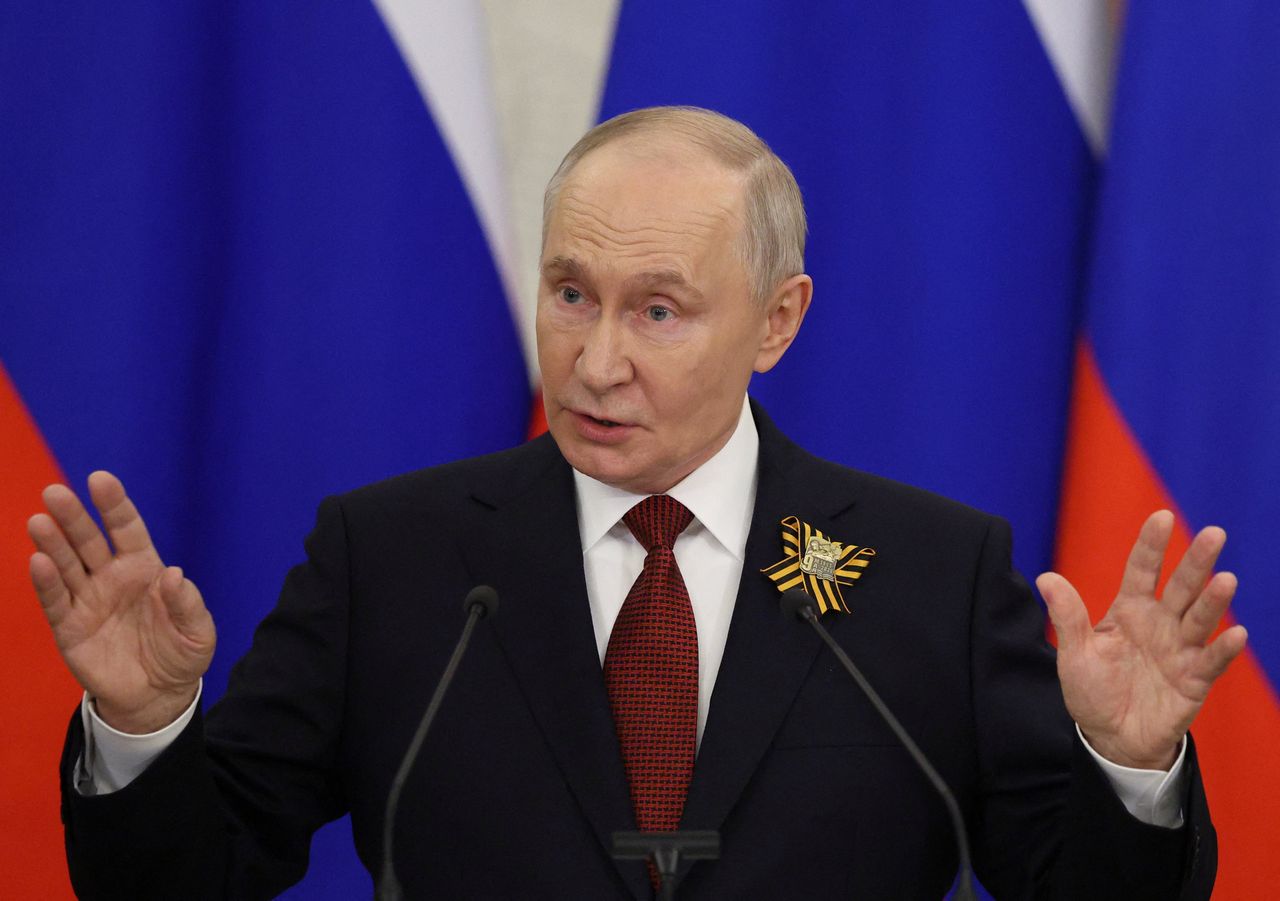
His latest visit to Beijing also appears aimed at securing stronger Chinese political, economic, and technological backing as Russia’s dependence on China deepens amid the protracted conflict in Ukraine.
‘Indirect balancing’
As Russia’s economic and military pressures continue to mount, China’s global stature appears to be growing further, underscored by the back-to-back visits to Beijing by Trump and Putin.
While Trump left Beijing mostly with commercial gains like Boeing sales, Xi used the summit to portray himself as a confident global leader, reportedly citing the “Thucydides Trap”, the concept that rising and established powers' rivalry can lead to confrontation.
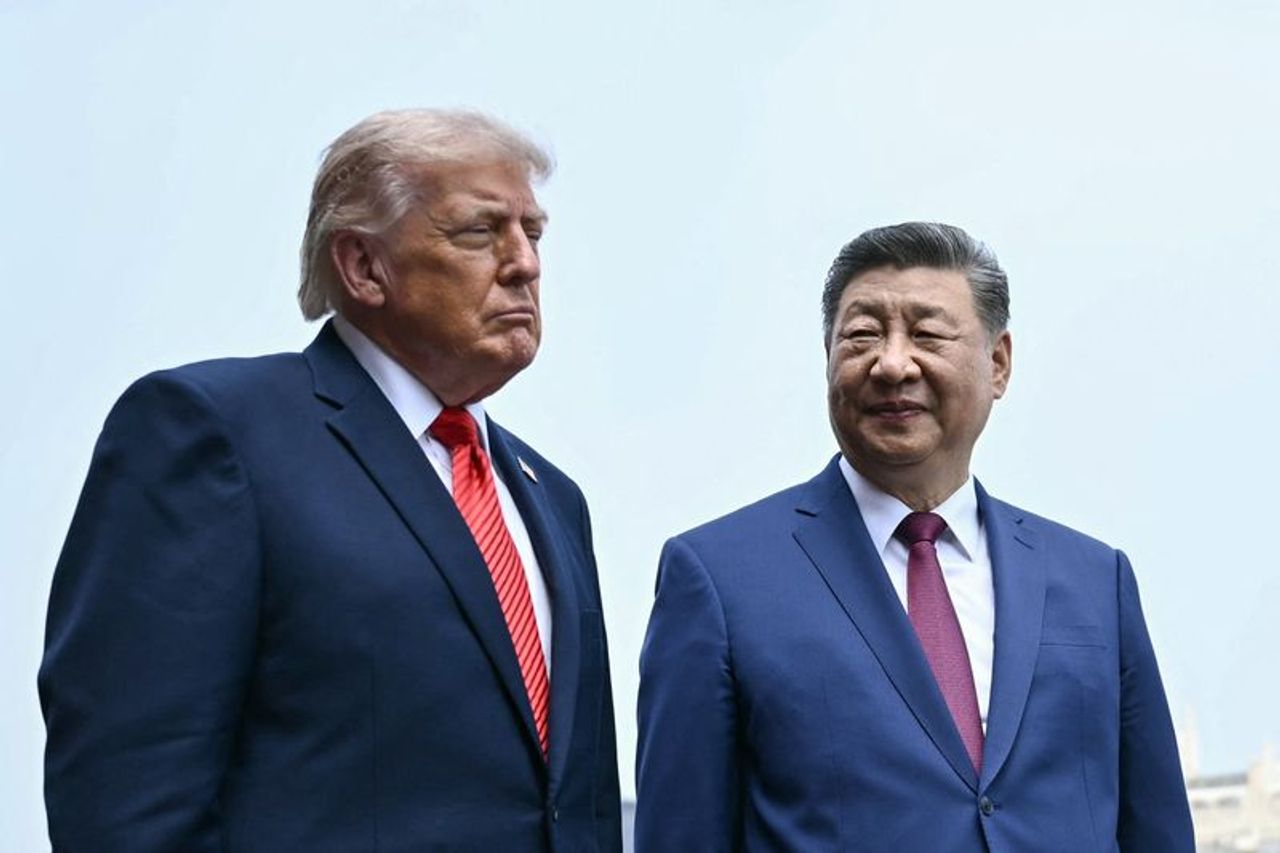
Putin’s visit, along with his unusually warm praise of Chinese leadership, further reinforced perceptions of Xi’s expanding geopolitical influence.
According to Korpe, both visits reflect Beijing’s broader strategy of “indirect balancing” against the United States. Rather than confronting Washington directly, China strengthens its position by supporting countries such as Russia and Iran, thereby using them as strategic buffers against American pressure.
Putin’s visit after Trump’s reinforces Beijing's view of Russia as essential in its indirect balancing strategy amid rising US-China rivalry, says the military analyst.
“In this context, Russia serves as both a useful buffer for China and a cost-effective tool for distracting the US,” he says.
Indirect balancing, he explains, allows China to shape the regional balance of power in its favour by supporting third actors without directly engaging in confrontation with its main rival.
From this perspective, Russia’s growing reliance on China has become increasingly evident as Western sanctions restrict Moscow’s access to critical wartime components, ranging from microchips and optics to drone parts and dual-use technologies.
“China has become an indispensable supporter of Russia's war economy. This means that Moscow's military capacity is increasingly dependent on Beijing's export policies,” making the Russia-China relationship 'asymmetrical’, according to Korpe.
“The question to be discussed is not whether Russia is dependent on China, but rather at what rate and in which areas this dependence will intensify further,” he adds.

“Therefore, Putin's visit serves not so much as a reduction in Russia's dependence on China, but rather as an external reminder confirming how deep and permanent this dependence is in the international system.”
The asymmetry is also increasingly visible diplomatically. Moscow has aligned itself more closely with Beijing’s positions on issues ranging from Taiwan and Hong Kong to Xinjiang, while both countries continue coordinating within non-Western platforms such as BRICS and the Shanghai Cooperation Organisation.
Eugene Chausovsky, an expert on Russian politics, says Moscow-Beijing ties have gained additional importance amid the widening regional fallout from the Iran conflict.
According to several reports, Russia, like China, has politically backed Iran in the face of US-Israeli pressure, praising Tehran’s resilience despite mounting Western pressure.
During his Beijing visit, Trump also reportedly sought Xi’s support for securing stability around the Strait of Hormuz, though no major Chinese commitment emerged from the summit.
Is Russia becoming a junior partner?
Despite Russia’s mounting economic difficulties and growing reliance on Chinese markets and technology, experts caution against viewing the relationship as one in which Beijing seeks outright dominance of Moscow.

They argue that China and Russia remain pragmatic partners bound not only by strategic necessity, but also by decades of ideological overlap and shared opposition to Western influence.
Chausovsky is among those who reject the idea that the relationship is evolving into a straightforward hierarchy, even as Russia’s dependence on China has deepened significantly since the start of the war in Ukraine in 2022.
“Rather, Russia and China have a flexible and evolving strategic partnership that varies by topic and rests on where both sides can mutually benefit, both practically and in their efforts to challenge a US/Western-led global order,” he tells TRT World.
“Both Moscow and Beijing have made an effort not to frame this relationship as lop-sided or inferior. The reality is that they have established a workable division-of-labor, with Russia providing key energy resources and other commodities, while China serves as a large market that (along with other countries like India), presents Russia with a viable alternative to the West.”
According to him, both sides have deliberately avoided framing the partnership as unequal or subordinate.
At the same time, analysts familiar with Kremlin thinking say Moscow would never willingly accept junior-partner status regardless of China’s growing economic weight.
That sentiment was recently echoed by Dmitry Trenin, president of the Moscow-based Russian International Affairs Council, in an article titled “We Bow to No One.”
Experts also note that despite speculation over China’s growing leverage, both countries remain closely aligned on major geopolitical issues, including Iran and opposition to Western pressure campaigns. Beijing, in particular, has been careful not to undermine Russian interests regarding the Ukraine war.
From this perspective, Oleg Ignatov, senior Russia analyst at the International Crisis Group, also rejects the idea of a deeply asymmetrical relationship.
“There are no disputes or conflicts in relations between the two countries, nor is there any tension,” Ignatov tells TRT World.
“This is an example of strategic relations showing just how far they can go without a military alliance and without one side dominating the other. Moscow and China are satisfied with how these relations are developing.”
According to Ignatov, China has consciously avoided exploiting Russia’s vulnerabilities despite holding a stronger economic position.
“China accepts Russia’s interests as they are, without dictating to Russia what to do, which suits Moscow,” he says.
Still, he acknowledges that Russia’s options have narrowed significantly since the war in Ukraine severed much of its economic relationship with Europe.
“Moscow has no other choice because China has replaced Europe for Russia for its energy exports due to the Ukraine war,” Ignatov says.
Yet even under these conditions, Beijing appears intent on preserving the appearance, and perhaps the reality, of strategic equality.
“Given its stronger economic and political position, China could use this to its advantage more, but it is not doing so. China considers Russia a neighbor with whom it is important to maintain good relations and an equal relationship.”