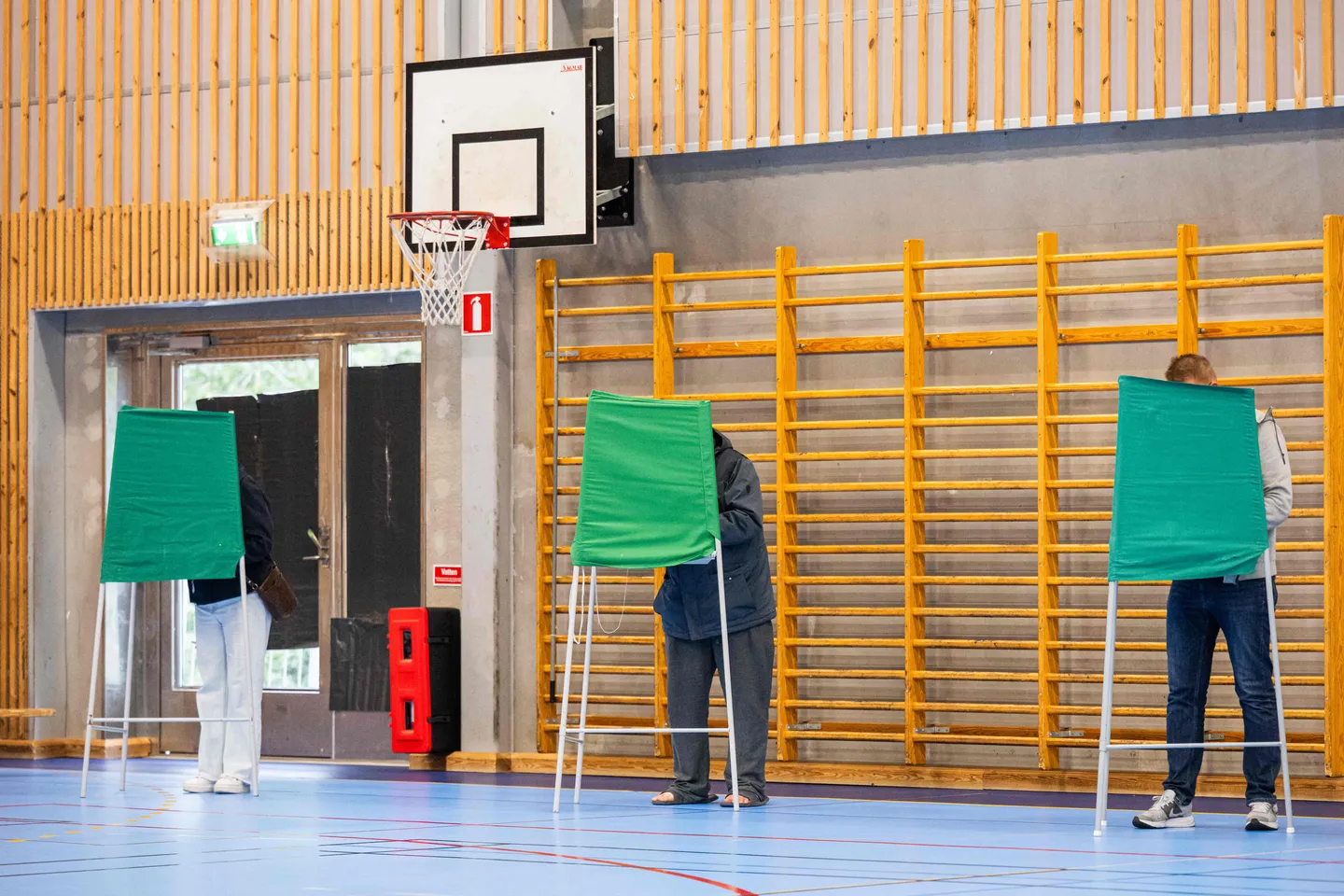
Swedes began voting on Sunday in a closely contested general election that could see the far-right Sweden Democrats enter government for the first time or the left-wing opposition return to power.
Opposition leader Magdalena Andersson of the Social Democrats was among the first to cast her ballot after polling stations opened at 8 a.m. local time.
The 59-year-old former prime minister voted with her husband at a school in her home municipality of Nacka, south of Stockholm.
Polls had long given the four-party left-wing bloc a comfortable lead over conservative Prime Minister Ulf Kristersson’s four-party alliance, which includes the Sweden Democrats. But the gap narrowed to a virtual dead heat in the final days of the campaign.
“It is now up to the Swedish people to decide which direction our country should take,” Andersson told reporters after voting, warning that the election could produce a government dominated by the Sweden Democrats.

Far-right seeks historic government role
Kristersson’s government has relied on Sweden Democrats support since 2022, giving the far-right party significant influence over immigration and crime policy.
The party, led by Jimmie Akesson, has roots in the neo-Nazi movement but has moved into the political mainstream over the past two decades. Kristersson has pledged to offer the party cabinet posts if the right-wing alliance wins.







Kristersson has highlighted falling levels of deadly shootings and bombings linked to organized crime, as well as record-low asylum applications, while promising to improve everyday life for Swedes.
“We want to use our new and far better preconditions to improve the lives of ordinary people ... to make Sweden great again,” he said before the vote.
Welfare, crime and the cost of living
Andersson’s Social Democrats, Sweden’s largest party, have campaigned on strengthening the welfare state and helping households cope with rising living costs.
Akesson, meanwhile, expressed confidence in victory at the party’s final rally in Stockholm on Saturday, telling supporters: “We’ve already won!”
Around 8 million people are eligible to vote in the election, with turnout in Sweden regularly exceeding 80 percent. About half of voters have already cast ballots in advance.
Polling stations close at 8 p.m. local time, with exit polls expected shortly afterward and reliable results several hours later.
A right-wing victory could make government formation relatively straightforward. If the left wins a majority, however, negotiations could prove more difficult because of ideological divisions among the four parties.