 Abhishek G Bhaya
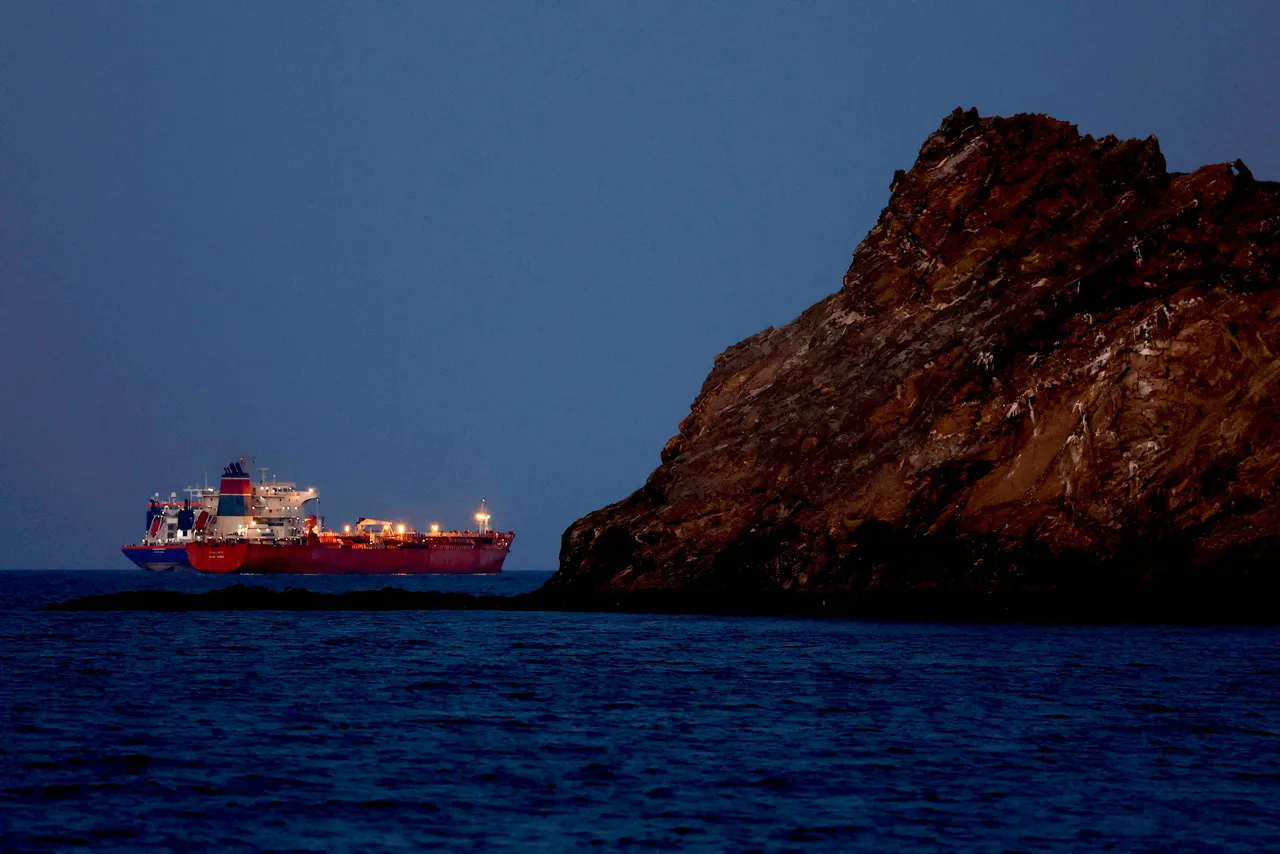
As the US-Israeli war on Iran reshapes the geopolitical landscape of the Middle East, a new front has emerged — not on land or in the air, but in one of the world’s most critical maritime chokepoints: the Strait of Hormuz.
Iran on Thursday reiterated that it is drafting a joint protocol with Oman to oversee traffic through the narrow waterway. Coupled with signals from Tehran about imposing conditions — or even tolls — on passing vessels, the move is raising urgent questions about who truly controls this vital artery of global trade.
While Iran and Oman have territorial claims over the strait, experts in maritime law say that they can’t simply force ships to pay money to use it.
“Under international law, the Strait of Hormuz is not controlled by the international community in a sovereign sense,” Sanjeet Ruhal, professor of international maritime security law at the International Maritime Law Institute (IMLI) in Malta, tells TRT World.
“Iran and Oman retain sovereignty over their respective territorial seas, but that sovereignty is limited by the right of transit passage in straits used for international navigation,” he explains. “Passage must be continuous and expeditious, and it shall not be impeded.”
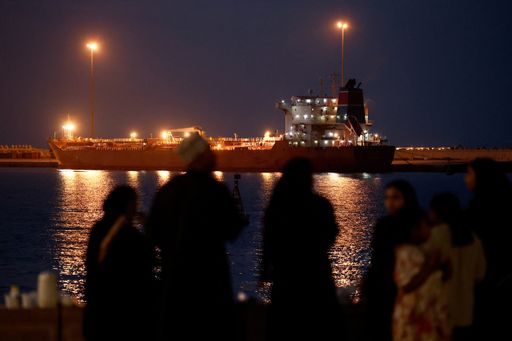
Ruhal further clarifies that Iran and Oman, as the two coastal states, “may adopt limited laws on safety, navigation, pollution, and sea lanes, but they may not convert the strait into a permission-based corridor,” as per international maritime laws.
At stake is not just regional stability, but the future of the rules governing international navigation in such narrow waterways.
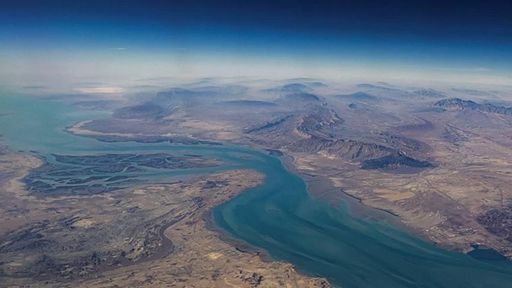
Legally, the Strait of Hormuz occupies a unique space. The 167-kilometre-long waterway — that connects the Gulf with the Sea of Oman, with its narrowest point being only 33 kilometres wide — lies within the territorial waters of Iran and Oman, but it is also governed by international law as a strait used for global navigation.
Roughly a fifth of the world’s oil supply — around 20 million barrels per day — passes through the Strait of Hormuz, making it indispensable to global energy markets, particularly in Asia.
Even though traffic through the strait has declined sharply since the outbreak of the US-Israel war on Iran, with rising insurance premiums and security risks deterring shipping companies, future developments can set a precedent on how such waterways are used.
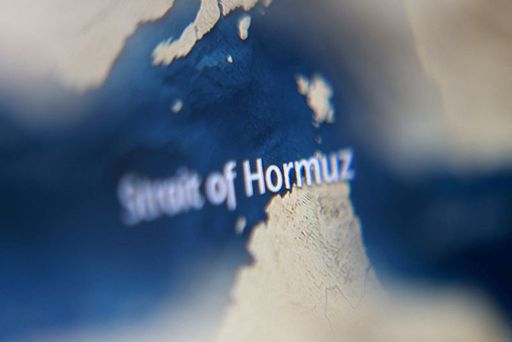
Since the war began on February 28, only 292 commercial vessels transited the vital strait under Iranian oversight by March 31 — roughly 95 percent below pre-war levels, according to the United Nations Conference on Trade and Development — highlighting the extent of disruption and Tehran’s effective grip over the waterway.
Several reports have also pointed to multiple commercial vessels being struck in and around the Strait of Hormuz during the ongoing escalation, with Iran’s Revolutionary Guard Corps warning that ships attempting to transit the waterway without its approval would be targeted.
The de facto blockade of the strait has already sent ripples through global markets, reviving long-standing fears about the vulnerability of maritime chokepoints.
Iran, for its part, insists the strait remains “open to the world” but only “closed to enemies.” On Thursday, Iranian military spokesperson Abolfazl Shekarchi hardened the stance, asserting that the waterway would be closed “long-term” to the US and Israel.
Can Iran legally impose tolls?
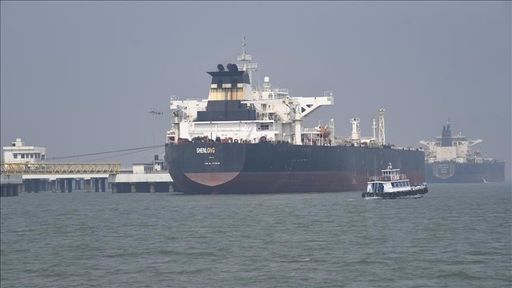
“As a general rule, no,” Ruhal says when asked whether Iran can legally impose tolls. “No charge may be levied upon foreign ships by reason only of their passage.”
The legal framework governing such waterways is set out in the United Nations Convention on the Law of the Sea (UNCLOS), which guarantees the right of “transit passage” through straits used for international navigation.
Under Articles 37 to 44 of the convention, ships and aircraft are entitled to continuous and expeditious passage that cannot be impeded or suspended. Crucially, Article 26 prohibits states from levying charges on vessels merely for passage, allowing fees only for specific services rendered, while Article 42 limits coastal states from adopting measures that would hamper transit.
That legal framework is now being tested.
Tehran’s consideration of a tolling system — or conditional access based on political alignment or national identity — has sparked alarm among maritime stakeholders.
“A toll for mere passage, or a nationality-based condition for access, would be incompatible with the treaty regime,” says Ruhal. Charges, he notes, are only permissible for specific services rendered, such as pilotage or port assistance — not for simply transiting the waterway.
The distinction is critical. While artificial waterways like the Suez and Panama canals charge transit fees, natural straits like Hormuz operate under a different legal framework designed to guarantee uninterrupted global access.
A fee-based system in Hormuz, Ruhal argues, would effectively transform a shared maritime route into a controlled gateway — undermining the principle of non-discriminatory transit.
A wartime strategy — or something more?
From Tehran’s perspective, however, the calculus is not purely legal.
“We are now in a state of war, and wartime conditions cannot be governed by peacetime rules,” Kazem Gharibabadi, the Iranian deputy foreign minister for legal and international affairs, asserted on Thursday as he justified Iran’s position.
Reza Khanzadeh, a professor of Middle East politics at George Mason University, sees the toll proposal as part of a broader strategic play.




“The government is attempting to create a new revenue stream, given the extent of sanctions and the cost of this war,” he tells TRT World.
But the move goes beyond economics. According to Khanzadeh, Iran is also trying to establish a precedent that could be replicated by allies in other contested waterways such as the South China Sea.
More fundamentally, he argues, the Strait of Hormuz represents one of Iran’s last remaining sources of leverage.
“With its proxies weakened, its nuclear and missile programmes degraded, and domestic pressures mounting, the Iranian government is trying to hold on to what may be its last bargaining chip,” he says.
In that context, even a legally questionable tolling system could serve as a powerful negotiating tool.

Enforcement versus legality
The gap between legal norms and geopolitical realities is where the situation becomes most volatile.
Khanzadeh acknowledges that a tolling system would likely be illegal under international law. But he raises a more pragmatic question: who will enforce those rules?
“If the only way to ensure passage is by paying a toll rather than engaging in military action, many companies may choose the former,” he suggests.
That possibility underscores a broader concern — that enforcement of maritime law ultimately depends on political will and military capability, not just legal frameworks.
Ruhal, however, believes such a system would face sustained resistance.
India, China and Europe — all heavily dependent on energy imports from Hormuz — as well as Gulf energy exporters share a strong interest in keeping the strait open. Their likely response, he says, would include diplomatic protests, appeals to international law, and support for collective security arrangements.
Notably, however, key stakeholders have so far stopped short of signalling any direct military response. The EU has ruled out military intervention, while China and India have not indicated any willingness to pursue enforcement measures in the strait
Global fault lines deepen: Can the world move beyond Hormuz?
The emerging dispute over Hormuz is already exposing deep geopolitical divisions.
Western powers, including the UK and the EU, have emphasised the need to protect freedom of navigation, while Gulf states are pushing for a UN-authorised force to secure the waterway.
China, by contrast, has blamed US-Israeli military actions for the disruption, aligning more closely with Iran’s narrative.
The result is a fragmented international response — one that risks turning Hormuz into a flashpoint for broader great-power competition.
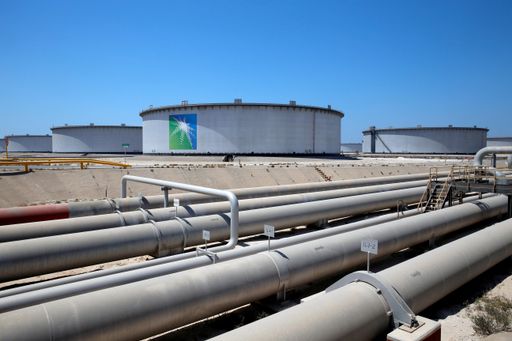
Faced with growing uncertainty, Gulf countries are accelerating efforts to diversify their export routes, investing in pipelines and alternative corridors to bypass the strait.
Yet such measures offer only limited relief in the short term.
Hormuz remains irreplaceable — a narrow but indispensable artery through which a significant share of the world’s energy supply must pass.
Law versus power
Beyond the immediate crisis, Iran’s actions could have far-reaching implications.
“If countries begin imposing toll systems on strategic waterways, it could fundamentally alter the global trading system,” Khanzadeh warns. “Costs, insecurity, and political coercion would all increase.”
For Ruhal, the legal stakes are equally high. Allowing tolls or selective access in Hormuz could erode the foundational principles of maritime law, encouraging similar moves elsewhere.
At its core, the unfolding situation in the Strait of Hormuz is a test of whether international law can withstand the pressures of modern conflict.
On paper, the rules are clear: transit passage must remain free, continuous, and non-discriminatory.
In practice, however, those rules are being challenged by a combination of war, strategic calculation and shifting global power dynamics.
What happens next in Hormuz may not only determine the outcome of a regional conflict — it could redefine the balance between law and power on the world’s oceans.