 Sadiq S Bhat
Washington DC — In the quiet suburbs and rolling hills of northern Kentucky, one of the most pivotal US primaries in years is reaching its climax.
With voting set for 19 May 2026, the contest between seven-term GOP Congressman Thomas Massie and Trump-endorsed challenger Ed Gallrein has become far more than a local race in the Bluegrass State.
It is a high-stakes test of President Donald Trump’s firm grip on his own party.
For non-American readers, a congressional primary is the internal election in which members of the same party compete to become their party's official candidate.
Kentucky’s solidly Republican 4th District almost always sends a Republican to Washington; the real contest is this intra-party fight.
What makes it extraordinary is the money: more than $25 million poured into attack ads and attacks by Trump himself. Observers on both sides call it a proxy war over the soul of the Republican Party.
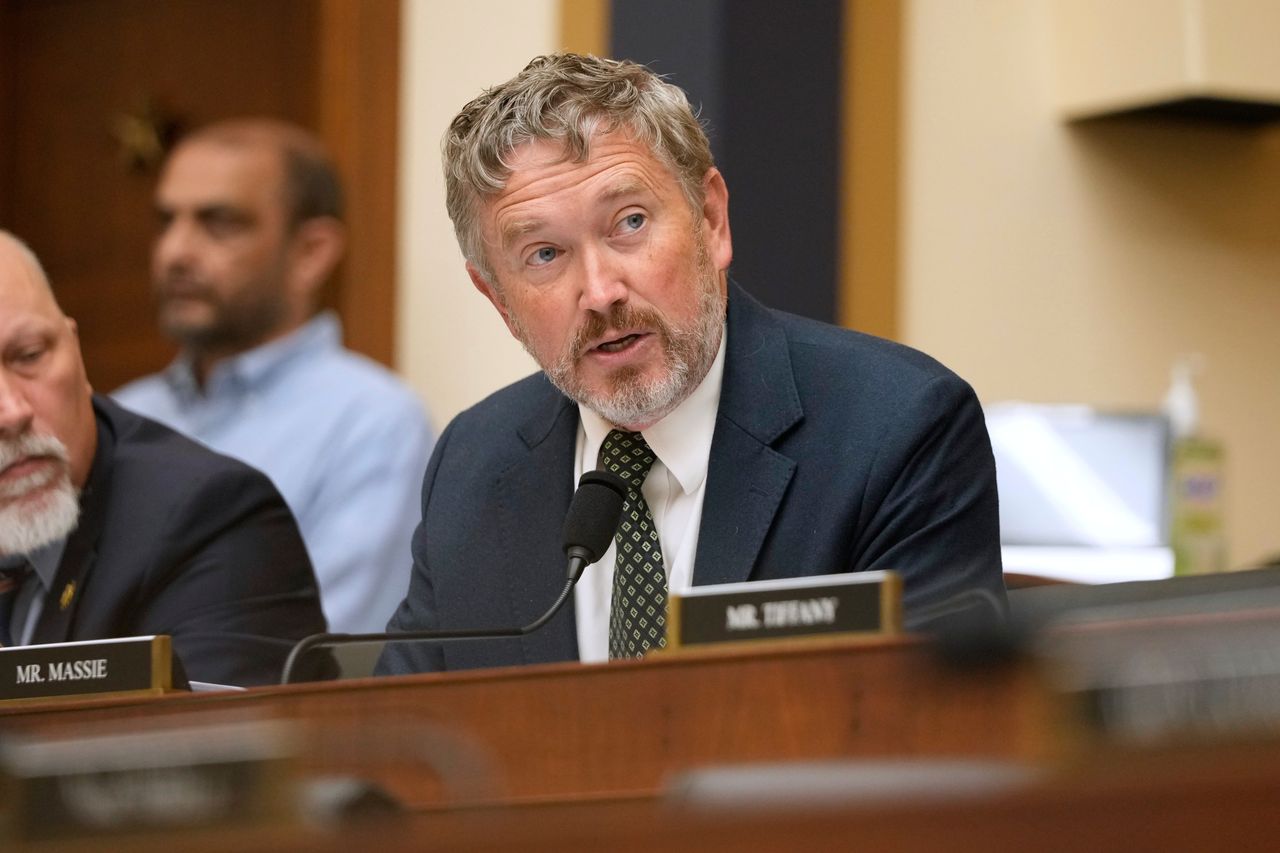
Thomas Massie, a 54-year-old MIT-trained engineer and conservative, has represented the district since 2012. He is known for scepticism of foreign wars and a stubborn insistence on constitutionality, even when it clashes with his own party leaders.
Massie has voted with Trump mostly, yet he has broken ranks on key issues: for instance, opposing military action against Iran without congressional approval and pushing for the release of Epstein files.
To his supporters, he is a principled “America First” voice who refuses to be a rubber stamp. To critics, he is an obstructive “RINO” (Republican In Name Only).
The face-off reignited after Trump’s 2024 victory. A brief post-election truce collapsed when Massie criticised aspects of Trump’s legislative agenda.
Trump responded on Truth Social and at rallies, calling Massie a “disaster,” “weak and pathetic RINO,” and “not MAGA.”
Come May 2026, the president has personally endorsed Ed Gallrein, a former Navy SEAL, making his first run for federal office.
Trump has held rallies in the district, urging voters to “send a message” by defeating the incumbent.
“Most challenging reelection”
Gallrein’s campaign has leaned heavily on that presidential backing.
His top poll strategist, Michael Antonopoulos, told local media, “Every day, we hear from people who feel let down by Thomas Massie. That record along with his betrayal of President Trump will be front and centre in this final stretch.”
The onslaught has been relentless. Owing to Massie’s anti-war stance, pro-Israel groups have flooded airwaves with advertisements painting the congressman as out of touch.
Yet Massie has fought back with his trademark dry wit and emphasis on local roots.







In a recent solo debate appearance (Gallrein declined to attend), he described the challenge as “by far the most challenging reelection I’ve ever faced” but added confidently that the race remains “within the margin of error” thanks to strong ground-level enthusiasm.
After the dust settles, Massie predicted, “Once this race is over, I don’t think there’s any benefit to him attacking me. I’ll have the antibodies from a natural infection.”
Advantage Gallrein?
Polls reflect the chaos. A Quantus Insights survey conducted 11-13 May showed Gallrein edging ahead at 48.3 percent to Massie’s 43.1 percent, with undecided voters breaking toward the challenger.
Earlier surveys had Massie in the lead.
Prediction markets, however, still tilt slightly toward the incumbent, pricing his chances at around 55 percent.
Early voting is already underway, and turnout in such primaries often favours the candidate with a deeper personal network.
Senator Bill Cassidy of Louisiana lost his Republican primary on Saturday, ending his bid for a third term after President Trump backed efforts to unseat him.
The result highlighted Trump’s continued influence over the party. Representative Julia Letlow, the president’s endorsed candidate, led the field with around 45 percent of the vote, while state treasurer and former Trump official John Fleming narrowly overtook Cassidy for second place with about 28 percent.
Republican in Trump age
Dr Kevin Reuning, associate professor of political science at Miami University, captured the broader stakes: “I think the reason it’s actually the most heated is that it might mean things for a lot more than just the Northern Kentucky district… this race has the potential to change how other Republicans look at their own elections and the party as a whole.”
A Gallrein victory would signal that even a long-serving incumbent can be toppled, reinforcing Trump’s dominance in the GOP.
A Massie win, however narrow, would demonstrate the limits of presidential power inside the GOP and embolden those who prize independence.
Either outcome will echo through the 2026 midterms and beyond, shaping legislation and the party’s direction for years to come.
As northern Kentucky voters head to the polls, the world watches a distinctly American political drama: a powerful president versus a stubborn congressman in a battle that could redefine what it means to be a Republican in the Trump age.
The margin may be razor-thin, but the message sent will be loud.