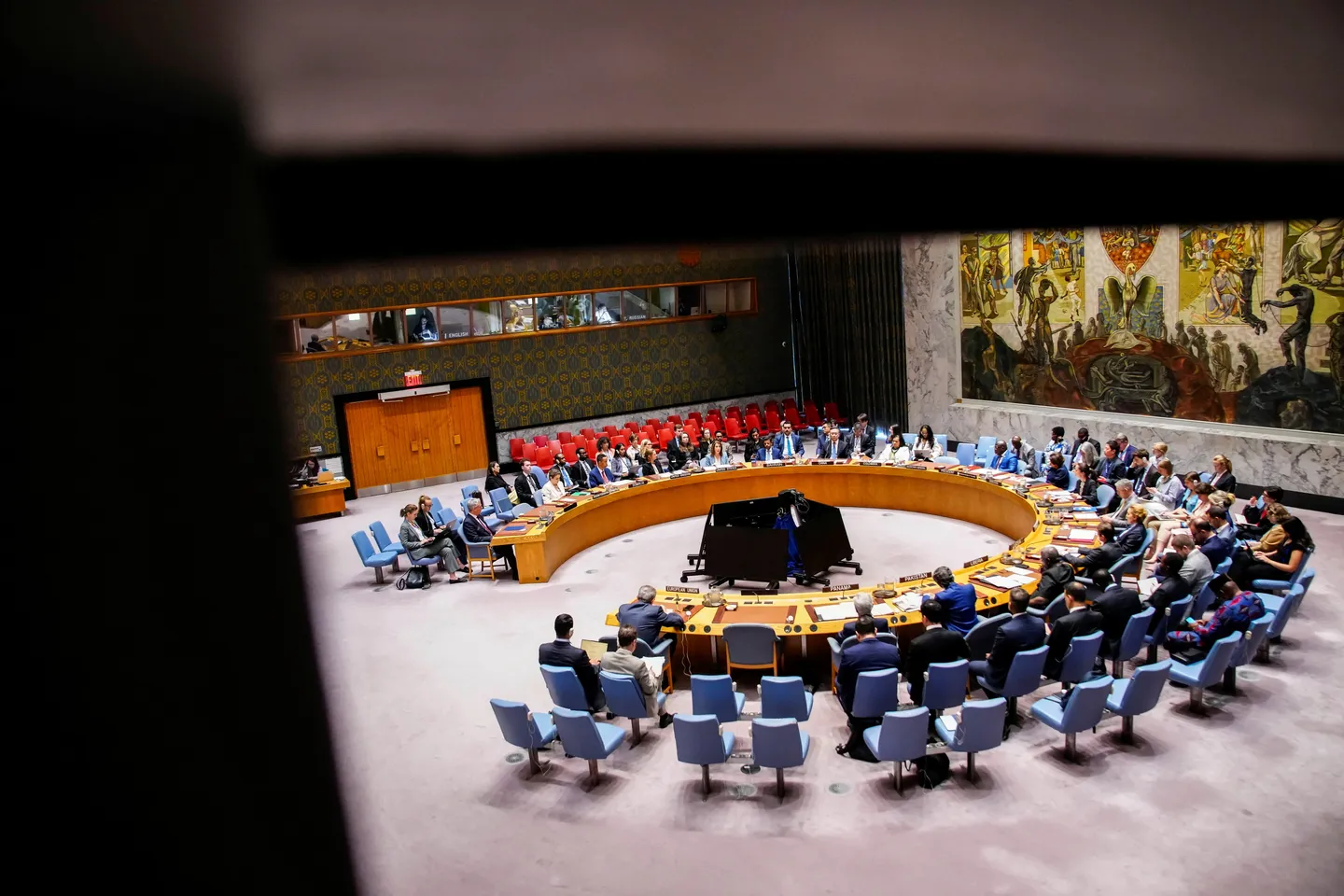
The five permanent members of the UN Security Council clashed on Thursday over the legal validity of sanctions against Iran and the reimposition of UN measures under the 2015 nuclear deal’s “snapback” mechanism.
Russia challenged a scheduled briefing on the 1737 Sanctions Committee, arguing that the mechanism under Resolution 2231 had not been legally activated and that the resolution expired on October 18, 2025.
Moscow also argued that the 1737 Committee ceased to exist in 2015 and that there were no legal grounds to discuss its work.
China backed Russia’s position, warning against what it called unilateral efforts to reimpose sanctions on Iran and saying the moves would deepen divisions within the council and hinder a political settlement.
Western delegations rejected the challenge, saying the sanctions regime had been legally restored following Iran’s breaches of the 2015 Joint Comprehensive Plan of Action (JCPOA).
The UK said it had initiated the snapback mechanism with France and Germany in accordance with Resolution 2231 because of Iran’s “significant non-performance” under the nuclear agreement. London said the process concluded on September 28, 2025, restoring six Chapter VII resolutions.
Council backs briefing
The council voted 11-2, with two abstentions, to adopt the provisional agenda and proceed with the briefing, defeating the Russian and Chinese challenge.
The US representative said the 1737 Committee remained in existence and accused Russia and China of attempting to undermine council decisions. Washington also cited an International Atomic Energy Agency finding that Iran remained non-compliant with its safeguards obligations.
Russia subsequently called the briefing illegitimate and an “inefficient use” of council resources, while accusing the US and Israel of striking facilities under IAEA safeguards.
China blamed the US withdrawal from the JCPOA and its “maximum pressure” policy for the current tensions, while defending Iran’s right to the peaceful use of nuclear energy.
The UK said Iran was the only country without nuclear weapons enriching uranium to 60 percent, accusing Tehran of stockpiling more than 400 kilogrammes of the material without a credible civilian justification.
France similarly warned that Iran’s stockpile could potentially provide enough material for about 10 nuclear weapons.
Western states also criticised Iran for restricting access for UN nuclear inspectors since June 2025, while stressing that negotiations remained the only durable solution to the dispute.