 Aslan Can Delibas
Last week, the Turkish foreign ministry issued a strongly-worded statement criticising Greece for trampling on the rights of the Turkish minority in Western Thrace, a region located in the country’s northeast near the Turkish border.
The statement did not come out of the blue; it was the latest response to Greece’s continued policy of suppressing the community’s very identity, leading to anger and resentment among the Turkish population.
Western Thrace, which also borders Bulgaria and the Greek region of Macedonia, is home to an estimated 150,000 ethnic Turks, comprising approximately a third of the population.
In 1913, the Turks of Western Thrace established what is considered the first Turkish republic in history, long before modern Türkiye was founded.
Greece’s latest attack on the Turkish minority reached the community's most ancient institution: the office of the mufti.
Refusing to recognise the muftis elected by the minority, Athens has not hesitated to install individuals of its own choosing in their place.
A century of denial
In 1923, the Treaty of Lausanne did not merely redraw borders; it also made a mutual promise. The Turks of Western Thrace would remain under Greek sovereignty, while the Greeks of Istanbul and Gokceada (Imroz) and Bozcaada islands in the Aegean would be under Turkish sovereignty.
Both communities would preserve their identities, faiths, languages and institutions under the protection of international law.
Yet this promise has been systematically broken by Athens; through a deliberate strategy of wilful blindness, an entire people is being erased on paper.
The Turks of Western Thrace have been waging an uncompromising struggle for existence against these policies of denial for well over a century.
Against this struggle, a wall of oppression has been rising, built brick by brick over the decades.
Greece has never officially acknowledged the existence of a Turkish minority within its borders. The first and sharpest front of this denial was to render Turkish identity invisible; everything else was constructed upon this foundation, layer by layer.
Ozan Ahmetoglu, a former president of the Iskece Turkish Union, defines this picture in stark terms.
"From Greece's perspective, the primary target is the Turkish identity in Western Thrace. For many years, erasing or rendering this identity invisible was one of the fundamental priorities of its Western Thrace policy,” he tells TRT World.
“In recent years, however, this approach has expanded further. It is no longer just national identity that is under attack…all cultural elements of the minority are now in the crosshairs."
Denial, oppression, encirclement
Over time, Greece transformed this denial into a deliberate state doctrine.
As the targets widened, the oppression deepened, encircling not merely an identity, but the entire existence of a community.
In official discourse, this community was labelled solely as the 'Muslim minority'. While a religious category was imposed on one hand, on the other, ethnic identity, language and culture were systematically driven towards erasure.
Restrictions were placed on Turkish-language education in schools, associations were shut down on the grounds that they bore the word 'Turkish', and the management of community foundations was handed to government-appointed administrators with no ties to the community whatsoever.
Ahmetoglu spells out the dimensions of this systematic approach.
"It is no longer just national identity that is under attack, all cultural elements of the minority are now targeted…(it’s an) extremely systematic campaign,” he says.
“The aim is to create a minority structure that is entirely controlled, incapable of acting on its own will. Such an approach is incompatible with both democracy and fundamental human rights."
Greece, despite being a signatory to international laws and recognising its binding nature, systematically disregards both the treaties it has signed and the rulings of the European Court of Human Rights when it comes to the Turkish minority of Western Thrace.
The case of the Iskece Turkish Union stands as the most glaring example. Nearly two decades after a court issued its ruling, Athens has yet to implement it.
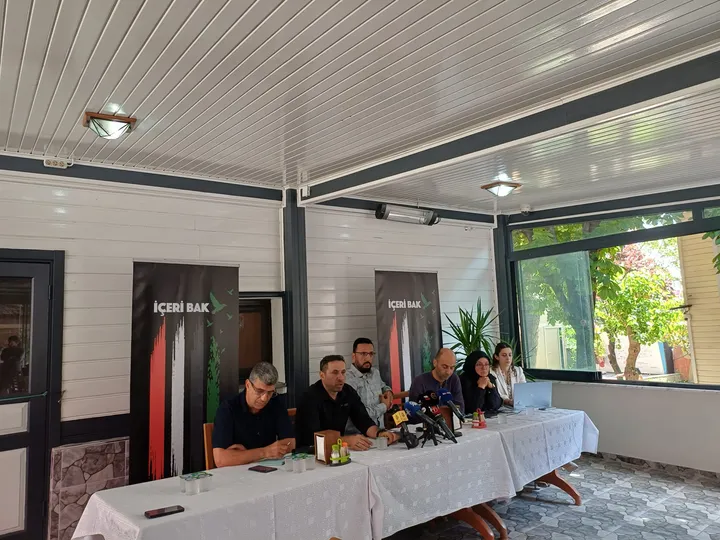
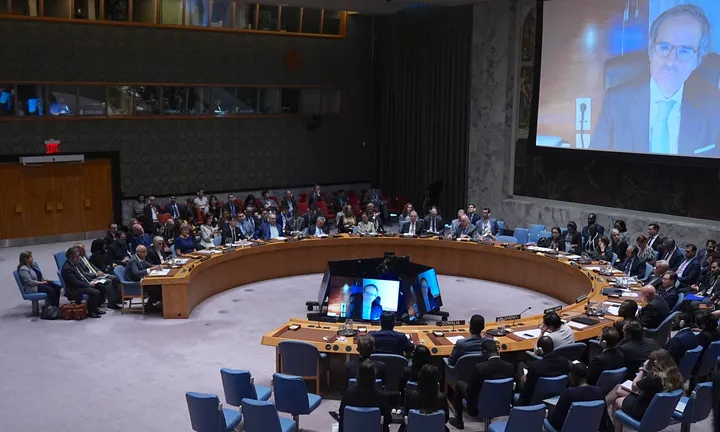




"It is plain to see that this issue is not legal, but entirely political. The fact that rulings secured before the ECHR have gone unimplemented for nearly twenty years makes this abundantly clear,” says Ahmetoglu.
“What is particularly striking, however, is the ineffectiveness of European legal institutions in the face of these prolonged violations. This raises serious questions about whether human rights mechanisms are being applied selectively."
The quietest yet most blatant front of this oppression is education.
Ahmetoglu makes clear that this process is not a matter of neglect but the product of deliberate policy.
“Minority education is the most fundamental arena that both preserves identity and shapes the future. Every school closure is not merely the disappearance of an institution, it is the weakening of a language, a culture and a collective memory.”
He adds that by rejecting the demand for minority kindergartens offering bilingual Turkish and Greek education, Greece has condemned the minority children to state-run kindergartens where instruction is provided solely in Greek.
On the issue of appointment of muftis, Ahmetoglu says that “the failure to recognise elected muftis and the installation of individuals deemed illegitimate by the minority appointed by the Greek government in their place is not merely a dispute over an office; it is an issue that directly affects people's daily lives. The Athens government did not seek the approval of a single minority MP in doing so."
Not an election, but an imposition
In recent months, this long-standing policy of oppression has entered a new and dangerous phase in the matter of the mufti's office.
Without any consultation with minority representatives or institutions, names sanctioned by the state were designated as muftis under the guise of an 'election'. The community refused to recognise this process.
Athens was entirely unmoved by that refusal. Now the same model is being sought to be imposed upon the provinces of Rodop and Iskece, the two provinces where the Turks of Western Thrace are most numerous and most organised.
Mustafa Trampa, the mufti of Iskece and Chairman of the Western Thrace Turkish Minority Advisory Board, was stinging in his criticism.
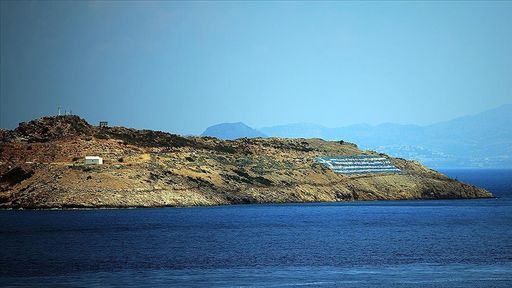
"The appointment of a mufti in Dimetoka a few months ago, under the guise of a so-called 'election', was a practice that neither reflected the will of the minority nor had any basis in law…it was neither legitimate nor democratic,” he tells TRT World.
“The fact that a similar process is now being attempted in the provinces of Rodop and Iskece makes it abundantly clear that the Greek state's contempt for the rule of law has once again disregarded the legitimate expectations of the Turkish minority."
For the Turkish community of Western Thrace, the office of the mufti is much more than a religious institution; it is a vital domain of life spanning family law and inheritance, social disputes and cultural representation.
Trampa recounts the historical trajectory of this process:
"Our demands are grounded in international law: the 1913 Treaty of Athens and the 1923 Treaty of Lausanne form the foundation of this right. Greece has been in violation of these obligations for decades.”
The problem began and deepened in the wake of the deaths of Huseyin Mustafa, the mufti of Gumulcine, in 1985, and Mustafa Hilmi, the Mufti of Iskece, in 1990, when Greece imposed its own method of appointment.
The minority did not yield. In 1990, they elected their own muftis through a vote conducted in the mosques.
This tradition endures to this day; most recently, on September 9, 2022, the Turks of Iskece elected their own mufti. Yet in the same year, the Greek state enacted a law that reduced the mufti offices to ordinary state departments and civil service posts.
This systematic oppression, sustained by the Greek state for decades, targets a community's language, religion, traditions and collective memory. Every move Athens makes, every legislative measure, every appointment, forms part of an interconnected and meticulously calculated campaign of erasure.
Trampa sets out what this struggle truly means.
"Our primary objective is to protect our language, our religion and our traditions. The philosophy of our cause is to safeguard religious freedoms, protect our foundations, and fight against injustices inflicted upon education and the blows dealt to civil society.”
The struggle of the Turkish community of Western Thrace is not merely a tension between a community and a state, but a test of international law itself.
Every case won before the ECHR over the decades, every ruling of condemnation, demonstrates that this community's rights have been repeatedly affirmed under international law.
Türkiye, for its part, is not merely a bystander in this process; it stands firmly alongside the Turks of Western Thrace in accordance with its treaty obligations.
“The legal struggle is an inseparable part of the broader struggle for minority rights,” Trampa adds.