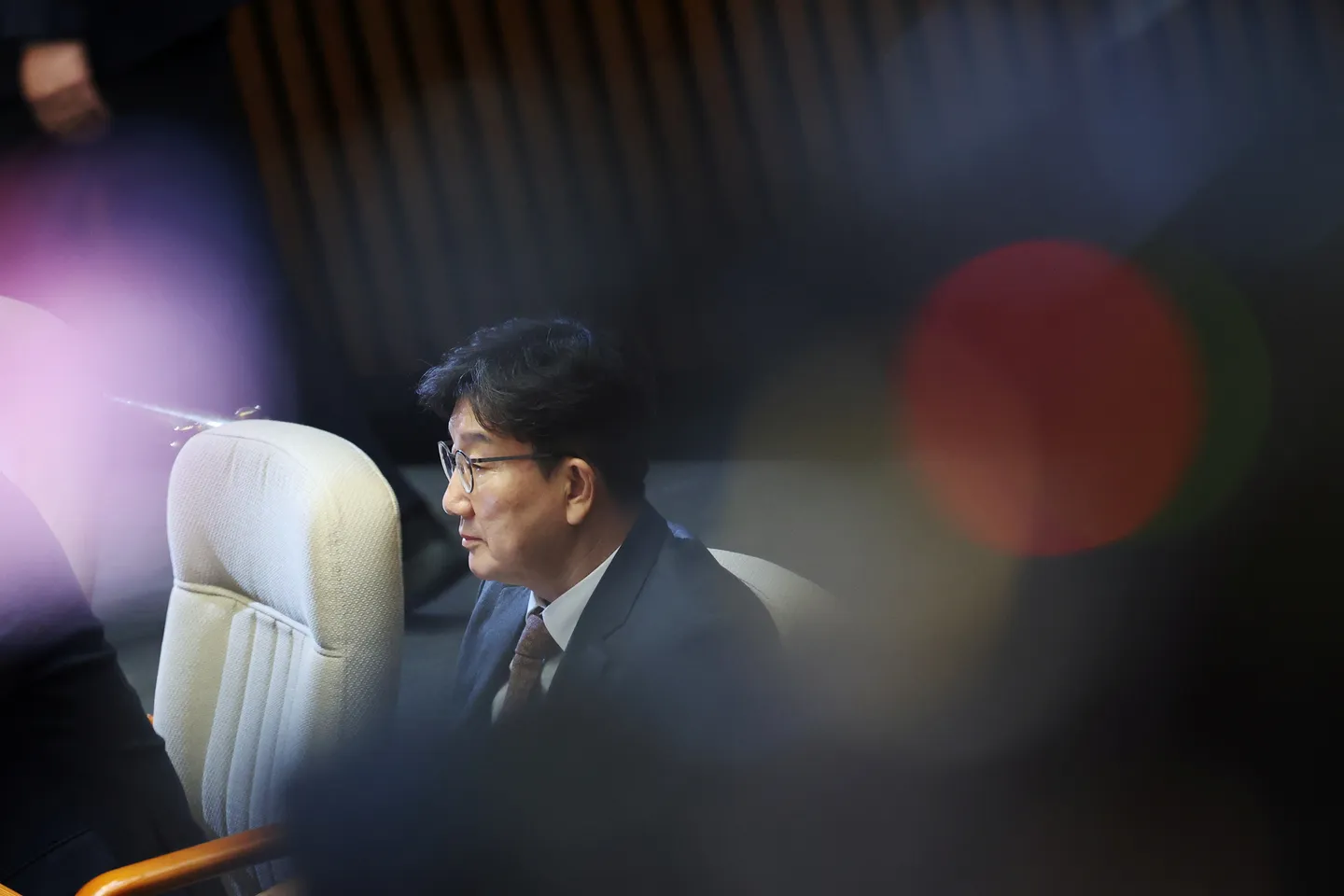
South Korea's top court on Thursday upheld a prominent MP's two-year jail term for taking bribes from the Unification Church, effectively stripping him of his parliamentary seat.
Kweon Seong-dong, a five-term lawmaker from the opposition People Power Party (PPP), was sentenced to two years in prison by a lower court for accepting 100 million won ($67,400) in illegal political funds in exchange for helping the church, often condemned by critics as a cult.
He had appealed against the ruling.
The Supreme Court upheld "the lower court's guilty verdict, finding that the key evidence in the case... was admissible as evidence, and that the defendant had received illegal political funds", the top court said in a statement.
The highest court "found no error in the appellate court's judgement that affected the verdict", it said.
The ruling stripped Kweon of his parliamentary seat.

The graft scandal
The appellate court said in April that Kweon had "betrayed the expectations of the public, including his constituents, and failed to uphold the constitutional responsibilities of a lawmaker" by accepting the money.



"Accordingly, criminal punishment commensurate with his political position, authority, and responsibilities is unavoidable," it said at the time.
Kweon, an ex-prosecutor, served as floor leader of the then-ruling PPP and was an ally of disgraced former president Yoon Suk Yeol.
The graft scandal centred on the Unification Church has also implicated ex-president Yoon's wife, Kim Keon Hee, who was convicted of accepting two Chanel handbags and a Graff necklace from the church as bribes.
She was sentenced to four years in prison in April after also being convicted on separate stock manipulation charges.
Church leader Han Hak-ja is also being held in detention while standing trial on bribery charges, with prosecutors seeking a 13-year prison term.
Founded in 1954 by Han's late husband, Moon Sun-myung, the Unification Church has long drawn controversy over its political ties and teachings that portray Moon as the Second Coming of Jesus Christ.
Following the scandals, prosecutors and police also launched a joint investigation in January into suspected collusion between religious groups and politicians.