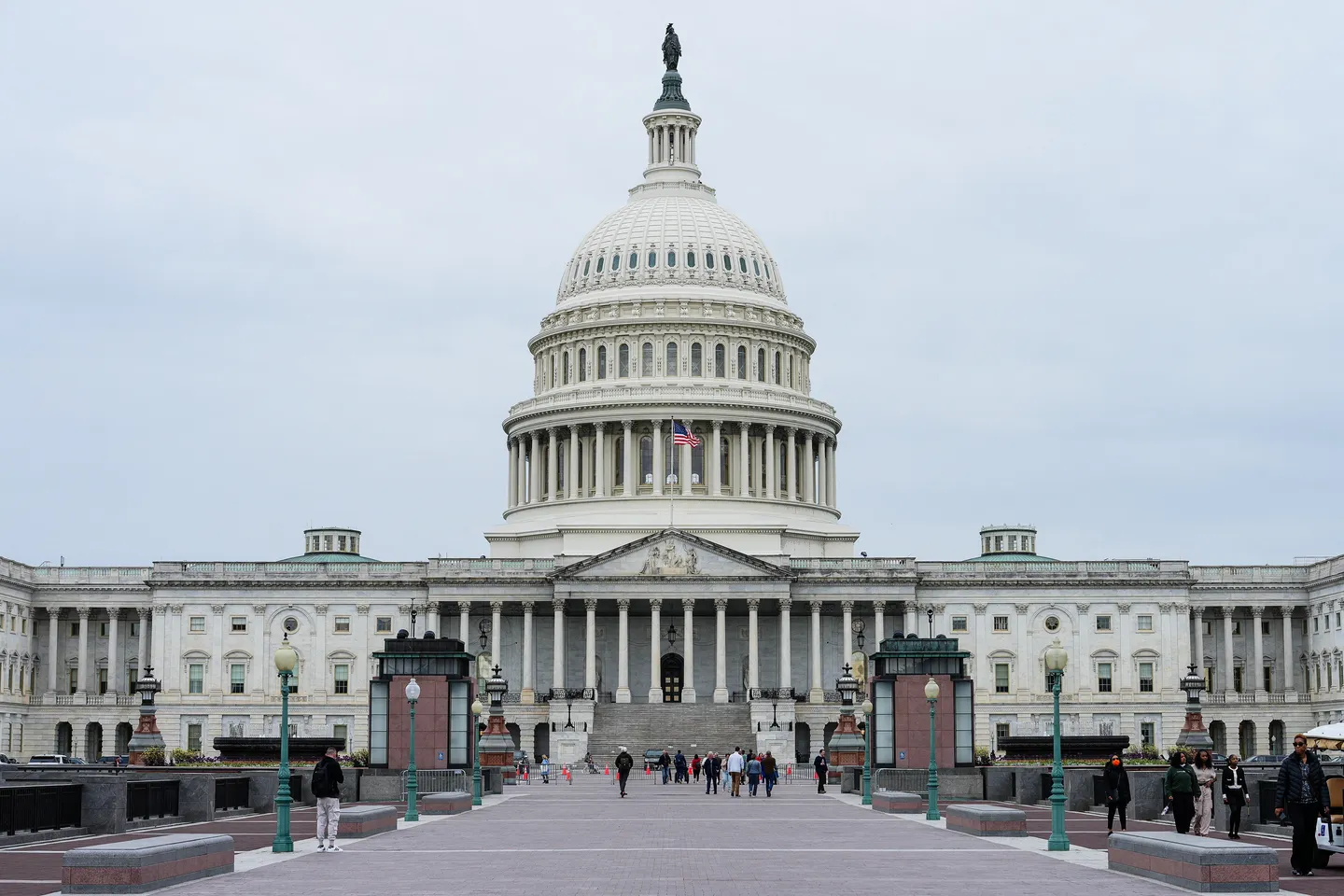
The US Senate has overwhelmingly voted to advance legislation that would impose new sanctions on Russia and Iran, approving a procedural motion to begin consideration of the measure.
The Senate voted 86–12 to invoke cloture on the motion to proceed to H.R. 5334, the legislative vehicle for the "Lindsey O. Graham Sanctioning Russia and Iran Act of 2026", clearing the way for debate on the measure.
The bill seeks to increase economic pressure on Moscow over the Ukraine war and restrict Iran's energy revenues.
Ukrainian President Volodymyr Zelenskyy observed the vote from the front row of the Senate gallery, attending proceedings as a tribute to the bill's author, the late Sen. Lindsey Graham, whose funeral was held earlier in the day.
Speaking to reporters at the Capitol ahead of the vote, Zelenskyy called the legislation "very important."
"It's not only about the money... But it's also a big signal to Europe, big signal to Ukraine, big support of our people. So I'm very thankful," Zelenskyy said.
The Ukrainian leader added that he discussed urgent air defence needs, specifically anti-ballistic systems, with President Donald Trump and US senators during his Washington visit.

Tariff provisions and bipartisan debate
If enacted into law, the bill would allow President Trump to impose tariffs of up to 100 percent on countries that are major consumers of Russian energy, including India, Japan and several European Union member states.
President Trump indicated support for the measure after requesting the inclusion of Iranian sanctions.
However, the tariff authority has raised concerns among some lawmakers regarding import costs, threatening the bill's prospects as it moves toward final passage before heading to the House of Representatives in September.
"This is not so much a sanctions bill as it is a massive backdoor authority for President Trump to impose more tariffs," said Representative Gregory Meeks.
Conversely, Senator Jeanne Shaheen urged support, stating: "This is our best opportunity to support Ukraine, who are defending not just their country, but the rest of Europe."