 Ahmed Najar
Britain, France, Canada and Norway want us to believe they are finally getting serious about holding Israel accountable.
This week, they announced sanctions against networks accused of financing illegal settlers’ violence in the occupied West Bank.
France went even further, banning Israeli Finance Minister Bezalel Smotrich from entering the country because of his support for annexation and settlement expansion. The move was presented as evidence that Western governments are finally drawing a line.
But one cannot help but wonder: accountable for what, exactly?
Because if these governments genuinely believe that the violence, land theft and dispossession taking place in the occupied West Bank are serious enough to warrant sanctions, why are they still treating the problem as though it is confined to a handful of extremists rather than the state that enables them?
The fundamental flaw in these measures is that they separate the settlers from the system that created them.
The image often presented is that of a few radical settlers acting outside the law while the Israeli government struggles to contain them. If that were true, sanctions against individual settlers and their financial backers might make sense.
But that is not what is happening. Illegal settler violence is not occurring despite Israeli state policy. It is occurring because of it.
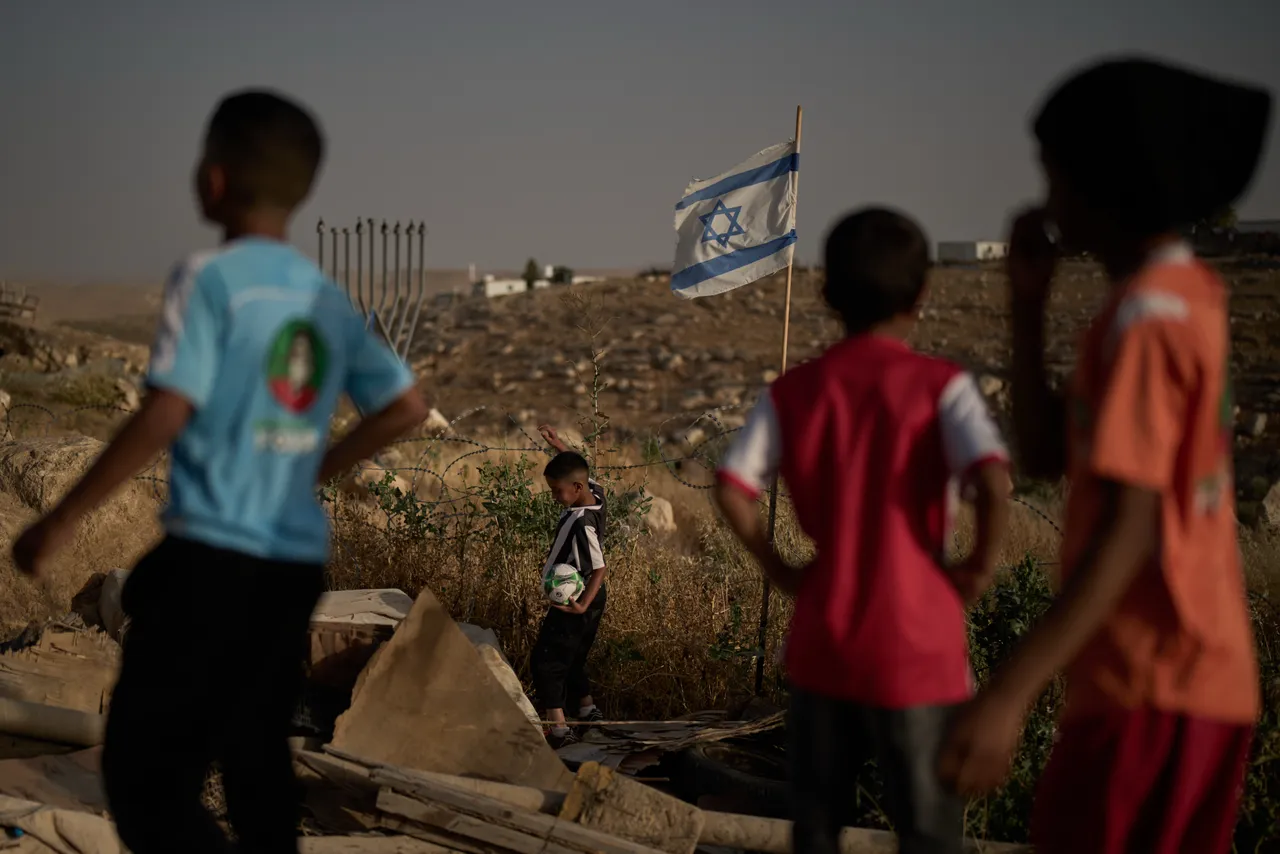
The settlements themselves are illegal under international law. Yet they continue to expand. Roads are built. Infrastructure is funded. Land is confiscated. Military protection is provided. Palestinian communities are displaced.
None of this is the work of a few rogue individuals.
State-sponsored violence
In fact, a United Nations probe report released this week concluded that Israeli authorities have facilitated settler violence through financial, military and legal support and that Israeli security forces frequently accompany and protect settlers during attacks on Palestinians.
The report found that the distinction between settlers and the state has increasingly collapsed.
That finding should fundamentally alter the discussion.
If the state is providing protection, funding and political backing, then settler violence is not simply a criminal problem. It is a policy problem.
And if it is a policy problem, then sanctioning a few illegal settlers while leaving the state untouched becomes little more than political theatre.
Indeed, there is a danger that these sanctions serve a far more convenient purpose.
By focusing attention on Smotrich, a handful of extremist organisations and several financial networks, Western governments create the impression that the problem lies with a few bad actors rather than with the broader system of occupation, settlement and military control.
The message becomes: Israel is not the problem. These individuals are.
But the truth is that the individuals are simply implementing policies that the state itself has adopted.
The illegal settlers attacking Palestinian villages are doing so because they know they enjoy the protection of soldiers, ministers and government institutions.
The problem is not that Israel cannot stop them, but that it does not want to.
The contradiction becomes even more striking when one looks at what is happening in London itself.
Days after announcing sanctions against settler-linked organisations, Britain is preparing to host a major Israeli real estate exhibition promoting property sales, including homes in illegal settlements in the occupied West Bank.






Think about that for a moment. The British government says the settlements are illegal under international law. It says settlement expansion undermines peace and threatens the possibility of a two-state solution. It says settler violence must be punished.
Yet a conference promoting property built on occupied Palestinian land is allowed to market itself openly in London.
If settlements are illegal, why are they being marketed in London? If settlement expansion violates international law, why is the British government willing to sanction a handful of people involved while allowing the commercial promotion of the project itself?
The contradiction reveals the central weakness of Western policy towards Israel. The problem is always presented as a handful of extremists rather than the system that empowers them.
A few settlers are sanctioned. A few ministers receive travel bans. Yet the structures that sustain the settlement enterprise remain largely untouched.
That question becomes even more uncomfortable when viewed through the lens of Gaza.
Israel is not merely accused of facilitating settler violence in the occupied West Bank. It stands guilty of genocide, war crimes and crimes against humanity over its atrocities in Gaza.
Yet despite these accusations, Western governments continue military cooperation, arms transfers and diplomatic protection.
Western double standards
This is where the contradiction becomes impossible to ignore.
When Russia invaded Ukraine, sanctions arrived within days. Russian banks were cut off from international financial systems. Assets were frozen. Trade restrictions were imposed. Entire sectors of the Russian economy were targeted.
There was no prolonged debate about whether sanctions would be appropriate.
The principle was simple: a state that violates international law should face consequences.

With Israel, however, we find ourselves in the extraordinary situation of debating whether a few ministers and a handful of settler organisations should face travel bans.
The contrast exposes a double standard so glaring that Western governments scarcely attempt to explain it.
If annexation is wrong in Ukraine, why is annexation merely controversial in Palestine?
If territorial conquest is unacceptable in Europe, why is it negotiable in the Middle East?
If international law matters, surely it must matter regardless of who violates it.
The reality is that sanctions on individual settlers may generate headlines, but they will not stop settlement expansion.
They will not dismantle the structures that sustain occupation. They will not end the protection provided to violent settlers. And they will not alter the conditions that make such violence possible.
Because the violence is not an accident. It is the predictable outcome of a system that has been cultivated, financed and protected for decades.
The uncomfortable truth is that Western governments appear willing to sanction the symptoms while continuing to shield the disease.
And that may be the greatest irony of all.
Measures presented as accountability for Israel risk becoming another mechanism through which Israel avoids accountability.