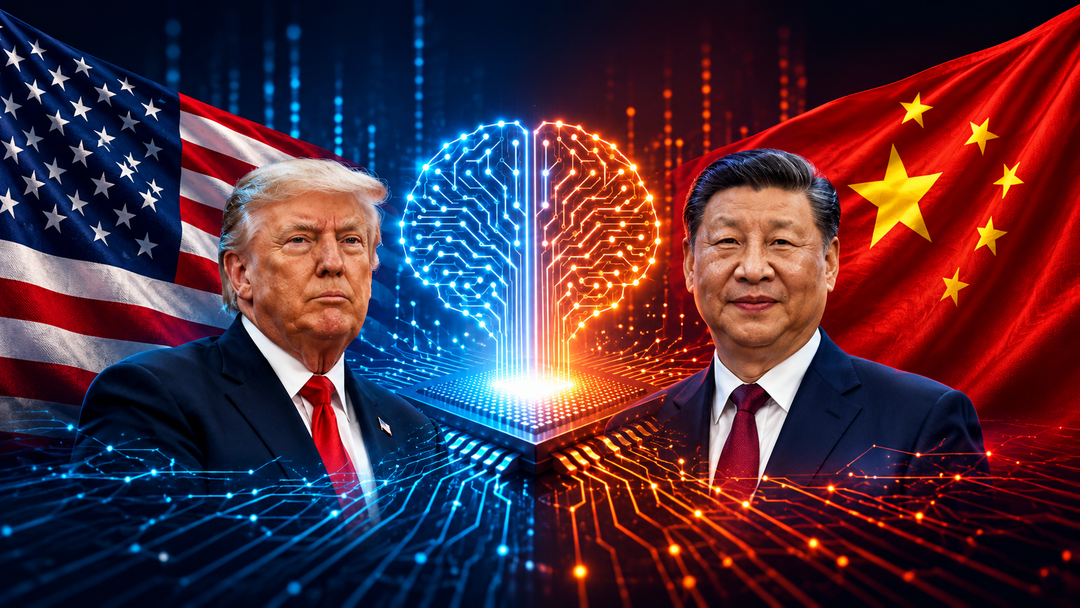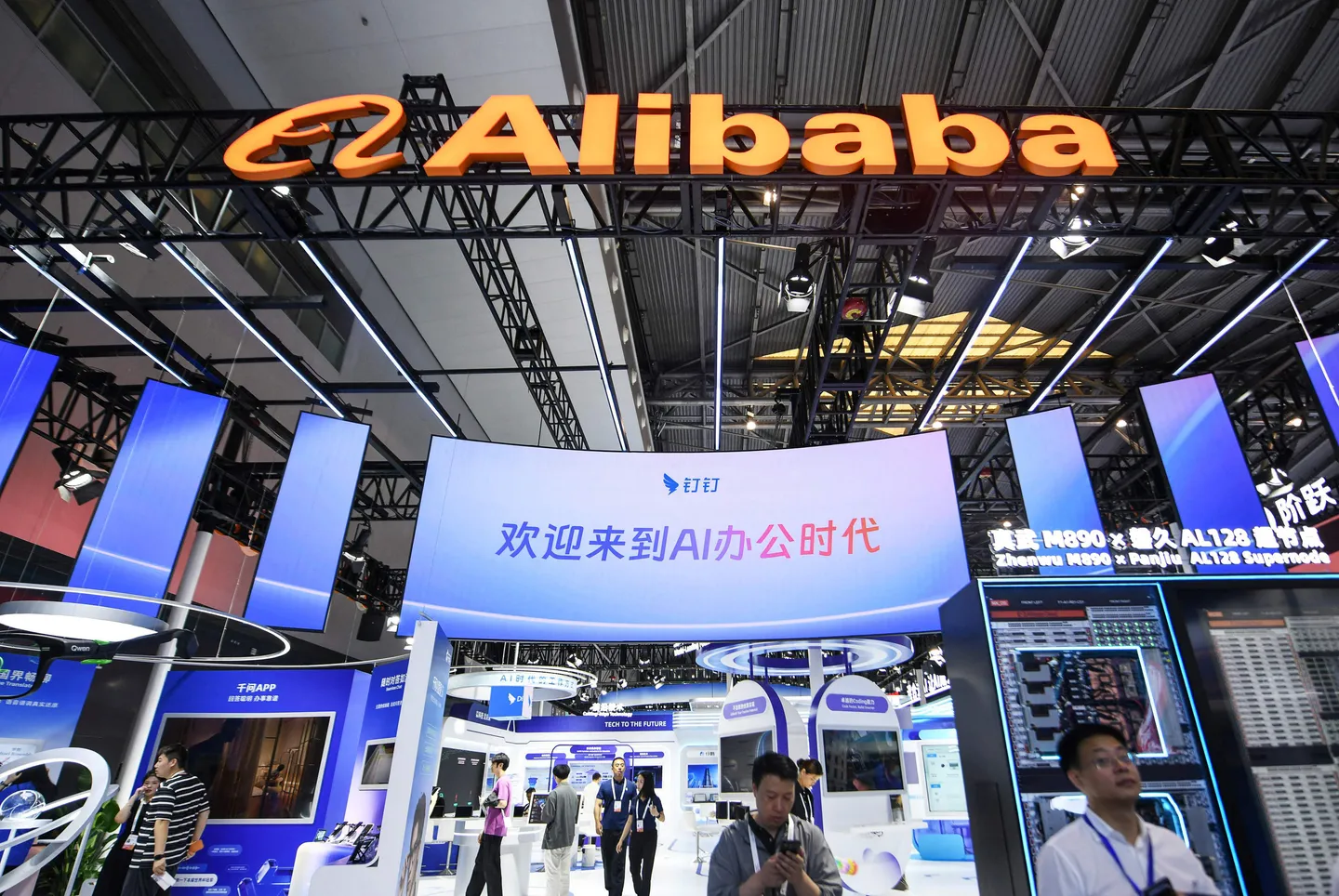
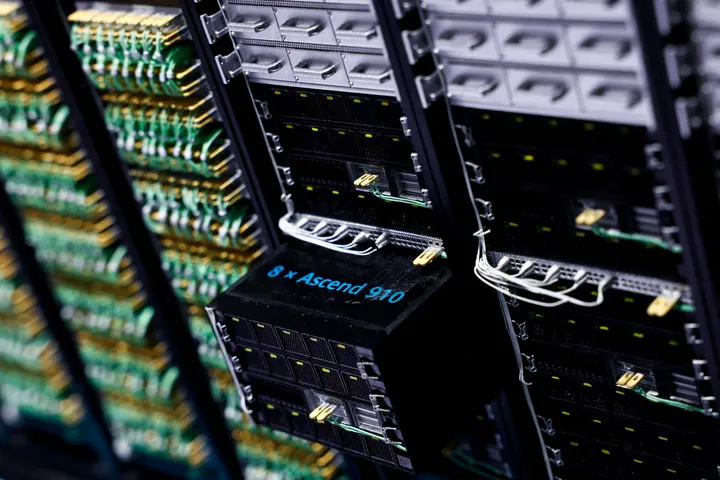
Alibaba unveiled a new AI chip and plans for a vastly larger artificial intelligence model on Tuesday, highlighting China’s drive for greater technological self-reliance just days before President Xi Jinping is due to meet US President Donald Trump in Washington.
At its annual Apsara conference in Hangzhou, Alibaba CEO Eddie Wu said the company’s new Zhenwu V900 chip is the most powerful AI processor in China and delivers three times the performance of its predecessor.
The chip is designed to support both AI training and inference, the computing used to generate responses from trained models.
Alibaba also said it plans to train a new AI model with between 5 trillion and 10 trillion parameters — potentially more than four times the size of its current Qwen 3.8 Max model, which has 2.4 trillion parameters.
AI race moves to chips and computing power
The announcements underscore Alibaba’s effort to build a full AI ecosystem spanning chips, models and cloud infrastructure as Chinese companies face restrictions on access to some advanced US technologies.
The company said it expects Alibaba Cloud’s global data-centre capacity to exceed 20 gigawatts by 2032, reflecting what Wu described as rapidly rising demand for AI computing. The V900 is expected to enter mass production and commercial release in early 2027.
Alibaba’s push comes as other Chinese technology companies, including Huawei, are also developing domestic alternatives to advanced AI hardware amid US export restrictions.
Chinese developers have also gained international attention with open AI models that can be cheaper and more accessible than some proprietary US systems, adding another dimension to the competition.




New backdrop for Trump-Xi talks
The timing of Alibaba’s announcement is notable as Xi prepares to meet Trump in Washington on Thursday, with AI expected to be among the issues shaping discussions between the world’s two largest economies.
The two countries remain deeply competitive over advanced technology, while Washington has restricted China’s access to some high-end AI chips and semiconductor equipment.
Beijing, meanwhile, has pushed to strengthen domestic capabilities and reduce its dependence on foreign technology.
US and Chinese officials have also discussed creating mechanisms for greater transparency around AI-related incidents, even as broader disagreements over technology controls remain unresolved.
Wu compared the rapid development of AI to the Industrial Revolution and said Alibaba was mobilising its resources to meet growing demand.
The latest announcements show how quickly the AI competition is expanding beyond individual models to the chips, data centres and computing infrastructure needed to power the next generation of systems.