Nearly a year and a half has passed since then-President Yoon Suk-yeol declared martial law in South Korea on the evening of December 3, 2024.
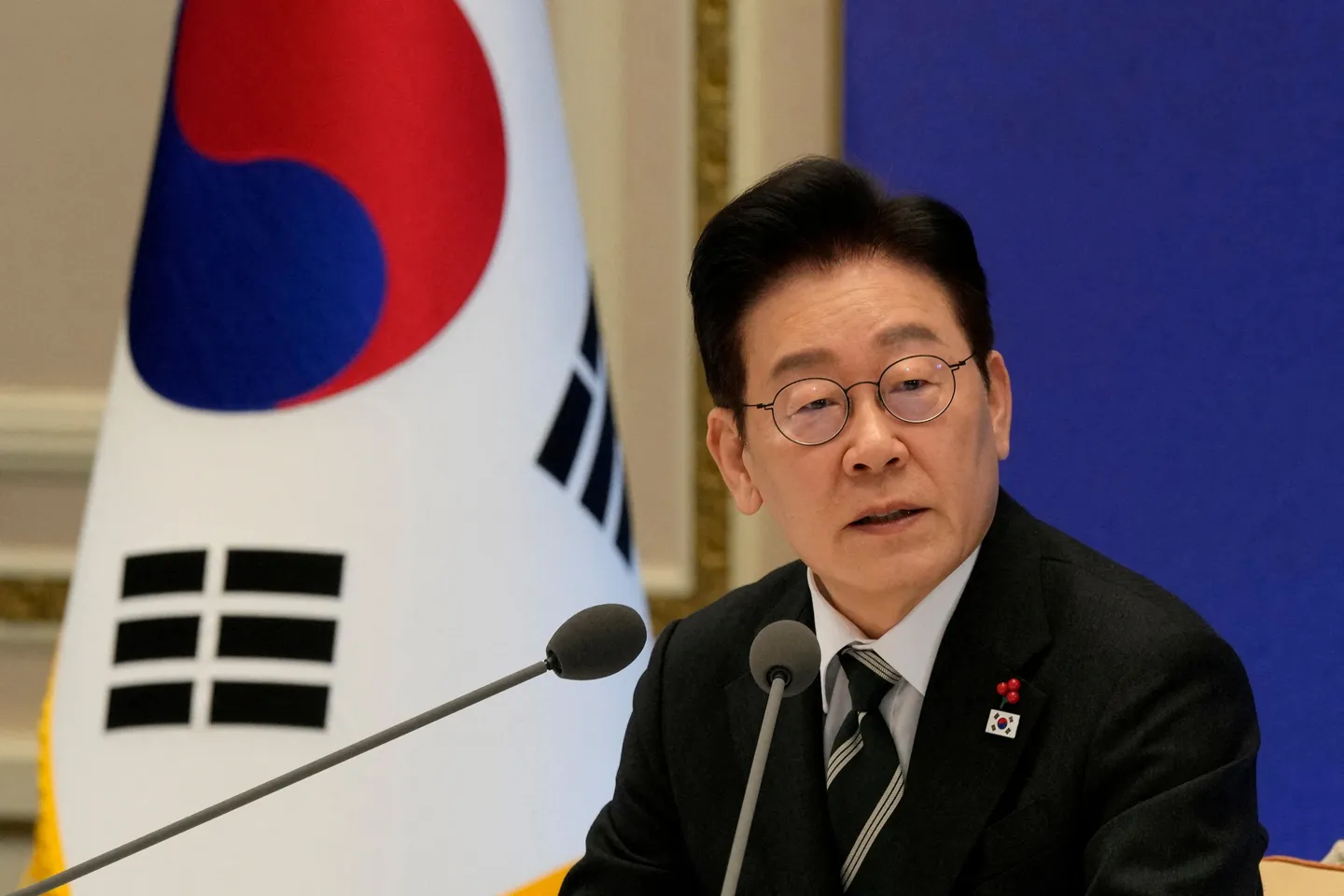
During this period, South Korea managed the political crisis through established legal procedures, with Lee Jae-myung elected as president and taking office on June 4, 2025.
Since then, the new administration has faced a range of challenges across multiple areas. Amid a rapidly shifting international and regional landscape, these challenges can broadly be grouped into several key areas.
First, it is important to examine how South Korea, a major Asian economy that transitioned to democracy in the late 1980s, responded to a crisis that once seemed unimaginable: the declaration of martial law.
Although some Western countries advised their citizens to exercise caution or reconsider travel to South Korea immediately after the declaration, the demonstrations and protests that followed were largely peaceful, with no major disruptions reported.
The martial law decree was subsequently revised, while police and military personnel were prevented from entering Parliament during the period of emergency rule.
Legal investigations were also launched into the officials and units involved in the decision to impose martial law.
Beyond restoring domestic stability, the new government’s priorities included improving economic indicators and rebuilding international confidence. Its economic measures aimed not only to support financial markets but also to provide direct relief to households.
Interdependence and security relations
High-level diplomatic engagement has been one of the key tools for rebuilding international confidence.
During his first year in office, the South Korean president visited 14 countries, while 13 foreign leaders visited South Korea. Notably, both US President Donald Trump and Chinese President Xi Jinping visited the country.
Seoul has also remained focused on developments in its region, where political and economic issues are increasingly intertwined. Key priorities include ongoing trade negotiations with the United States and the evolving security partnership between the two allies.
Discussions between Seoul and Washington have centred on trade, security, semiconductors, and supply chain resilience, with potential cooperation also expanding into artificial intelligence, shipbuilding, and energy.
The “US-South Korea Strategic Trade and Investment Agreement,” announced in November 2025, reflects efforts to adapt bilateral economic ties to changing global trade conditions.
The agreement demonstrates that while economic interdependence between the two countries remains strong, Seoul is seeking to protect its industrial interests while deepening cooperation with Washington in economic security, advanced technologies, and strategic industries.
This approach reflects the Lee Jae-myung administration’s broader goal of building a more comprehensive and future-oriented alliance capable of responding to a rapidly changing global environment.
Following the Lee Jae-myung administration’s arrival in office, the future direction of South Korea-Japan relations has become another closely watched issue in the context of regional cooperation.
Despite expectations that Japan’s newly elected Prime Minister Takaichi would take a cautious approach due to longstanding historical disputes between the two countries, relations have shown signs of renewed engagement.
During their meeting in January 2026, Lee and Takaichi played drums together in a symbolic display of goodwill, highlighting a mutual interest in maintaining dialogue and expanding cooperation.


Meanwhile, South Korea’s economic stability and international standing remain closely linked to global developments.
President Lee has warned that ongoing conflicts in the Middle East are contributing to higher living costs by disrupting energy markets and supply chains.
He called for measures including the release of government stockpiles, expanded support for food and essential goods, and increased tariff quotas.
Furthermore, President Lee has emphasised that restoring stability and peace in the Middle East is essential not only for regional security but also for global stability and economic resilience.
This reflects South Korea’s effort to position itself as a responsible international actor while recognising its own vulnerability to global disruptions.
Over time, the Lee Jae-myung administration’s foreign policy and economic security approach has reflected a broader view that global stability is closely connected to South Korea’s national interests.
Long-term growth
Domestically, the administration has identified reforming South Korea’s capital markets and addressing the so-called “Korean discount” — the tendency for Korean companies to receive lower valuations compared with global peers — as key economic priorities.
The government aims to achieve this through reforms focused on improving corporate governance, increasing market transparency, strengthening shareholder rights, and encouraging innovation.
It also plans to support markets such as KOSDAQ and KONEX while deepening capital market development. These measures are intended to enhance South Korea’s competitiveness and create a more sustainable foundation for long-term growth.
Artificial intelligence has also emerged as a central pillar of the administration’s economic strategy.
The “South Korea National Artificial Intelligence (AI) Action Plan (2026–2028),” announced in February 2026, frames AI as a strategic technology capable of driving economic growth, transforming industries, improving public services, strengthening scientific capabilities, and contributing to national security.
Through investments in AI infrastructure, workforce development, regulatory reform, and broader adoption across sectors, South Korea aims to strengthen its position as a global leader in AI while contributing to international discussions on AI governance and standards.
Regarding South Korea-Türkiye relations, ties established in 1949 continue to expand across economic, cultural, defence, and security fields.
During his official visit to Türkiye in November 2025, President Lee highlighted Türkiye’s role as a strategic hub for South Korean companies seeking to expand into Europe and expressed interest in deepening cooperation in areas such as technology, artificial intelligence, and renewable energy.
High-level engagement has continued, with Turkish Foreign Minister Hakan Fidan meeting South Korean Foreign Minister Cho Hyun during his visit to South Korea in June 2026.
Such exchanges are expected to further strengthen the potential for expanded bilateral cooperation.
This article was first published on TRT Korean.