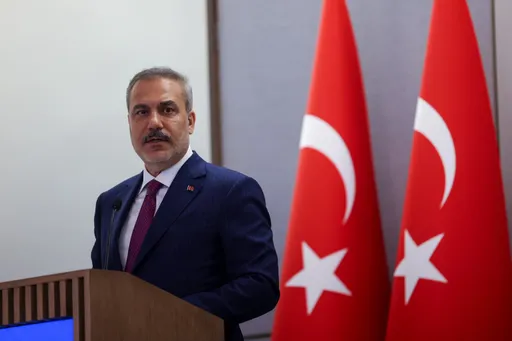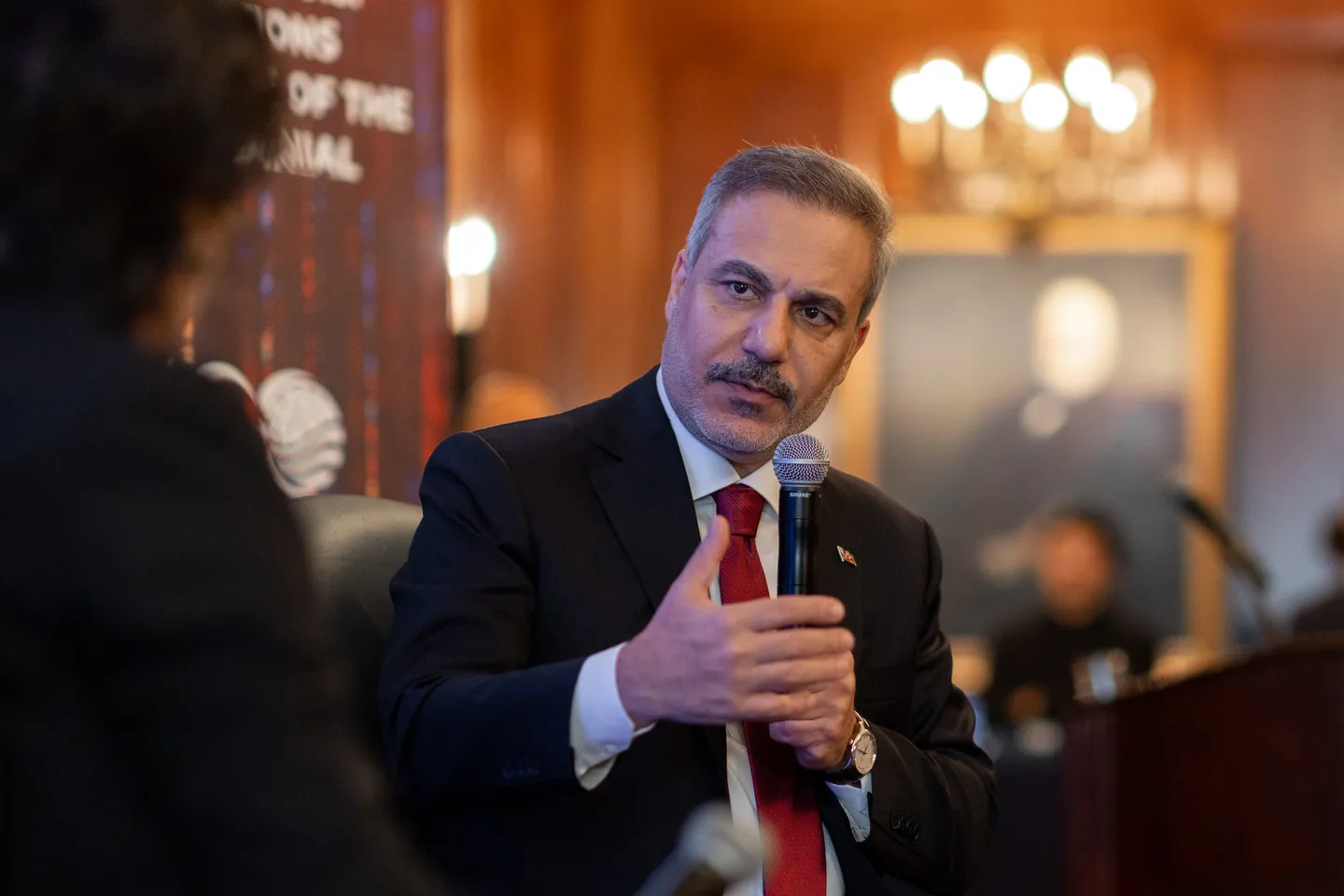
Turkish Foreign Minister Hakan Fidan has defended the newly established Mecca Joint Defence Agreement against criticism over its response to attacks by Yemen’s Houthis on Saudi Arabia, saying it was unfair to judge the new alliance against a decade-old conflict.
Speaking at a panel on Türkiye-US relations organised by the Communications Directorate in New York on September 21, Fidan was asked whether the Houthi attacks on Saudi Arabia represented the first test of the agreement and how the pact had performed.
Fidan pointed to former US Ambassador to Türkiye James Jeffrey, who was in the audience, and asked when he had joined the military. After Jeffrey said it had been about 50 years ago, Fidan asked how many times he had witnessed NATO’s Article 5 collective-defence provision being invoked.
“Only once,” came the response from the audience, according to the Communications Directorate’s statement about the event.
“That is not fair at all. No one criticises NATO for being a ‘paper tiger’, but when it comes to a newly established defence alliance, they point to a 10-year crisis — the Yemen crisis — and say, ‘Look, it doesn’t work,’” Fidan said.
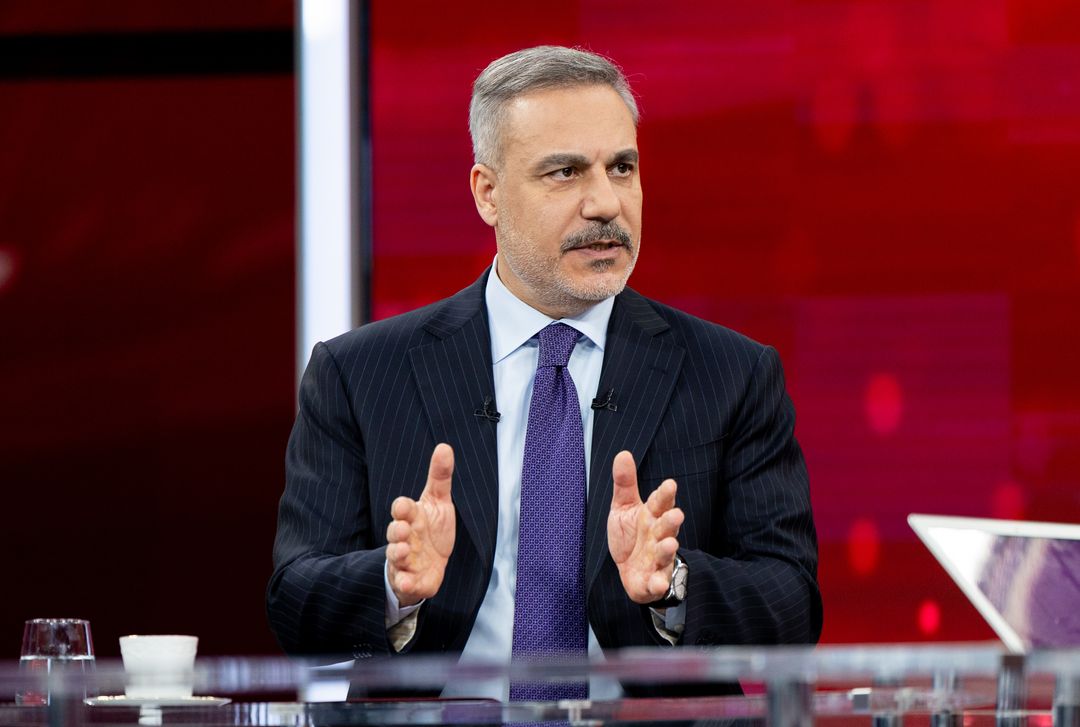
“We have only just begun,” he added, with his response drawing applause from the audience.
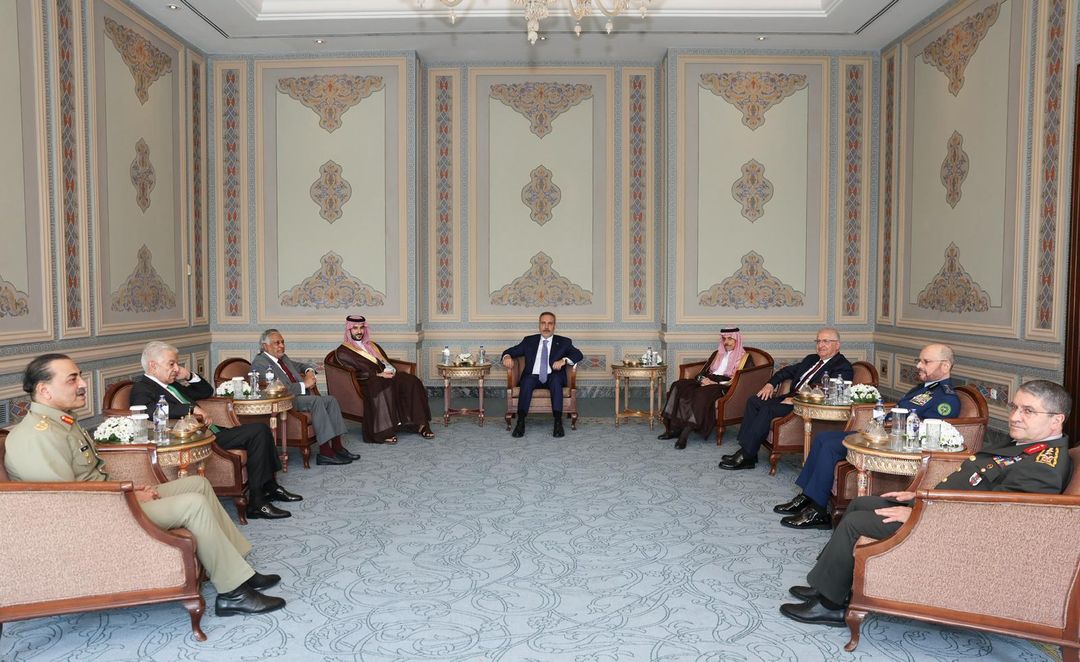
The Mecca Joint Defence Agreement was established by Türkiye, Saudi Arabia and Pakistan as part of Ankara’s push for greater regional responsibility for security.
Fidan said Türkiye had been considering such an arrangement for five or six years, but that it had taken time to persuade other countries to join.
He said the agreement was based on the principle that countries in the region should take greater responsibility for their own security, sovereignty and territorial integrity.
“The countries of the region have learned the principle that we, as Türkiye, have articulated: ‘There is no domination, no submission; rather, there is cooperation,’” Fidan said.
He described the Mecca agreement as a starting point for greater “regional ownership,” arguing that a lack of trust among countries in the region had contributed to conflicts, external intervention and countries becoming involved in disputes connected to the agendas of others.

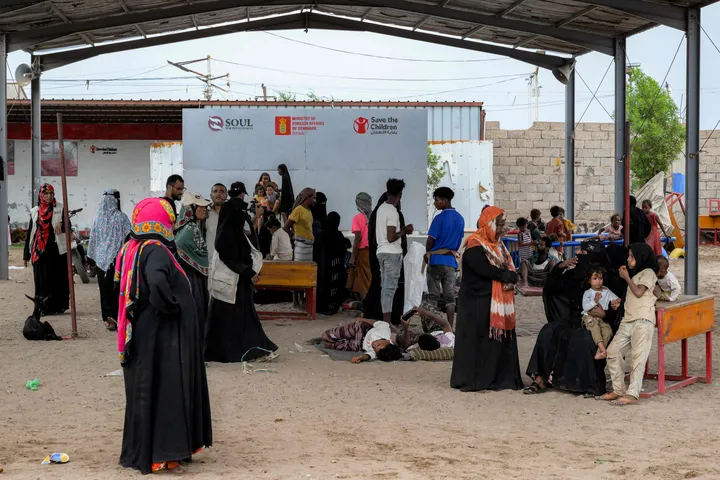

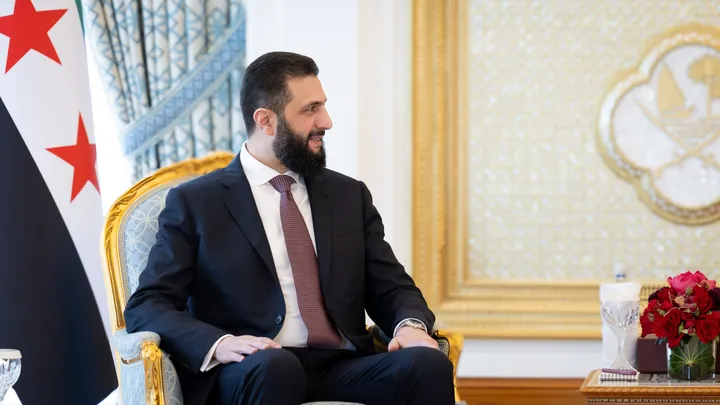




Fidan said the three countries had a roadmap for developing the arrangement and that other countries interested in joining could be invited once the structure was institutionalised.
“Our idea is that once we institutionalise it, the invitation for other countries to join will remain open,” he said.
Earlier in his remarks, Fidan said Türkiye and the United States shared an interest in having sovereign and stable states capable of providing security and prosperity in the Middle East, particularly in Syria and Iraq.
He said Ankara sought to strengthen national institutions and prevent terrorist organisations from operating, adding that a Syria free from terrorism and with its territorial integrity preserved would constitute significant progress for regional security and prosperity.
Fidan also identified the US war with Iran, the conflict in Yemen and Israel’s destabilising policies and actions across the region as interconnected threats that were obstructing diplomacy.
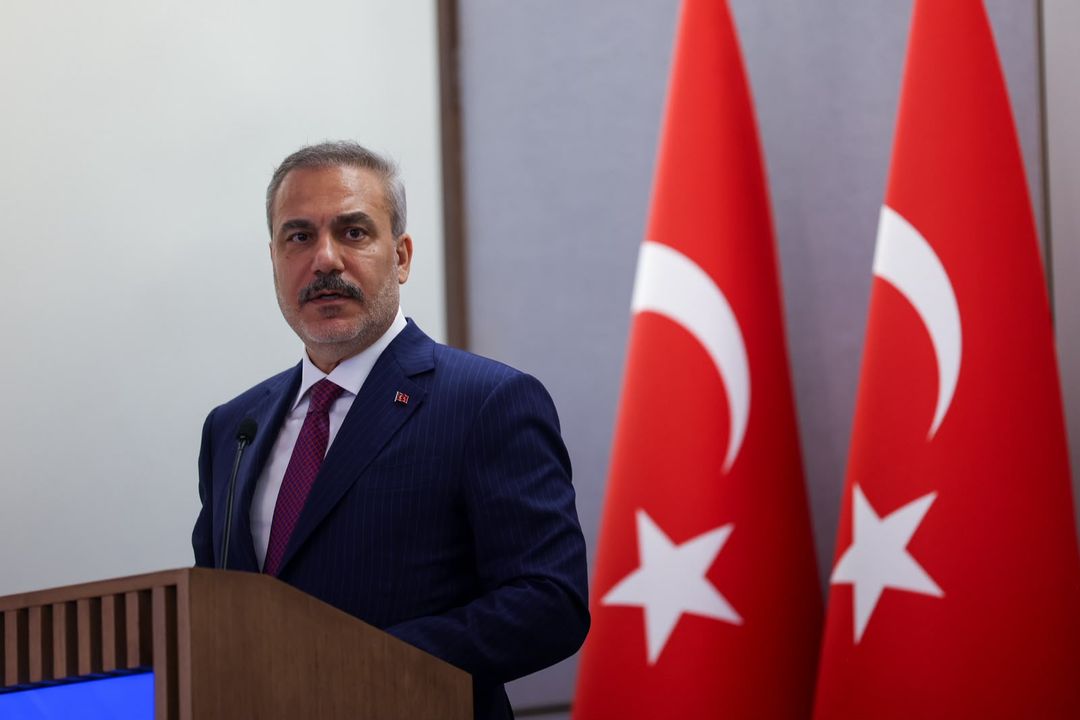
“These threats reinforce one another and obstruct diplomacy,” he said, adding that addressing them required regional responsibility and close cooperation with Washington.
“In particular, we expect the US to make greater use of its influence over Israel to bring an end to policies that undermine both regional and global peace and stability,” Fidan said.
He also said Gaza remained a central test of efforts to establish security, cooperation and prosperity in the region, and that Türkiye supported US President Donald Trump’s efforts to end the crisis in Gaza.
Turning to Türkiye-US relations, Fidan said the two countries had developed renewed momentum as they approached the centennial of their diplomatic ties. He said the relationship had remained resilient despite disagreements and crises and that the two sides should turn the current momentum into concrete results and institutionalise cooperation.
On defence ties, Fidan said political leaders in Ankara and Washington had demonstrated a willingness to resolve outstanding issues, including restrictions affecting bilateral defence cooperation. He also said work was continuing on Türkiye’s return to the F-35 programme and the resolution of the CAATSA issue, although the process was taking longer than expected.