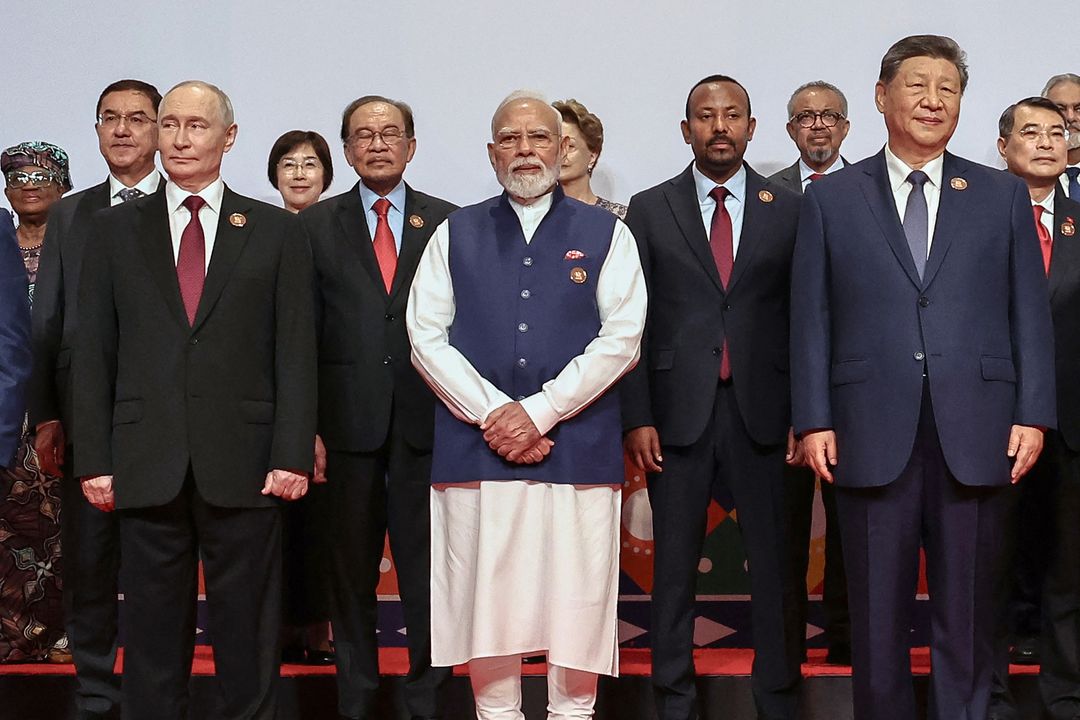
When Chinese President Xi Jinping arrived in New Delhi for a BRICS summit last week, his visit was seen as the biggest step yet in a cautious thaw between the nuclear-armed rivals.
He arrived in India six years after a deadly 2020 military clash along their disputed border, the Line of Actual Control (LAC) in India-administered Kashmir.
The 2020 China-India military clash was a violent, hand-to-hand battle in the Galwan Valley of the eastern Ladakh region of India-administered Kashmir that killed 20 Indian soldiers and four Chinese soldiers.
The Galwan Valley lies at an altitude of around 4300 metres.
The site lies amid remote, jagged mountains and fast-flowing rivers, abutting the Aksai Chin plateau, which India claims but China administers.
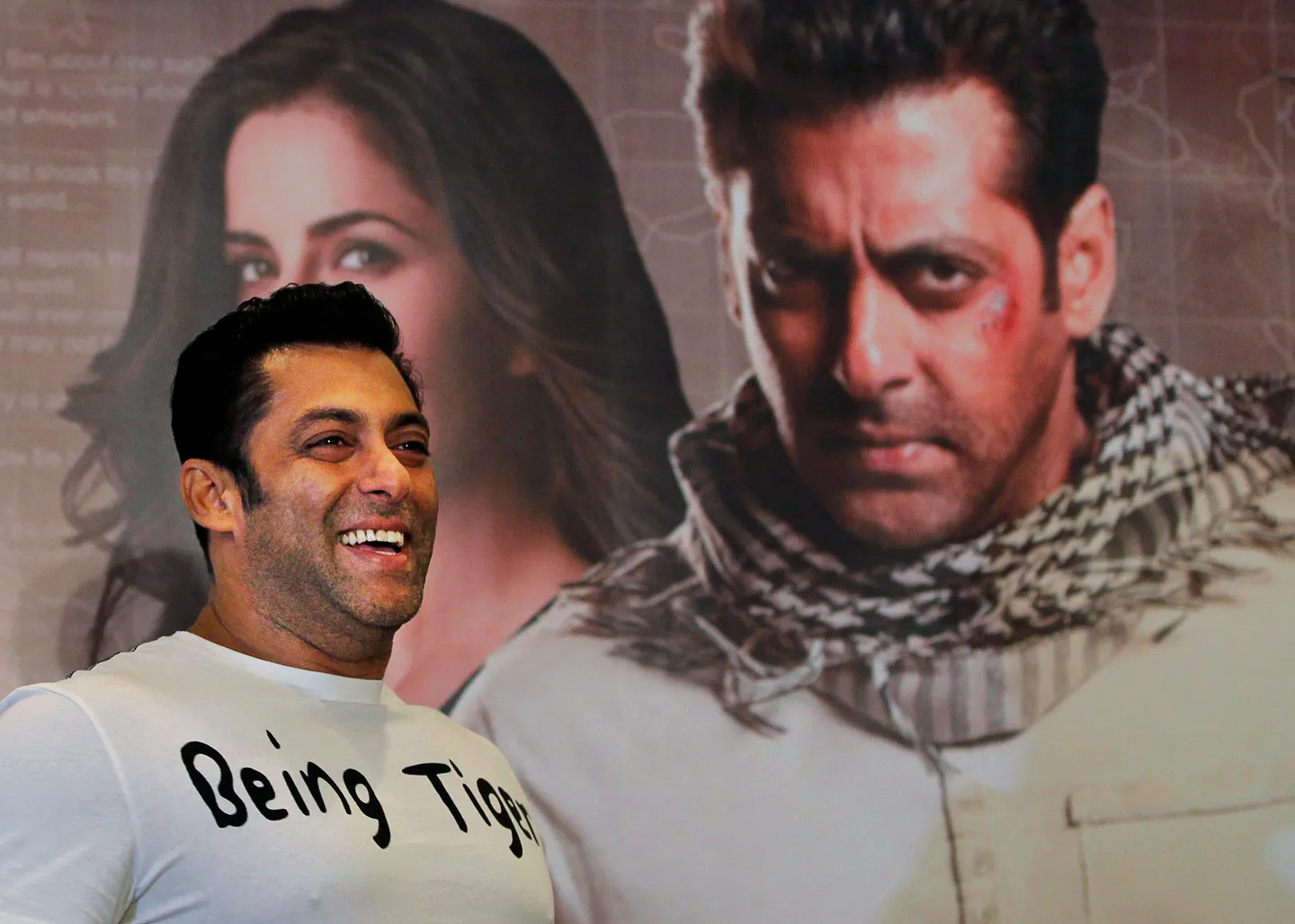
The movie
Amid renewed diplomacy, an Indian movie has landed in the abyss with an unusual twist: overdoing nationalism at the wrong time.
Salman Khan is a popular Bollywood actor who has starred in over 80 movies, many of them being blockbusters.
When Khan's new film was first announced in 2025, its title and teaser left little room for ambiguity: Battle of Galwan.
The film was to dramatise the deadly June 2020 confrontation between Indian and Chinese troops.
The first teaser of the movie presented the episode as a conventional military story, with Khan playing an Indian Army officer.
It looked like dozens of other over-the-top Bollywood action flicks packed with a dose of nationalism and choreographed combat.
The hero often survives in such movies even after being hit by a missile or single-handedly takes on an entire enemy army, emerging bruised but triumphant.
Battle of Galwan appeared to be heading in much the same direction.
But then the film began to change.
It was renamed Maatrubhumi, meaning motherland, with an added tagline: “May War Rest in Peace”.
Indian media reports said references to China and the Galwan clash were removed and that a substantial portion of the film was reshot.
Some reports put the reshoots at around 40 percent and attributed the changes to objections from the Indian government.
The Wire characterised the pattern as an "enforced silence" on China originating from the Narendra Modi government to avoid antagonising Beijing on screen.
But the production's transformation has coincided with a broader sensitivity in India over how China is portrayed on screen.
Another film based on Galwan, The Lion of Galwan, was shelved. Its producer, Himalay Dassani, said there could be no "China bashing" and that there was little point in making the film if the battle could not be depicted.

The clash
The 2020 clash transformed public perceptions of China in India.
The government responded with tighter scrutiny of Chinese investment, restrictions on Chinese technology companies and the banning of hundreds of Chinese mobile applications.
The confrontation also changed the tone of Indian television and popular culture.
China was increasingly presented not simply as a strategic competitor but as an adversary.
New Delhi increased scrutiny of Chinese investments, widened vetting of business visas for Chinese citizens, banned popular Chinese mobile apps, and severed direct passenger air links.
A film about Galwan in these circumstances fitted naturally into that atmosphere.
But by the time Battle of Galwan was being prepared for release, the political environment had become more complicated.
And the thaw
India and China began restoring some diplomatic and economic channels after years of intense confrontation.
The neighbours reached a disengagement pact in October 2024, by which point they had both pulled back troops from five locations where they had been facing off.
The pact also entailed returning to the situation in 2020 by pulling back troops from the remaining two locations, a condition fulfilled by December that year.
New Delhi resumed direct flights to China, cutting red tape to speed up approval of business visas for Chinese professionals and easing curbs on buying Chinese equipment.
Fragile ties



Yet the underlying disputes have not disappeared.
Besides intermittent tension on the frontier, territorial disputes often flare over disputed Arunachal Pradesh, which Beijing calls Zangnan and considers a part of its southern Tibet.
Trade ties also remain fragile, with industry executives highlighting visa delays and bottlenecks in procuring Chinese equipment and components critical in areas such as electronics and infrastructure development.
India is also wary of Chinese investment in industries it considers sensitive for national security, such as finance, defence and telecom.
China's reaction to the original film offered an early indication of its sensitivity.
China’s Global Times criticised the teaser, accusing Indian cinema of presenting a distorted account of the Galwan confrontation and of inflaming nationalist sentiment.
The South China Morning Post reported that India has told its filmmakers to drop "China-bashing".

It is economics
Indian cinema has spent decades depicting Pakistan as an antagonist.
Movies like Border, Gadar, Uri: The Surgical Strike and many more have provided Bollywood with a familiar language of jingoism and national security, with Pakistan constructed as a villain.
More rabid movies like Dhurandar, Article 370, and Kashmir Files not only portray Pakistan as a villain but also demonise Muslims and even opposition parties.
China presents a different calculation for India.
India imports enormous quantities of machinery, electronics, industrial components and other goods from China.
Reuters reported that Indian imports from China reached about $132 billion in the 2025-26 financial year.
That dependence has strategic consequences.
For policymakers, therefore, an aggressively anti-China film may carry a different sensitivity from another Bollywood production portraying Pakistan and Muslims as enemies.
The other Khans
Bollywood itself has become increasingly entangled with and in India's political battles.
During Modi's years in office, several movies have been embraced by the government and its supporters, while others featuring Modi critiquing enemies have faced boycott campaigns from political groups.
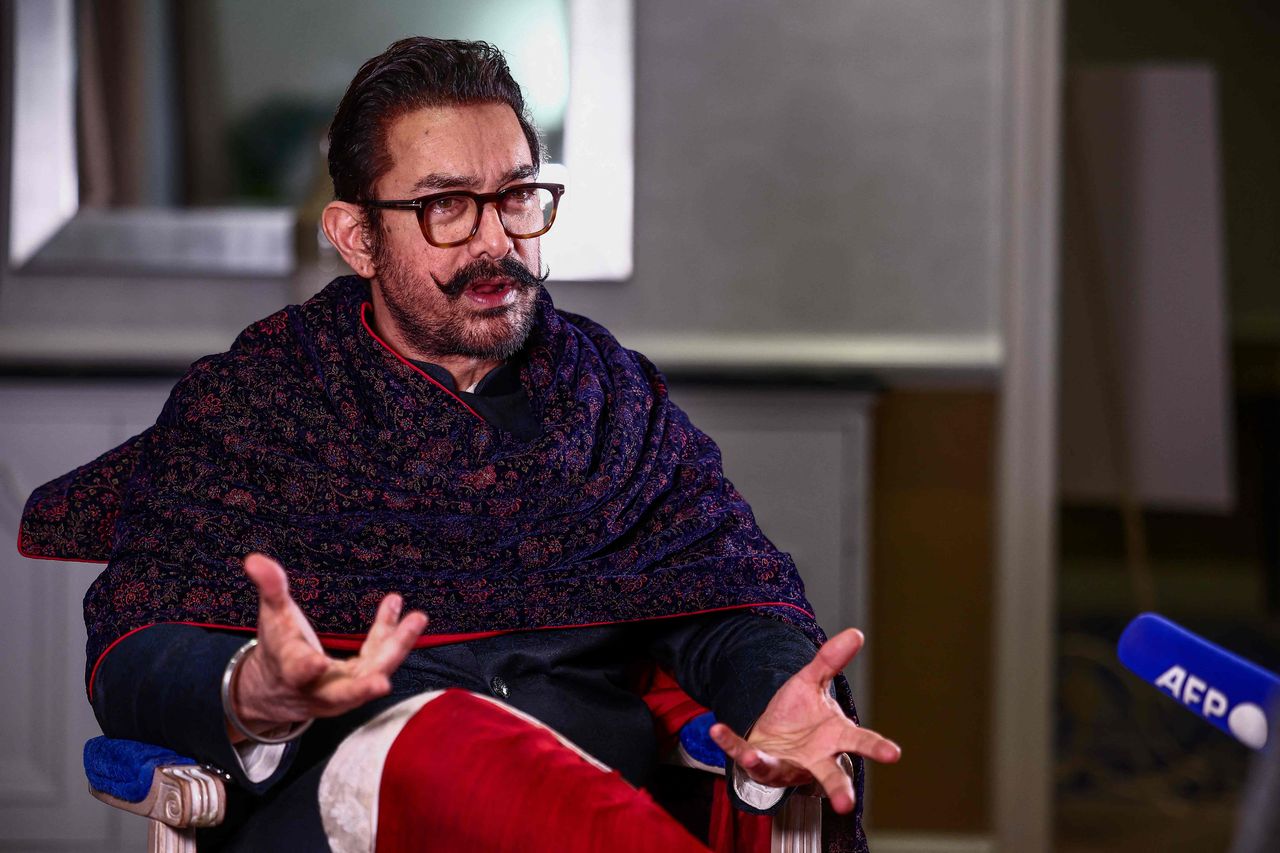
India's Hindu right-wing, including the ruling BJP, targeted Aamir Khan and called for a boycott of Türkiye days after May 2025's four-day India-Pakistan clashes, after Turkish Foreign Minister Hakan Fidan was the first to call his Pakistani counterpart Ishaq Dar in solidarity, a gesture India's media cast as hostility toward New Delhi.
Khan had met the first lady while in Istanbul for the shooting of his movie, Lal Singh Chadda, in 2020.
However, there is more to it.
In 2006, then-Gujarat Chief Minister Narendra Modi, still under a US visa ban over the 2002 Gujarat riots that killed over 1,000 Muslims, clashed with Aamir Khan, who backed a movement which opposed displacement caused by a dam. Modi supporters responded by attacking Gujarat cinemas screening Khan's Rang De Basanti and banning his film Fanaa.
The friction resurfaced in 2014 when Khan's PK, which satirised religious fraud and intolerance, drew BJP-aligned protests and effigy-burning from a party newly in power on a Hindu-nationalist wave, and again in 2015, when Khan spoke out after a spike in mob violence against Muslims and said he was "alarmed", prompting his wife to suggest leaving India, a remark that triggered a hostile media backlash.
Another popular Bollywood actor, Shah Rukh Khan, has also faced backlash from India's Hindu nationalist groups. In 2010, the right-wing groups threatened to obstruct the release of his movie, My Name Is Khan, after the actor called for Pakistani cricketers to be allowed to play in an Indian cricket tournament, the Indian Premier League.
Seven years later, his other movie, Raees, faced similar protests, as it featured Pakistani actress Mahira Khan.
The director
Matrubhoomi aka Battle of Galwan director Appurva Lakhia's treatment of geopolitical conflict has another chapter.
His other films have resulted in a familiar post-9/11 cinematic Islamophobic vocabulary in which Muslim-coded spaces, terrorism and geopolitical danger occupied the same frame.
Lakhia's proposed villain was a state: China.
And that has proved considerably more complicated for a $34M-budgeted movie.