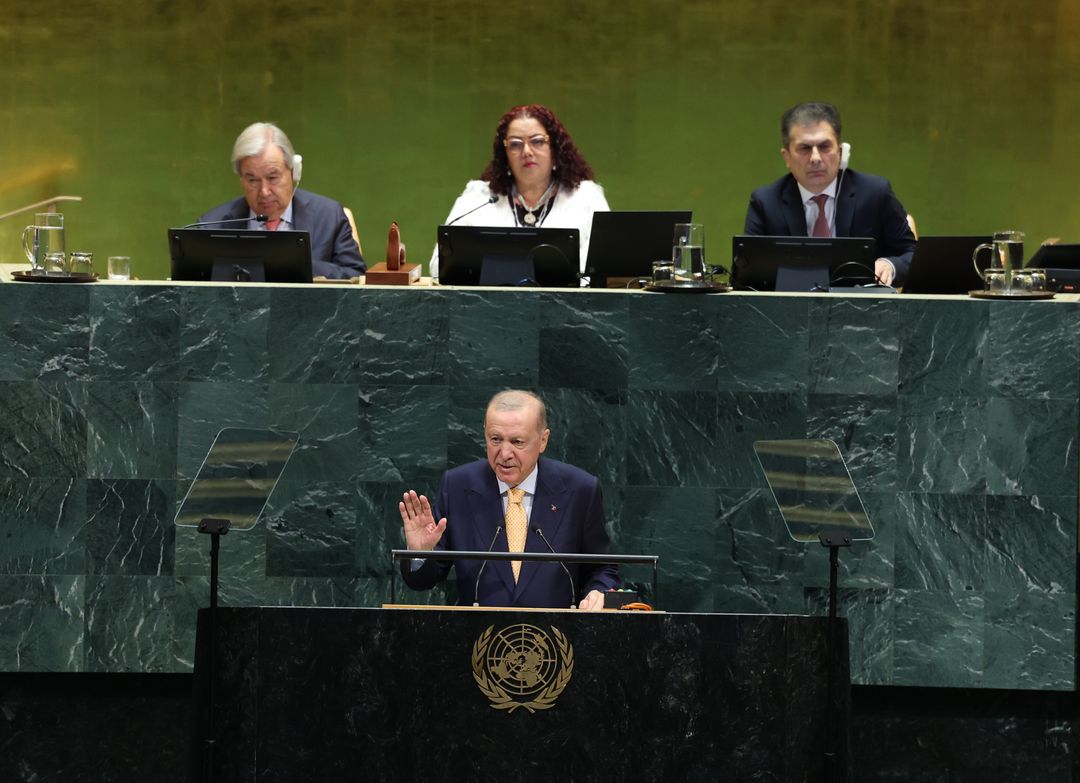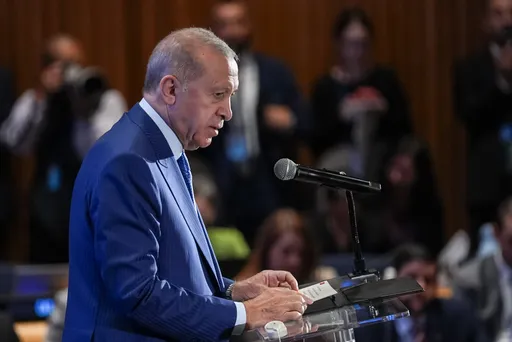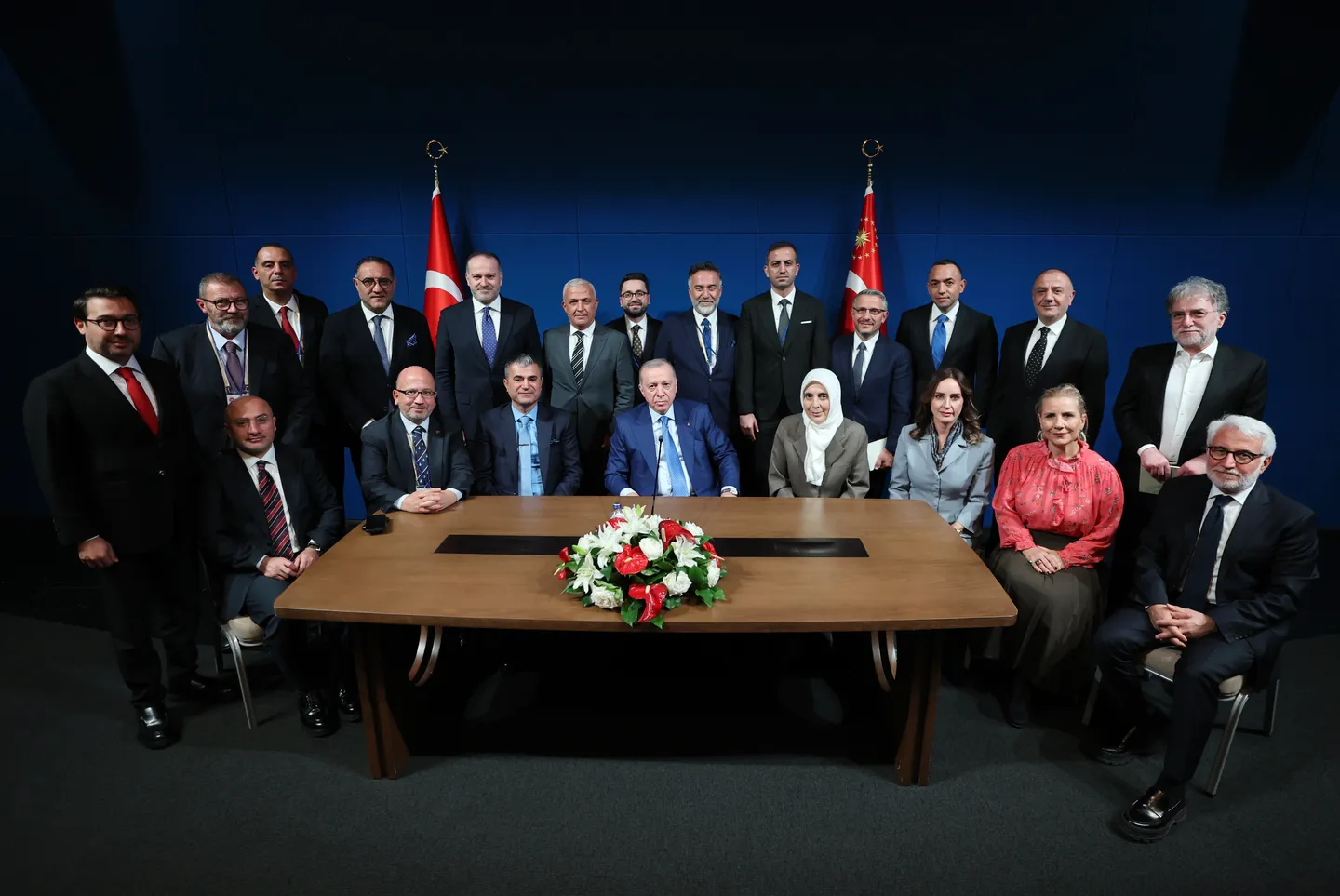
Turkish President Recep Tayyip Erdogan has outlined Türkiye’s positions on a wide range of regional and international issues, including reform of the United Nations, the Gaza crisis, tensions in the Strait of Hormuz, Black Sea security and Türkiye-US defence cooperation.
Speaking to journalists at Turkevi in New York on Wednesday, Erdogan also discussed the Terror-Free Türkiye process, relations with Iraq and Greece, the Development Road Project, climate change and Türkiye's preparations to host the COP31 climate summit in Antalya.
He said the UN system needed to become more representative, criticised the veto power of its five permanent members and called for a stronger General Assembly.
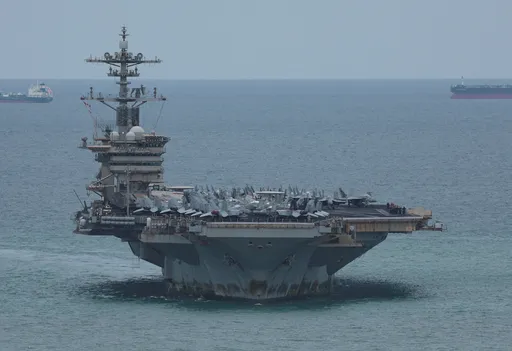
Erdogan also reiterated Türkiye's opposition to the closure of the Strait of Hormuz, called for a return to negotiations between Iran and the US, and said Ankara was stepping up diplomatic efforts to revive the Black Sea grain corridor.
He said Türkiye expected the US to take concrete steps towards its return to the F-35 programme, while stressing that Ankara would continue developing its domestic defence capabilities, including the KAAN fighter jet.
Below is the full Q&A:
QUESTION: You published an article in Bloomberg in which you wrote that the United Nations needs reform and that this reform can no longer be postponed. This is not the first time you have said this, but in that article you also stressed that Türkiye is ready to play its part in reforming the United Nations.
As I understand it, you emphasised the idea of a regional United Nations, in which different regions have different problems and therefore require solutions tailored to their circumstances. What kind of UN do you envision, Mr President? What kind of UN would you like to see?
PRESIDENT ERDOGAN:
First and foremost, we are talking about a United Nations in which the will of more than 190 countries is constrained by the veto power of five countries.
It is impossible for this unjust structure to maintain global stability and peace, remain faithful to the fundamental principles it upholds, and fulfil its promise to humanity.
The issue is not simply about Türkiye having a greater say. It is about Africa, Asia, Latin America, the Muslim world, Europe and all other regions being fairly represented in this global system through their own experiences and their own will.
That is why we say the veto mechanism should be abolished. We should move away from a United Nations model that protects only five members and towards a mechanism that embraces all members.
We should strengthen the General Assembly and make it more powerful and effective.
The new structure should be fairer, with elected members serving for defined periods and those seeking re-election having to regain the confidence of the international community.
The world's problems should be addressed and decisions made not by five members, but by all members.
Because the world no longer needs new walls; it needs new bridges.
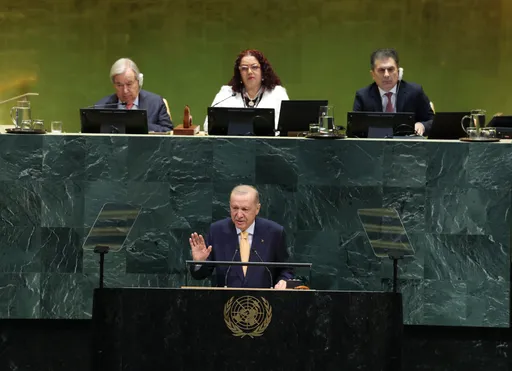
QUESTION: You have delivered your 16th speech to the UN General Assembly. From your first speech until today, you have also been a voice for the oppressed and for the pursuit of a fairer world.
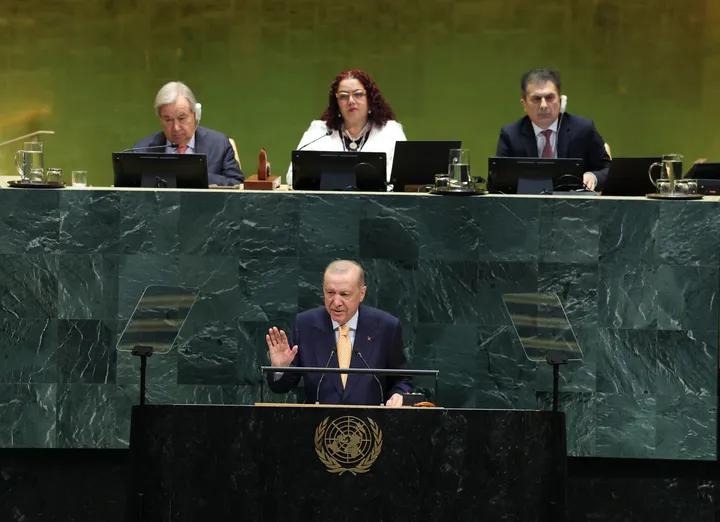
In your latest speech, you said, “As long as I live, I will continue to speak about these truths from this podium.”
Looking at the long journey from your first speech to today's address, and at where the world has reached today, how would you assess that journey?
PRESIDENT ERDOGAN:
This journey has been one of standing firm.
When we first took to the podium of the UN General Assembly, whatever we said and wherever we stood, we remain, thankfully, in the same place today.
What has happened in Syria, Iraq, the Russia-Ukraine war, Africa, Myanmar and, most recently, Gaza has repeatedly demonstrated the truth of what I have been saying.
The foundations of the Russia-Ukraine war were laid in those years. Many issues in our region grew because of wrong steps taken at the time; sparks effectively turned into fires.
If the world had listened to what we were saying at the time and taken measures, so many lives would not have been lost.
If UN reform had been carried out in those years, preventing the conflicts and wars we see in our region and around the world today would not have been beyond our reach.
The fact that Palestinian President Mahmoud Abbas was unable to attend the United Nations for two consecutive years is, in itself, an indication of how deeply injustice has become entrenched in the international system.
Our issue is not being against any country. Our issue is being against injustice.
We are happy that, from those days to today, we have always stood on the right side of history and have not taken a single step that would bring shame upon our nation.
Today, the world is moving towards the position we expressed from the very beginning.
QUESTION: Ship traffic through the Strait of Hormuz is declining sharply. The steep fall in the number of vessels passing through the region shows that the crisis is no longer just an issue concerning Iran, but has become a global energy and trade issue.
Does Türkiye have a concrete plan to bring the US and Iran towards a ceasefire? What are you proposing to the parties?
PRESIDENT ERDOGAN:
The situation in the Strait of Hormuz shows that this is no longer simply an issue between Iran and the United States.
We have made our position on this matter very clear. We oppose the closure of the Strait of Hormuz to maritime traffic. Freedom of navigation in the Strait of Hormuz must be protected.
Every tension in the Strait of Hormuz affects not only the countries of the region, but also Europe, Asia, energy markets, transport and the daily lives of millions of people.
The dramatic decline in commercial shipping in recent days clearly demonstrates the scale of the issue. The Strait is vital to global energy security and international trade.
Hormuz must be opened as a key to resolving problems through dialogue and negotiations.
We are telling all our interlocutors that we need to return to the negotiating table as soon as possible.
What needs to be opened are not new fronts, but new channels of diplomacy.
QUESTION:
While the world is focused on Hormuz, the war between Russia and Ukraine has also intensified again in the Black Sea. Attacks on commercial vessels have also increased again.
As a result, grain ships are waiting at ports. Could a new security mechanism similar to the Black Sea Grain Initiative, which was established through your efforts, be created and the corridor revived?
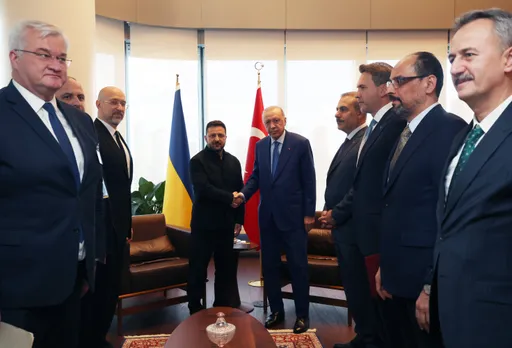
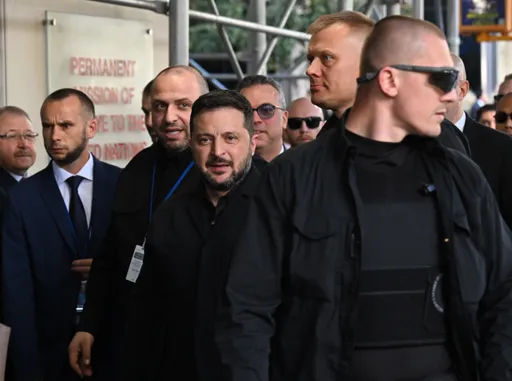
Are you hopeful following your discussions with the parties on this issue? Did this issue come up during your meeting with Ukrainian President Volodymyr Zelenskyy?
PRESIDENT ERDOGAN:
The issue of security in the Black Sea is extremely important both for us and for our region.
The Black Sea is not a front in this war, and it must never become one.
In our talks with the parties, we are explaining in detail the need to restore the safety of navigation.
This would have two benefits: ensuring food security and preventing the war from spreading.
We have made it clear that we do not accept attacks on commercial vessels in the Black Sea, whoever carries them out, and that we expect the parties to act responsibly.
We have now stepped up our efforts to re-establish the grain corridor. We are also accelerating our diplomatic efforts to this end.
I raised the issue once again with Ukrainian President Volodymyr Zelenskyy, and the response I received from him was positive.
QUESTION: There are already various challenges at an early stage regarding the Mecca Defence Alliance. There is particularly some pressure on Saudi Arabia.
What would you like to say about the future of the alliance?
PRESIDENT ERDOGAN:
The Mecca Defence Agreement is a strong step in the right direction.
If you undertake such an important initiative in such a challenging region, it is hardly surprising that you encounter some challenges.
If you say something new and demonstrate a new will, there will naturally be those who are uncomfortable with it.
We are not a state that was established yesterday. We are a state with enough experience not to be provoked or fall into traps.
I have no doubt that we will move forward more strongly once the institutionalisation efforts are completed.
The foundations have been laid for a platform that will produce regionally driven solutions to the region's problems.
We have all seen that those who come from outside and prescribe security solutions for our region often leave behind greater instability.
The sapling we have planted will soon grow and become a great tree.
We have confidence in our country and our nation, and we have confidence in our brothers and sisters.
QUESTION: Last year, on the sidelines of the UN General Assembly, there was a meeting attended by the Gulf countries, US President Donald Trump and yourself.
As an outcome of that meeting, Trump launched his Gaza plan in Sharm el Sheikh.
A similar meeting was held this year. You touched on part of this in your opening remarks, but will this second meeting produce an outcome soon, as the meeting in Sharm el Sheikh did?
PRESIDENT ERDOGAN:
There can be no lasting peace in the Middle East without stopping the bloodshed in Gaza, making the ceasefire permanent and ensuring that Palestinians can have a dignified future in their own homeland.
The will that has emerged within the framework of the peace plan is important and valuable.
For lasting peace, tranquillity and stability in Gaza, almost everyone, including Hamas, has taken positive steps and expressed their desire for a solution.
However, Israel continues its aggression and is undermining peace.
The international community, led by the United States, must make Israel understand that it has to comply with this plan.
It is not enough simply to say, “Let the war in Gaza stop.”
We need to establish mechanisms that will prevent the war from starting again, accelerate the reconstruction of Gaza and guarantee the political future of the Palestinians.
The humanitarian catastrophe in Gaza remains there even as the world looks away.
I am talking about people struggling to survive among the ruins.
And this has not been happening for one day, one week, one month or one year, but for years.
This is an issue that concerns the shared conscience of humanity.
QUESTION: We also listened to your address to the UN General Assembly. We would particularly like to congratulate you on your messages regarding Gaza, which once again attracted considerable attention.
My question is about the F-35s.
US President Trump had made a commitment regarding the F-35s. However, months have passed and we see that there has still been no progress.
Could you give us an update on the situation?
PRESIDENT ERDOGAN:
We also discussed this issue with Mr Trump at NATO.
He expressed a positive will regarding Türkiye's return to the F-35 programme.

We now expect this will to translate into concrete steps. We are continuing our contacts on this issue. I believe we will achieve a result.
My relationship with Mr Trump has also given momentum to Türkiye-US relations.
Cooperation between the two countries has made considerable progress compared with the previous administration.
I believe we will not stop here and will reach even more ambitious goals.
Of course, what is important for us is our domestic defence industry. This is extremely important to us.
We want to produce our own fighter aircraft, air defence systems and defence industry capabilities, particularly the KAAN.
Meanwhile, we also met with the British prime minister. Our efforts and work on the Eurofighter are continuing with them as well.
Türkiye has security requirements, defence needs and strategic objectives.
We will work towards our goals and, God willing, we will not take a step backwards.
QUESTION: I would like to ask for an update on the stage reached in the Terror-Free Türkiye process.
First of all, could you share the latest information with us on whether the organisation has entered the stage of laying down its arms?
PRESIDENT ERDOGAN:
Terror-Free Türkiye is not a day-to-day issue for us.
This is about Türkiye overcoming a problem that has existed for nearly half a century.
As you know, the Turkish Grand National Assembly has established the legal framework. The relevant mechanisms have been established or are being established.
Our relevant institutions are on the ground and are carrying out the necessary monitoring.
For the framework law to be implemented, the organisation must actually lay down its arms and complete the disbandment process.
It is also clear how this will be determined and verified.
The process is moving forward step by step under the supervision of our relevant institutions.
Our parliament will also contribute to the process within the framework defined by the law, and Türkiye will, God willing, close the chapter on terrorism in unity and solidarity.
There are, of course, those who are trying to obstruct this process.
Those involved in the terrorism industry naturally do not want these chapters to be closed.
But we will not give them the opportunity they are waiting for.
As the People's Alliance and as the state, we are determined on this issue.
In short, we have received no indication of any problem.
The process is moving forward and, God willing, we will achieve the desired result before long.
QUESTION: Iraq's new Prime Minister Ali Zaidi visited Türkiye some time ago.
There have also been a number of developments between the two sides in both energy and the Development Road Project, which had been stalled for many years but is now gaining momentum.
How do you assess the positive atmosphere in relations between Ankara and Baghdad, both in terms of regional stability and perhaps stability within Türkiye?
PRESIDENT ERDOGAN:
As you know, Prime Minister Ali Zaidi made his first visit to Ankara.
I can say that we have made a good start to the new era.
I believe we will develop relations between the two countries and achieve mutual gains.
Indeed, today we also met with Mr Ali Zaidi and his colleagues here at Turkevi.
As you know, the Iraqi government's authority will now prevail in the Sinjar region, where the PKK has been based in Iraq for a long time.
Today, we discussed with the Iraqi authorities how control of the area will be organised once it has been cleared of terrorism.
We also discussed the handover of Bashiqa.
With our neighbour Iraq, we now want to talk not about terrorism, but more about the Development Road, increasing our bilateral trade volume, stability, peace and prosperity.
The process is moving forward positively.
We have gained good momentum.
God willing, the outcome will also be positive.
QUESTION: Mr President, elections are approaching in Greece. There will be elections in May.
Once again, Türkiye is a major issue on the agenda.
You previously warned Prime Minister Kyriakos Mitsotakis against taking our bilateral disputes to other countries, but there are once again statements concerning the sale of F-35s and Türkiye's need to acquire F-35s.
Could this current course of events put the atmosphere of rapprochement and negotiations at risk?
PRESIDENT ERDOGAN:
We have no intention of getting involved in the domestic politics of Greece or any of our other neighbours.
There may be elections in Greece, governments may change and opposition parties may change; these are not our concerns.
Our concerns are Türkiye's rights and security, and preserving peace and stability in the Aegean and the Eastern Mediterranean.
Let me make one thing very clear: Türkiye is not Greece's enemy. It is its neighbour and an ally under the NATO umbrella.
Relations between the two countries are too delicate and important to be turned into election material.
This is how we view these debates.
We are focused on our own agenda and are now attending to our own affairs.
QUESTION: Mr President, at the beginning of your speech you referred to the UN Framework Convention on Climate Change.
What will Türkiye's main priorities be at COP31, which we will host in Antalya in November?
There are also demands from developing countries, particularly regarding climate finance.
What messages will you deliver on this issue?
PRESIDENT ERDOGAN:
We simply cannot ignore the problems created by climate change.
This is extremely important to us.
At COP31, we will set out our measures and road maps, as well as what we plan to do to address the adverse effects of climate change in different parts of the world.
Indeed, in my speech at the United Nations today, I addressed not only the General Assembly but also climate change in a separate speech.
I also focused on these issues there.
The world is our home, and protecting it from pollution is our responsibility.
COP31 is not merely a climate conference; it is also a platform where developing countries can make their voices heard, set out their expectations and discuss concrete outcomes.
It is the responsibility of developed countries to stand by and support countries facing financial difficulties.
Combating climate change now requires action, not just words.
Disasters know no borders. Fires, floods and droughts do not distinguish between countries.
We, too, must remove borders when it comes to solving these problems.
I believe the COP31 summit we will hold in Antalya will be an important crossroads on this long journey.
QUESTION: If you allow me, I would like to ask the final question.
One of the main issues occupying the agenda in recent days is a situation known publicly as the “fund crisis”, which directly affects 455,000 investors.
The investigation is continuing. There have been detentions and arrests.
What message would you like to give investors, and could you give us some perspective on the road map ahead?
PRESIDENT ERDOGAN:
We are talking about a problem that has emerged in a limited area of the capital markets and in a certain number of funds.
In other words, there is no risk to our financial system or the Turkish economy.
Portraying this as a problem affecting the entire market would be unfair to the Turkish stock market.
All necessary steps are being taken and will continue to be taken within the principles of the capital markets and the framework of the law.
Our relevant institutions are pursuing the matter with determination.
Our judiciary has likewise launched a comprehensive investigation, and there have been a number of detentions and arrests.
I want everyone to know this: whoever is responsible will be held accountable before the law.
There should be not the slightest doubt about this.
Regardless of the circumstances, no one has the right to engage in a race to profit from the situation at the expense of others or to cause anxiety among our people.
Of course, given the nature of the capital markets, it is important that the process be conducted both transparently and with the utmost sensitivity.
That is also our instruction.
In addition, we will ensure that whatever measures are needed, including legal and administrative regulations, are implemented to prevent a similar problem from occurring again.