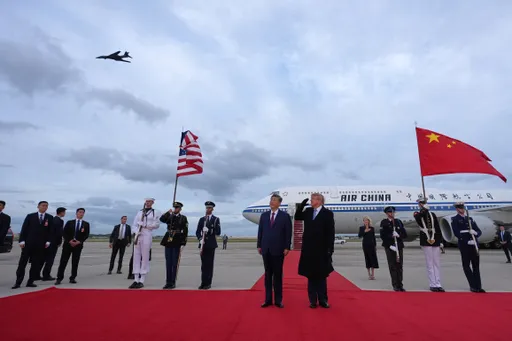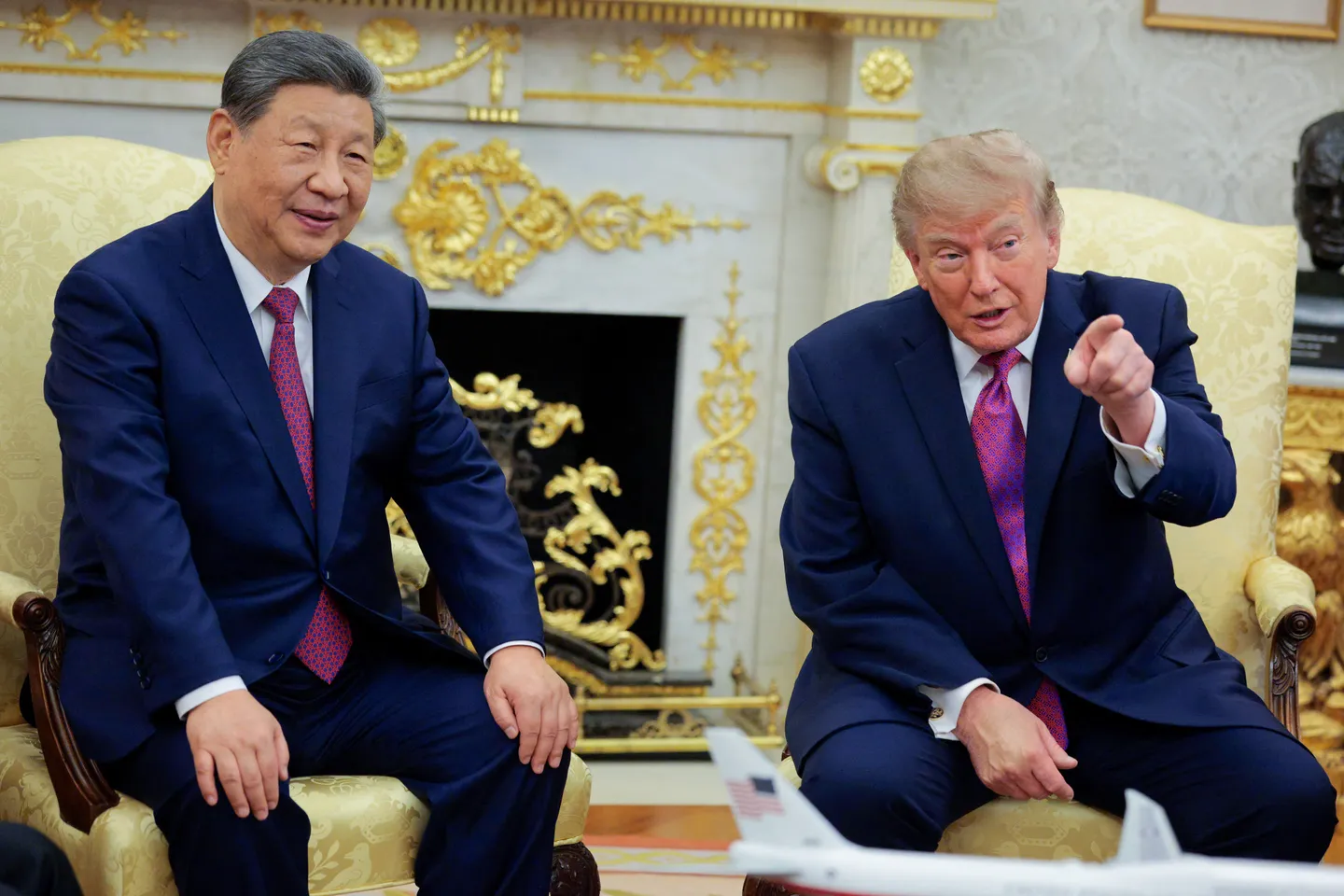
Chinese President Xi Jinping has called for "trust," continued dialogue and "healthy competition" as US President Donald Trump hosted him at the White House.
Beijing and Washington should strengthen communication, Xi said on Thursday, stressing that despite differences in their "national conditions," the two countries can better understand each other, seek common ground, and build mutual trust through "candid, in-depth, and continued dialogue."
He encouraged strengthened contacts between Chinese and US government departments, including those overseeing foreign affairs, the economy, financial cooperation, law enforcement, and people-to-people exchanges.
He also voiced support for greater exchanges between the two countries' legislative bodies.
"We should coexist in peace," Xi said, adding that as two major countries they "stand to gain from cooperation and will both lose in confrontation."
Xi emphasised that China and the US do not need to avoid competition, but that it should be "healthy" and "kept within bounds." He called for "a race of catching up with each other," rather than a zero-sum "wrestling match in which one either wins or loses."








China and the US "must hold the line of no conflict and no confrontation," he stressed, while calling for regular dialogue and improved mechanisms for crisis communication and prevention between their respective militaries.
"The Thucydides trap can be overcome," he said, referring to the risk of conflict between a rising power and an established one, a concept coming from US novelist Herman Wouk, referring to the ancient Greek historian.
Trump, meanwhile, said decisions made during his talks with Xi on security, technology and “superintelligence” — referring to artificial intelligence — could shape global stability for decades.
“During this visit, we will also discuss pressing issues concerning security, technology, and superintelligence. The decisions we make in these areas today can promote peace and prosperity for decades and decades to come,” Trump said.
He also said Washington and Beijing had been working to encourage a more balanced trading relationship, including greater market access for American farmers and ranchers.