 Zeynep Conkar
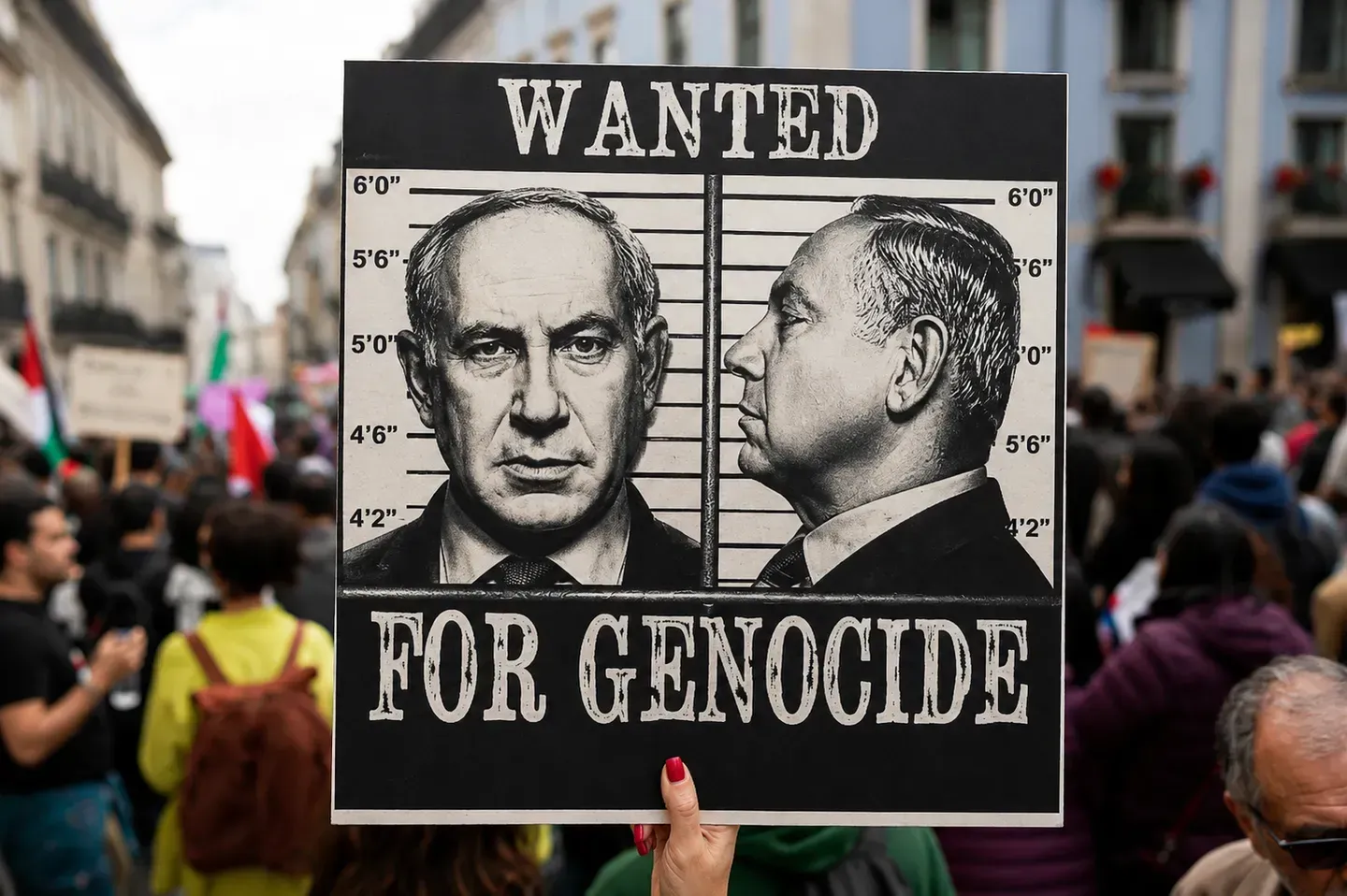
Türkiye has taken a new step in its domestic prosecution of Israeli Prime Minister Benjamin Netanyahu, asking Interpol to issue a Red Notice for him over the interception of the Global Sumud Flotilla, a Gaza-bound aid mission.
The Turkish proceedings are before Istanbul’s 11th High Criminal Court and involve 35 defendants, including Netanyahu and Afek Moskovitch, an Israeli soldier linked to the destruction of the Turkish hospital in Gaza.
The defendants are being prosecuted over the armed intervention against civilians delivering humanitarian aid to Gaza in international waters and the detention of activists.
The charges include genocide, crimes against humanity, aggravated deprivation of liberty, intentional injury, torture, damage to property, aggravated robbery and hijacking of means of transportation, Justice Minister Akin Gurlek said.
What sets this prosecution apart is that it doesn't run through The Hague at all.
Netanyahu already faces an International Criminal Court (ICC) arrest warrant issued in November 2024, but Türkiye's case is something else entirely: a domestic indictment, prosecuted under Turkish law, asserting jurisdiction over an incident involving activists who had sailed from Turkish shores.
Turkish prosecution overlaps in part with the ICC but is more extensive, according to Andrea Maria Pelliconi, Assistant Professor in Human Rights Law at the University of Southampton.
“It extends to the flotilla incident, which is not included in the ICC warrants as it happened afterward, and it involves charges of genocide, which are also not included in the warrants,” Pelliconi tells TRT World.
“The Turkish charges also include crimes like ‘aggravated robbery’ and ‘hijacking of means of transportation,’ which are not part of the international crimes over which the ICC has jurisdiction.”
“There is increasing acceptance of universal jurisdiction for international crimes, and this move may help make the world smaller for the Israeli defendants, putting them at greater risk of arrest and surrender,” she adds.

What is a Red Notice?
A red notice tends to get described as an international arrest warrant, but that isn't quite right.
As per Interpol's own description, a Red Notice is a request to law enforcement worldwide to locate and provisionally arrest a person pending extradition, surrender, or similar legal action, and it is not itself an international arrest warrant.
Member states apply their own laws when deciding whether to actually detain someone named in a notice, since Interpol has no independent power to make an arrest on its own authority.
That mechanism is exactly why the framing of Türkiye's request matters as much as the underlying facts.
The Interpol move could particularly pressure European states, according to Balakrishnan Rajagopal, former UN Special Rapporteur on the Right to Adequate Housing and Professor of Law and Development at the Massachusetts Institute of Technology (MIT).
“Türkiye’s efforts are very commendable and will increase pressure on Netanyahu following the Interpol notice, as states are required to respond to such a notice and enforce the warrant,” Rajagopal tells TRT World.
“The main political obstacle to action against Netanyahu remains the US, which continues to shield him and ensure his impunity for some of the most horrible crimes we have seen in decades.”
“The sanctions imposed by the US against ICC judges and prosecutors are a glaring example of such illegal abuse of law,” he adds.
Legal commentary on Interpol's constitutional framework points to a requirement that the organisation steer clear of certain categories of intervention, often called its neutrality clause, and whether a given request clears that bar tends to depend heavily on how it's built and documented rather than on the severity of the allegations alone.

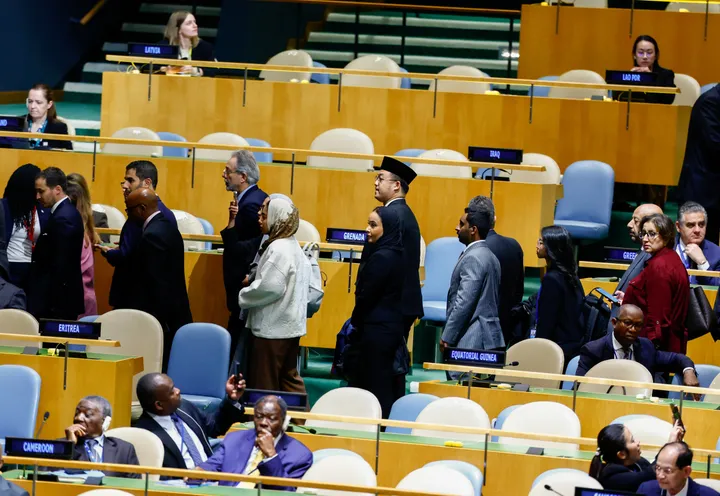




Interpol reviews these requests through its internal process and its Commission for the Control of Files. A Red Notice based on a formal domestic case with named suspects and specific charges, as in Türkiye’s case, is stronger than one based on vague or unsupported claims.
According to Pelliconi, the enforcement process could vary between states.
“Some states would reject enforcement of the warrants for the established international crimes, both because universal jurisdiction is not universally accepted, with the exception of torture, under UNCAT, and because of the Prime Minister's personal immunity, which holds only while he remains in power.”
“For crimes that don't attract universal jurisdiction, it would be extremely difficult to get past Netanyahu's personal immunity, although it may be effective for the other 34 defendants,” she says.

Why it matters beyond the courtroom
This isn’t Türkiye's first move against Netanyahu.
Istanbul prosecutors issued arrest warrants against him and dozens of other Israeli officials back in November 2025, also on genocide allegations tied to the broader Gaza campaign.
“Jurisdiction of a state like Türkiye to prosecute Netanyahu must rest on universality or the protective principle,” Rajagopal says.
“Thus, Türkiye must either assert and prove the commission of an international crime, such as genocide, or that Turkish nationals were harmed due to the actions of Netanyahu.”
“The failure or inability to execute the ICC warrant against Netanyahu gives rise to legal obligations on third states such as Türkiye to fully enforce the Genocide Convention, as it has an obligation to do so,” he adds.
The new Interpol request extends that effort specifically to the flotilla incident, giving Ankara a second, narrower case anchored in one well-documented event with named individual defendants rather than a sprawling wartime record.
A Red Notice would not itself compel every country to arrest him and its effect would depend on where he travels and how the country concerned treats the Turkish request.
Still, the request could have a longer-term impact, both by widening the number of states involved and by keeping the possibility of prosecution open beyond Netanyahu’s time in office, according to Pelliconi.
“States that don't currently want to cooperate with the ICC would still have to cooperate with Interpol, which includes virtually all states, in addition to whatever bilateral extradition treaties Türkiye may have in place,” Pelliconi says.
“Even if Netanyahu is granted personal immunity now, he will lose it once he's no longer in office, and there's no statute of limitations for crimes like genocide, so justice will come eventually.”
“That prospect is quite grim for him, and politically, this is certainly a very strong move from Türkiye,” she adds.
The ICC warrant already means he faces arrest risk in states that are bound by the Rome Statute. Türkiye’s case adds a separate domestic prosecution, another set of allegations and another potential channel for international police cooperation.
That is what makes the case significant beyond the question of whether Netanyahu will actually be arrested.
It shows the pursuit of accountability for international crimes does not have to stop at The Hague, and national courts can play a role in pursuing it.