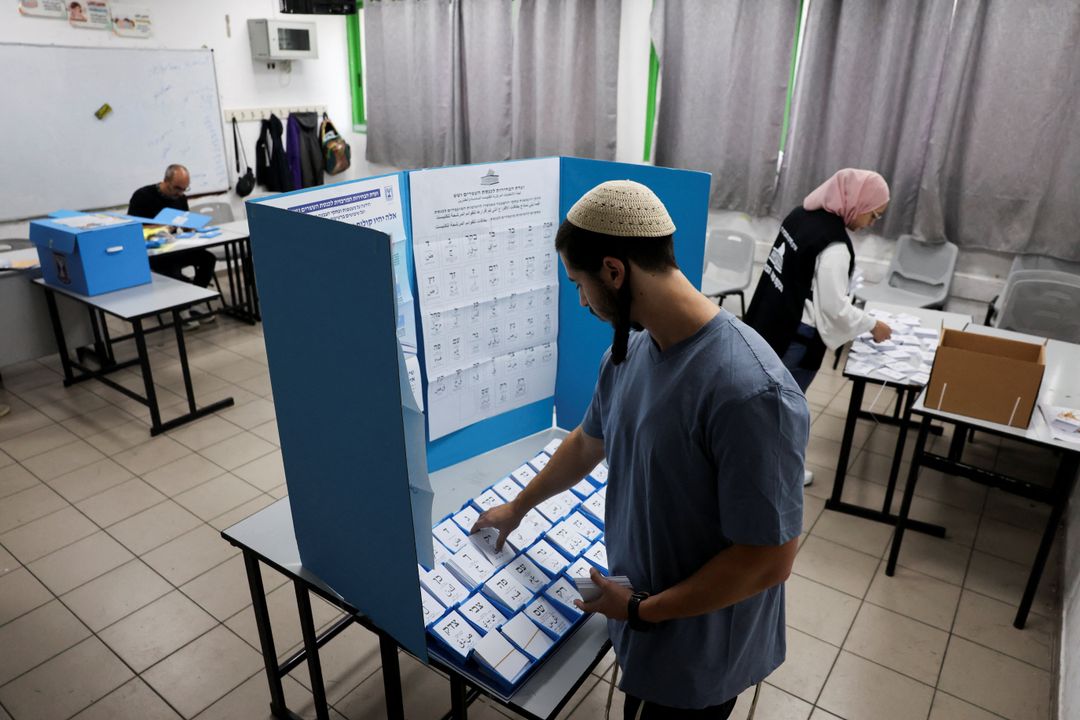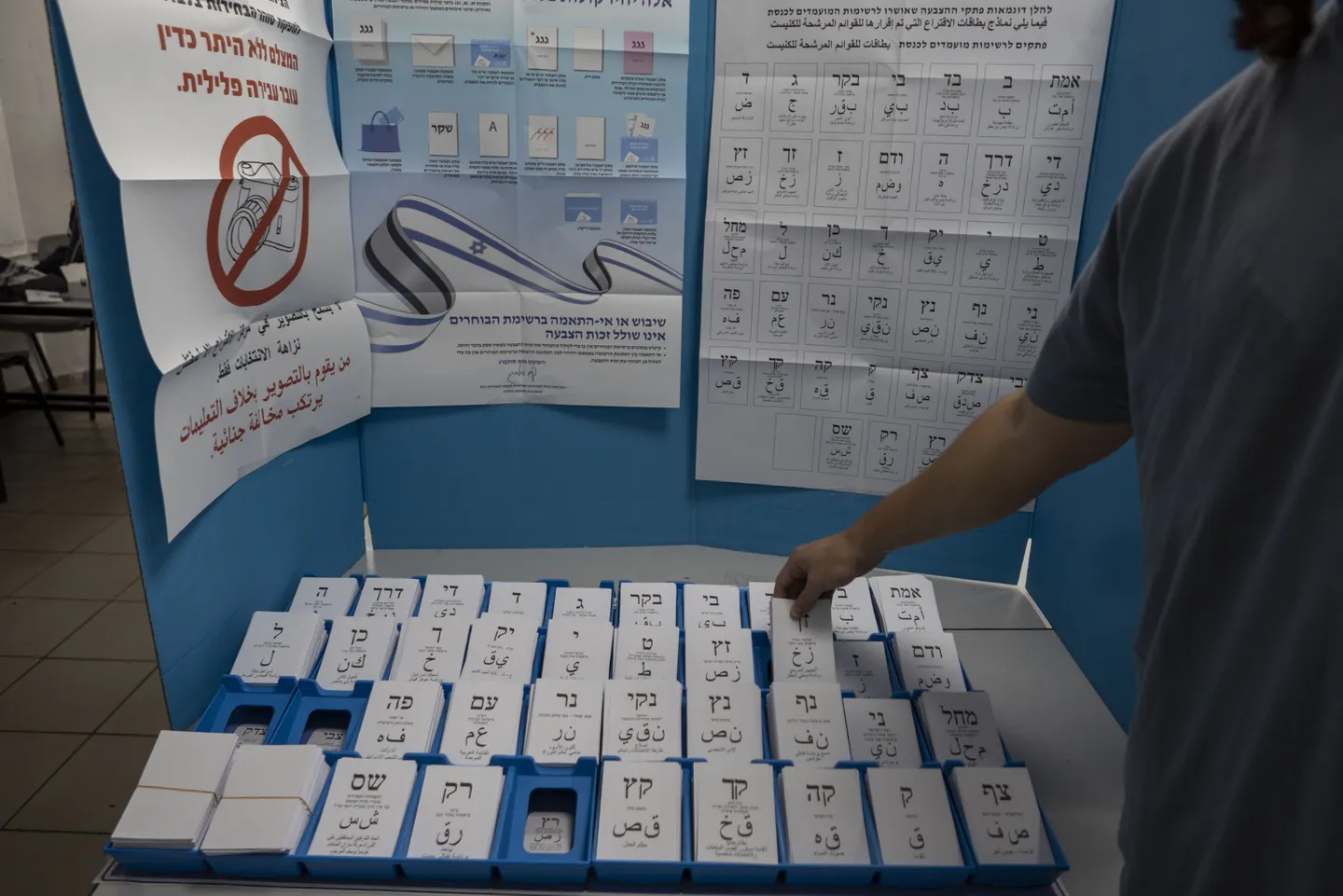
While millions of Israelis vote in Tuesday’s elections for the 26th Knesset, hundreds of thousands of ballots are expected to be counted only after preliminary results are published, potentially changing the distribution of seats in the coming days.
According to a report by ynet, Israel’s Central Elections Committee expects between 600,000 and 650,000 people to vote using double envelopes, an unprecedented number in the country’s election history.
By comparison, around 463,000 voters used the method in the 2022 elections.
The expected increase is mainly attributed to the large number of reservists and residents evacuated from their homes due to the war, many of whom are unable to vote at the polling stations where they are registered.
The Elections Committee estimates that these ballots could amount to the equivalent of roughly 15 Knesset seats, potentially affecting the final allocation after the regular vote count.
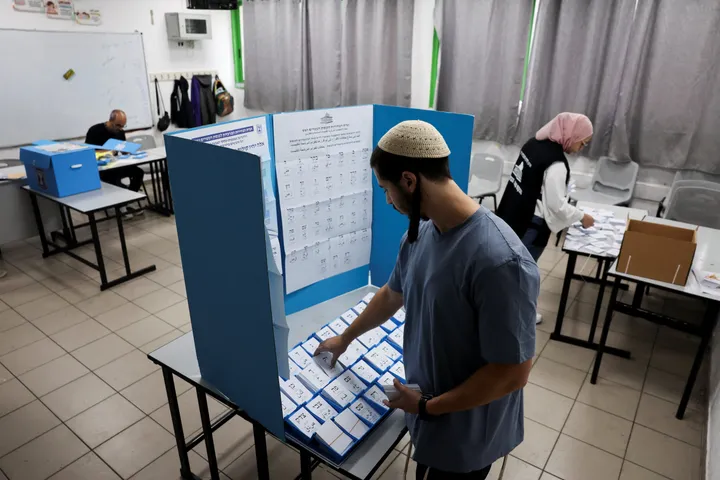





The double-envelope method allows citizens who cannot reach their registered polling station to vote while preventing double voting and preserving ballot secrecy.
Under the system, voters place their ballot slips in regular envelopes, which are then inserted into outer envelopes bearing their personal details.
The envelopes are sent to the Central Elections Committee, which checks whether the voter has also cast a ballot at their registered polling station. Once verification is complete, the inner envelopes are separated from identifying details and sent for counting.
The method is also used by hospital inpatients, prisoners, police officers, foreign service personnel and people with disabilities who meet the legal requirements, in addition to soldiers and reservists.