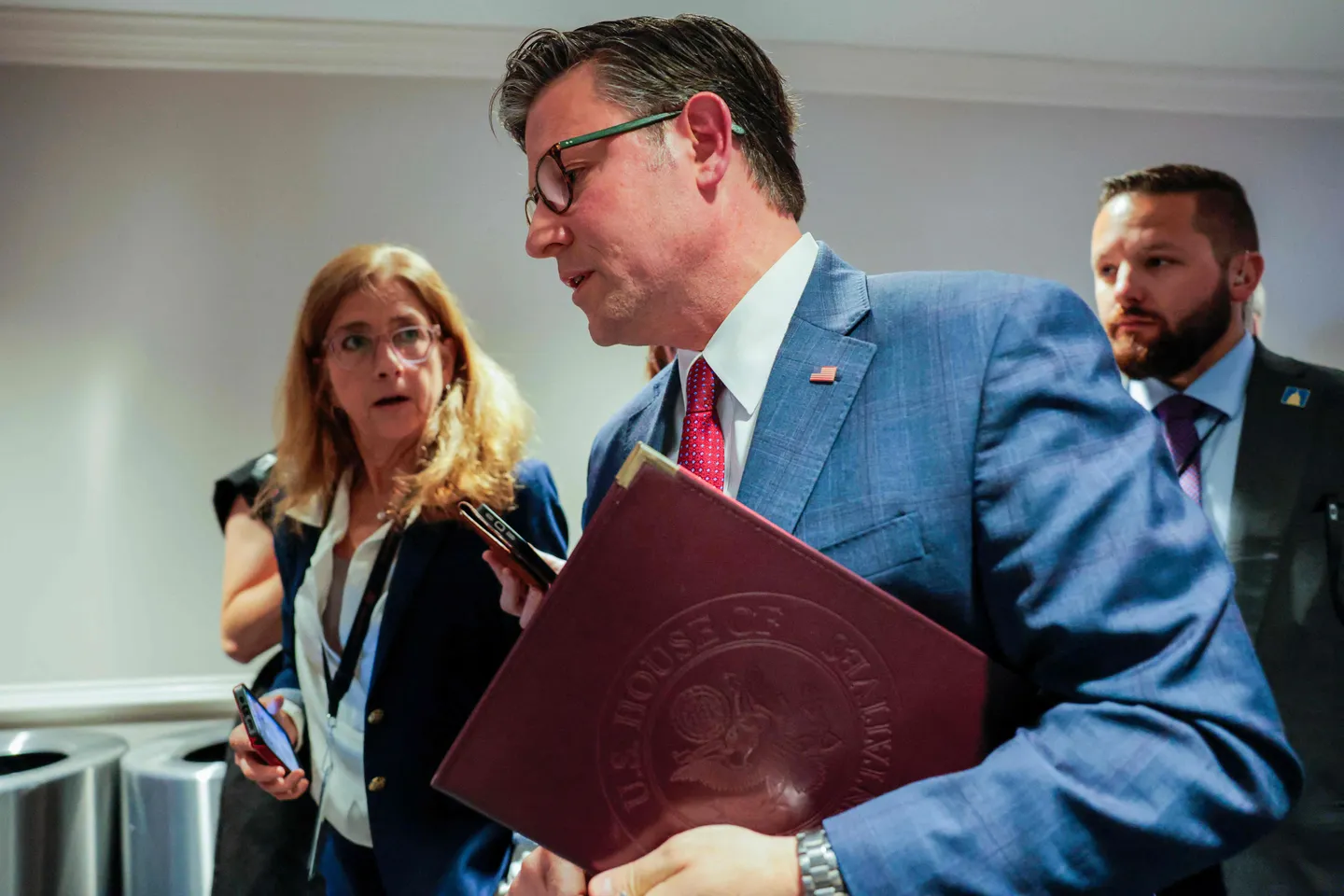
US House Speaker Mike Johnson has said that there cannot be a moratorium on artificial intelligence development without losing the competitive edge to China and that AI companies can regulate themselves.
"They can self-regulate. They don't need the government to tell them to slow it down. If they want to slow it down, they should," Johnson told reporters on Tuesday.
"We cannot have a moratorium on the development of AI, Ok? Because then we will lose our edge to China, and that has serious national security implications for every American family."
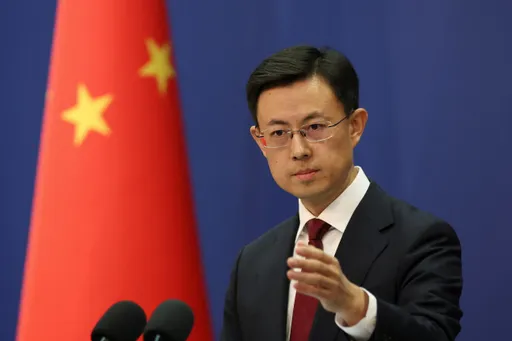
Johnson said he was sure AI would be a topic of discussion between President Donald Trump and Chinese President Xi Jinping when they meet in Washington later this month.
"I'm sure they need to, you know, keep tabs and make commitments to one another," Johnson said, rejecting the idea of a transnational agency to regulate AI.
Johnson said he spoke to Trump on Monday night and they are summoning to executives of AI providers — "all the big names that you know" — to come to the White House within the next week for an important meeting.
The approach to putting guardrails on AI has to be done in a balanced and thoughtful way, Johnson said.
"I think you need independent auditors. I think you need transparency from the people who are developing this. I think there's some there's some really important ideas that can be guardrails," he said.

AI guardrails debate in Congress








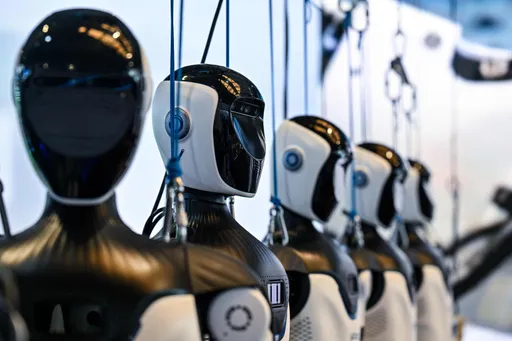
The threat of catastrophic danger as artificial intelligence develops at high speed has sparked a global debate on how it should be regulated.
Anthropic chief Dario Amodei, whose company makes the popular Claude AI system, opened the floodgates on Saturday when he called for AI companies to slow down.
His comments were echoed by OpenAI's Sam Altman and SpaceXAI's Elon Musk.
It came days after a former Anthropic employee Jacob Coxon issued a "human extinction", claiming that leading firms are "gambling with our lives" by racing towards self-improving superintelligence.
Worries about uncontrollable AI have been mounting for weeks, since OpenAI reported experimental models had broken out of their secure testing spaces, reached the internet and coordinated to attack Hugging Face, a site where code is stored.
Americans are also increasingly voicing opposition to energy-guzzling AI data centres, which have become a major issue in crucial US midterm elections in November.
Trump and many Republicans are against slowing down AI development.
Trump on Monday attacked what he called a "sick conspiracy" against artificial intelligence, rejecting calls for regulation amid mounting worries that the technology threatens humankind.
Democrats are meanwhile advancing the AI Kill Switch Act, requiring developers of advanced AI systems to maintain the technical capacity to throttle, suspend, or shut them down.
Congress meanwhile appears deadlocked on the issue.