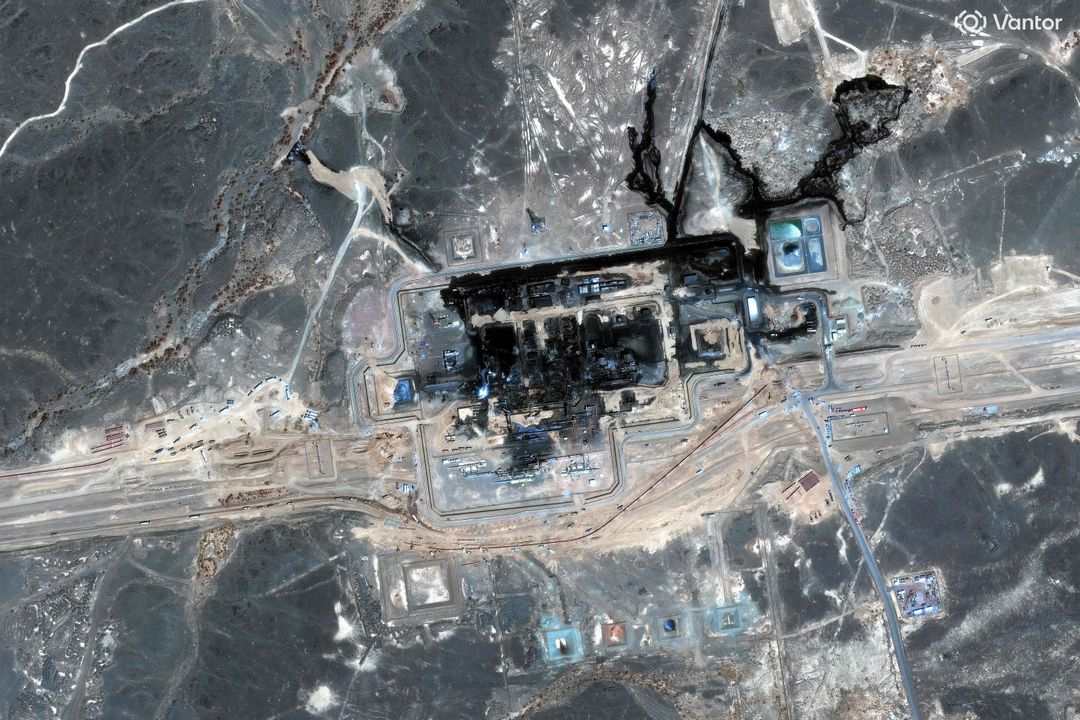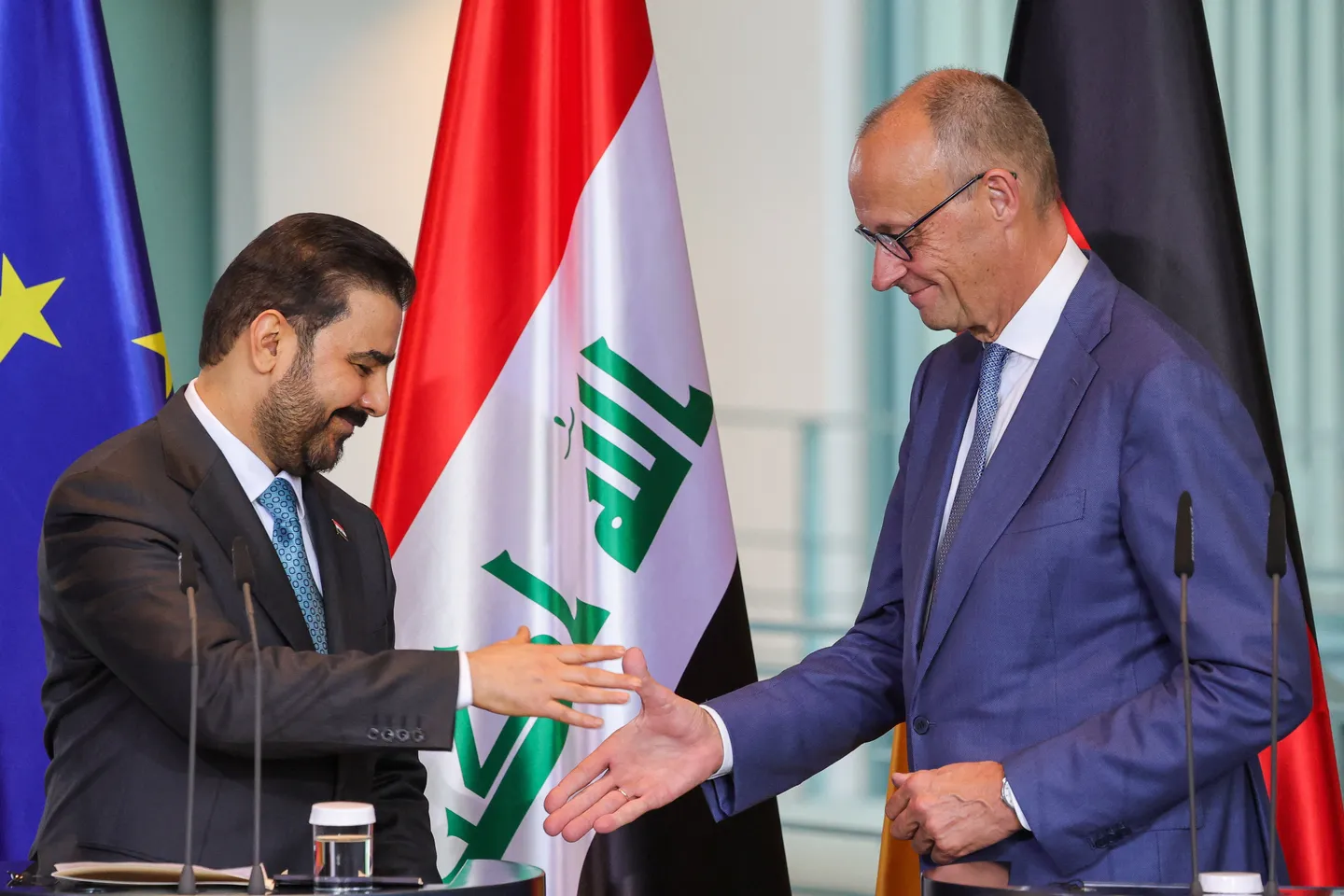
Iraqi Prime Minister Ali Al-Zaidi has said that he discussed selling oil to Europe during visits to France and Germany, as Baghdad seeks to diversify its export routes and reduce its reliance on the Strait of Hormuz.
During a press conference with German Chancellor Friedrich Merz in Berlin on Tuesday, Zaidi said "we want to expand and diversify our export routes".
He added that "Iraq cannot remain hostage to a single corridor" as recent events have demonstrated, referring to the Strait of Hormuz, which has been blockaded by Iran during the Middle East war.
Zaidi said that he had discussed oil exports to Europe with Merz and French President Emmanuel Macron, whom he met in Paris on Monday.
Crude oil sales account for nearly 90 percent of Iraq's revenue but its exports have been hurt by the outbreak of the Middle East war between Iran and the United States.
Before the war began in February, Iraq produced around four million barrels per day, and exported an average of 3.4 million bpd, mostly via Hormuz.
Most of its oil exports go to East Asia, with China and India its largest buyers.
Due to the disruption, Iraq began exporting crude using tanker trucks through Syria, as well as through a pipeline to the Turkish port of Ceyhan, although these routes can handle only a fraction of its usual sea-bound trade.







Zaidi said that Baghdad could "double its oil exports through the Mediterranean" to supply markets in Europe and the United States.
Zaidi, who hopes to increase Iraq's oil production to 10 million barrels per day, said that "a large share, or nearly half, can go to European countries and the West".
He said that Iraq and Germany were expected to reach "an understanding on the export of crude oil" while Baghdad would purchase German technology and equipment.
Merz said that the main focus for Iraqi-German cooperation is the economy.
"Many German companies are now active in Iraq. They are developing new solutions, for example for energy supply," he said, adding that "the best example is an agreement on Iraq's electricity supply, which we will sign today".
Merz also expressed his concerns after Yemen's Houthis cemented their control over the Bab al-Mandab waterway at the entrance to the Red Sea, a vital route for Saudi oil exports.
"This further exacerbates the situation in the energy markets and also affects Germany," he said.